Core Banking Development
A modern core replaces batch-driven, inflexible systems with real-time processing for accounts, ledgers, and transactions — giving the business a foundation it can actually build new products on.
Build banking software that meets regulatory requirements, scales with your business, and gets products to market faster.

Banks and fintechs don't fail on ambition — they fail on delivery. Legacy cores that can't support new products, compliance requirements that arrive faster than engineering teams can adapt, and vendors who understand code but not banking economics: these are the problems that stall digital transformation.
DashDevs builds core systems, digital platforms, and payment infrastructure for banks, challenger banks, and fintechs that need to move fast without putting a banking license at risk. Unlike generalist software vendors, our teams work exclusively in regulated finance, so compliance, audit readiness, and operational resilience are built into the architecture from day one — not added after launch. The result is software that meets regulatory requirements, scales with the business, and gets to market on a realistic timeline.
A modern core replaces batch-driven, inflexible systems with real-time processing for accounts, ledgers, and transactions — giving the business a foundation it can actually build new products on.
End-to-end platforms for retail and business banking that let institutions launch and manage digital products without depending on manual back-office work.
Customer-facing apps built to the reliability and security standards banking users expect, designed to reduce support load and increase daily engagement.
Digital-only banking solutions with the infrastructure, onboarding, payments, cards, and account management capabilities needed to launch and scale a modern neobank.
API-based connectivity to third-party providers and account aggregation services, built to meet regional open banking regulation while opening new revenue channels.
Payment processing, routing, and settlement systems that handle multiple rails and currencies while keeping transaction integrity and compliance intact at volume.
A structured path off outdated cores — migrating data and functionality in stages so the business keeps running while the new system comes online.
Back-office, compliance, and operations tooling that gives staff the visibility and control needed to manage risk, cases, and reporting without manual workarounds.
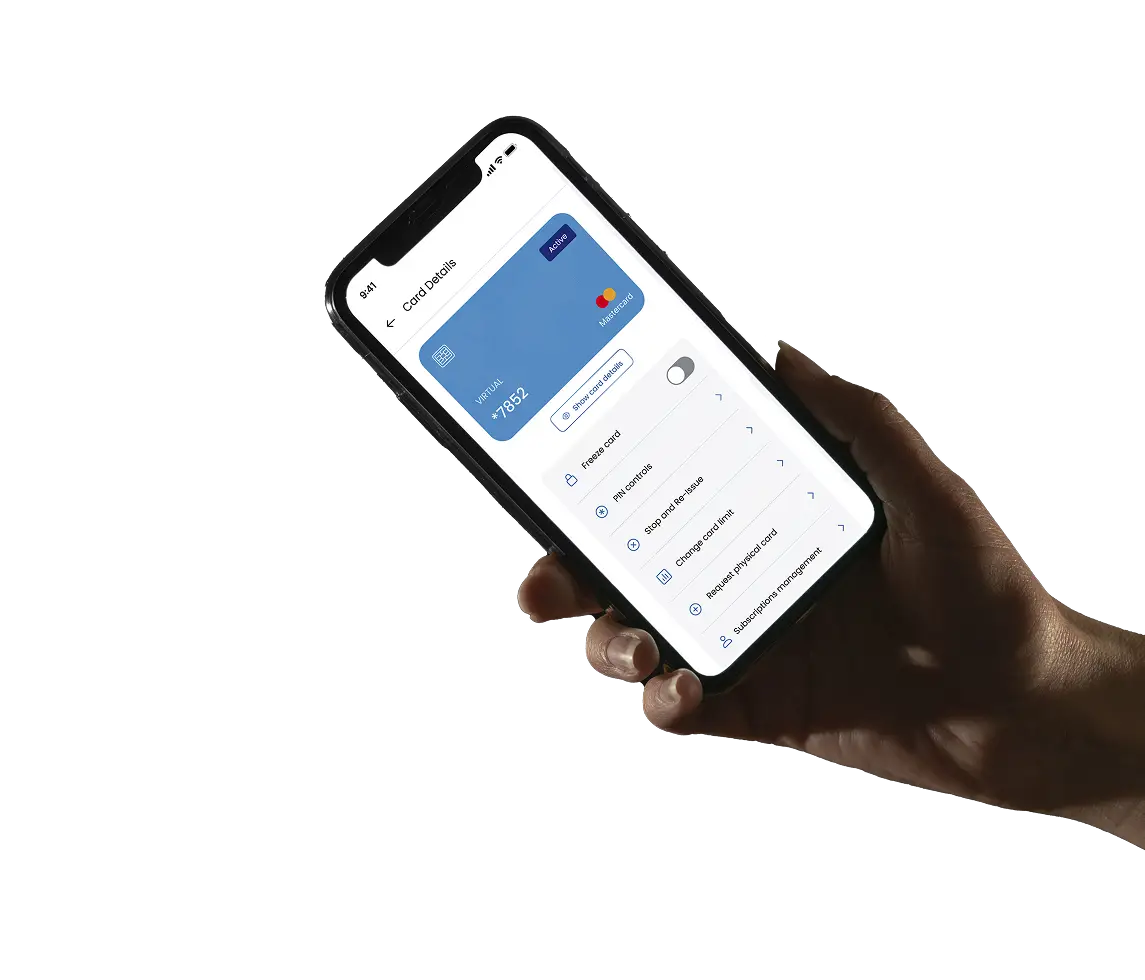
Systems for card issuing, authorization, processing, tokenization, and lifecycle management across physical and virtual cards.
Institutions modernizing legacy infrastructure to compete with digital-first challengers without disrupting existing operations or customer trust.
Teams building a bank from the ground up, where speed to license and speed to market determine whether the business gets funded again.
Regulated entities that need payment, wallet, and compliance infrastructure built to survive audits and scale across jurisdictions.
Growth-stage companies adding embedded finance, lending, or investment features to an existing product without re-architecting the whole stack.
Fintech Core is DashDevs' configurable layer for customers, payments, accounts, vendors, controls, and reporting. It is not a bank, a licence, or a BaaS provider; it connects to them.
Prebuilt, compliance-ready modules for accounts, payments, and onboarding cut integration time from over a year to a matter of months.
A system designed around your exact product logic, data model, and regulatory footprint, with no dependency on someone else's platform roadmap.
Neither path is universally better — the right choice depends on timeline, regulatory scope, internal engineering capacity, and how much control the business needs over its own roadmap. We help clients work through that decision before committing to either one.
The concerns that show up in every RFP — mapped to how we design, build, and hand over.
We connect new systems to existing cores and vendors in stages, so current operations keep running while the migration happens in the background.
Regulatory logic — AML screening, KYC, audit trails, reporting — is built into the architecture from the start, not added after a compliance review flags a gap.
Systems are architected to handle transaction growth and new markets without a rebuild, so scaling is a configuration change, not a re-engineering project.
Data and functionality move in controlled phases with parallel-run periods, reducing the chance of downtime or data loss during cutover.
Modular delivery and clear scoping mean clients pay for what the product needs now, with a defined path to add capability later rather than overbuilding upfront.
Our teams stay engaged after go-live to handle monitoring, incident response, and iteration — banking software doesn't stop needing attention at launch.
Code is built for teams that will maintain it for years, with documentation and architecture decisions made for the institution's engineers, not just ours.
DashDevs partnered with a digital bank to build a multi-layered compliance architecture covering AML screening, fraud monitoring, case management, and direct integration with SAMA's Tanfeeth reporting system.

DashDevs built and launched Dozens, a full-stack digital bank, across three platforms in nine months — covering core banking, customer apps, and FCA-compliant operations on a timeline most vendors considered unworkable.
Every engagement is staffed by teams who have shipped AML, KYC, and payment systems under real regulatory review — not generalist developers learning banking on the client's project.
Over 100 fintech products launched, including full bank builds delivered in under a year, gives clients evidence — not promises — that timelines will hold.
Teams work as an extension of the client's own organization across the full product lifecycle, rather than handing off a build and disappearing after launch.
Clients who need speed can draw on a production-tested platform instead of starting from a blank codebase, without losing the option to build custom where it matters.
Whether you're modernizing a legacy core, launching a new digital bank, or scoping your first compliant product, a conversation with our team will tell you what's realistic — for timeline, budget, and regulatory scope — before you commit to a build.
Contact usTimelines depend on scope and regulatory footprint. A platform built on Fintech Core can reach market in as little as 3–9 months; a fully custom build from scratch typically runs 9–18 months, depending on jurisdiction and product complexity.
Cost is driven by scope (core system vs. full platform), regulatory requirements across target markets, integration complexity with existing vendors, and whether the build starts from a ready platform or from scratch.
Yes. Our teams build AML, KYC, and audit-trail functionality into the system architecture and work directly with clients’ compliance and legal teams to meet local and international regulatory standards.
Yes. We assess the current stack first and design an integration or migration path that keeps operations running throughout the transition, rather than requiring a full cutover.
It depends on your timeline, budget, and how much long-term control you need over the codebase. We walk clients through this trade-off directly rather than defaulting to one answer.
Post-launch, our teams remain available for monitoring, incident response, and ongoing iteration. Support scope is agreed upfront and can scale as the product grows.
Clients retain full ownership of the code and intellectual property developed for their project, both for custom builds and for implementations built on Fintech Core.