


3D Secure 2.x: Decline Rate Trade-offs, Liability Economics, and Vendor Selection

July 31, 2026
- Treat 3D Secure as an auth-funnel control: frictionless RBA, challenges, and exemptions move conversion and fraud cost in opposite directions.
- Liability shift only pays when challenge and soft-decline losses are smaller than the chargeback and operational risk you remove.
- Tune risk-based authentication with issuer-ready data; over-challenging is a silent tax on checkout.
- Exemptions (TRA, low-value, MIT) are a strategy—not a checkbox—and must match your corridor and TRA calibration.
- Select PSP and 3DS-server vendors on data quality, exemption support, analytics, and orchestration fit—not on a logo slide.
Heads of Payments and CPOs do not need another glossary entry for 3D Secure. They need a control model: when step-up authentication protects margin, when it silently taxes conversion, and how liability economics change the RFP for a PSP or 3DS server.
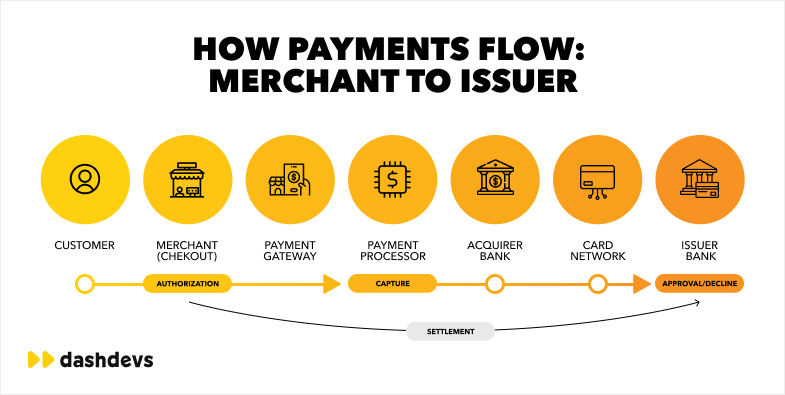
In card-not-present flows, 3D Secure sits between checkout intent and issuer approval. Version 2.x replaced static passwords with risk-based flows, biometric and OTP challenges, and richer data to the access control server. Done well, most cardholders authenticate without noticing. Done poorly, 3d secure authentication becomes the highest-friction step in the funnel—and your decline dashboard blames “issuer” for a design choice you own.
This article frames 3DS as a business lever: conversion trade-offs, liability-shift P&L, RBA tuning, exemptions strategy, and vendor selection for teams optimizing the auth funnel.
3DS in an auth-funnel sense
What is 3DS for a payments operator? It is a protocol layer that lets the card issuer assess—and when needed challenge—the person attempting a card payment before authorization completes. Schemes brand the experience (Visa Secure / Identity Check and peers); your stack still owns when to invoke it, what data you send, and how you recover soft declines.
3DS is not a fraud product by itself. It is secure authentication infrastructure for card payments that shifts who bears certain fraud losses after a successful authentication outcome—and that can raise or lower approval rates depending on challenge rate and data quality.
Industry benchmarks underline the gap between “authenticated” and “frictionless.” In Ravelin’s Jan–Jul 2025 country data, the global average 3DS success rate sat near 82%, with challenge success around 76%—while the frictionless share was only about 58% globally (higher in Europe, lower in North America). That spread is the conversion lever this article is about.
Decline rate trade-offs: when 3DS lifts vs depresses conversion
Turn 3D Secure on globally and you will usually see two effects at once: fewer friendly-fraud chargebacks on authenticated volume, and more abandoned checkouts plus soft declines on challenged volume. The net is corridor- and segment-specific.
| Lever | Often lifts conversion / approval | Often depresses conversion / approval |
|---|---|---|
| Frictionless RBA | High-quality device and history data; returning cardholders | Thin payloads; new devices treated as unknown risk |
| Challenge step-up | High-fraud SKUs or first-time high-ticket carts | Low-risk returning buyers challenged every time |
| Exemptions | Calibrated TRA and clean MIT after CIT | Mis-tagged MIT; TRA thresholds the issuer rejects |
| UX | Native SDK / in-app challenge | Broken redirects, double challenges, slow ACS |
For online purchases, measure four rates weekly by BIN country and device: attempt rate into 3DS, frictionless share, challenge completion, and authorization after 3DS. A healthy 3ds payment stack shows rising frictionless share without a spike in post-challenge declines.
Ravelin’s 2026 authentication analysis shows why a single global toggle fails: 3DS success improved slightly year on year (with a sharp jump in the US, about +47% in average success in their comparison), while frictionless rates declined globally, in the US, and in Europe—falling or flat in 28 of 37 countries tracked. Issuers are tightening models; merchants that under-send data pay in challenge volume.
3d secure verification that always challenges is not “more secure” in P&L terms—it is a conversion tax with a liability coupon attached. Conversely, skipping step-up on high-risk segments to protect conversion can move fraud into chargeback and monitoring programs that cost more than the checkout lift. Improve 3d secure verification with better payloads before you widen challenge rules.
If your product is a mobile-first wallet or banking app, challenge UX belongs in the same backlog as feature work—partner with a fintech app development company that treats ACS handoffs as product surface, not a redirect afterthought.

Liability economics: when the shift pays for itself
Successful 3d secure authentication can shift liability for certain fraudulent card transactions from merchant/acquirer toward the issuer, subject to scheme rules and correct authentication results. That is the headline. The operating math is narrower.
Model three buckets before you celebrate “liability shift”:
- Chargebacks avoided — Fraud and some misuse cases that would have hit you without authentication.
- Revenue lost to friction — Abandoned challenges, OTP failures, and soft declines after step-up.
- Ops cost — Representment, support contacts, TRA model upkeep, and 3DS vendor fees.
Liability shift pays when (1) + lower ops in (3) exceeds (2) + vendor fees. It fails when you buy shift on volume that would rarely charge back, while challenge drop-off removes high-intent buyers.
Regulators still see strong customer authentication as effective against the fraud types it was built for—especially cards—while warning that fraudsters adapt toward exemptions and social-engineering of legitimate step-up. The joint EBA–ECB 2025 payment fraud report notes that card payment fraud was about 17 times higher when the payment recipient sat outside the EEA, where SCA is not legally required and often not used. That is the cross-border liability and conversion problem in one statistic.
| Scenario | Liability shift value | Conversion risk |
|---|---|---|
| High CNP fraud category, weak AVS history | High | Acceptable if frictionless share stays strong |
| Subscription renewals with correct MIT | Often better via exemption than challenge | Challenge on renewals is usually a self-inflicted decline |
| Low-ticket, low-fraud domestic e-com | Modest | Easy to overpay in drop-off |
| Cross-border first purchase | High variance by corridor | Needs corridor-level RBA, not a global rule |
3ds security outcomes also depend on merchant acquiring setup: who is merchant of record, how chargebacks are coded, and whether your acquirer credits liability correctly. Align with your merchant acquiring partner on reporting before you change defaults in the gateway.
RBA tuning: data quality is the product
Risk-based authentication is the core of modern 3D Secure. The issuer’s access control server scores the attempt; frictionless proceeds when risk is low. Your job is to feed signals the ACS can use—and to stop forcing challenges when the data already supports frictionless.
Practical tuning loop:
- Instrument — Capture challenge vs frictionless, ACS timeout, and post-3DS auth codes by corridor.
- Enrich — Device, IP reputation, account age, prior 3ds authentication success, cart velocity, shipping mismatch.
- Calibrate — Review TRA thresholds with acquirer; fix missing fields that push “challenge by default.”
- Recover — Smart retries and method fallback when soft decline codes point to authentication, not funds.
3d secure verification quality tracks issuer trust in your data. Thin browser info and reused device fingerprints create challenge inflation. Rich, consistent payloads create frictionless volume—the conversion win that liability marketing never mentions. Teams that treat 3d secure authentication as a weekly ops review outperform teams that only audit after a fraud spike.
Visa Secure and scheme equivalents still require correct message versions and indicators; scheme rule updates change which fields matter. Treat 3DS configuration as a living control, not a go-live checkbox.
Exemptions strategy (not a compliance checkbox)
Strong customer authentication regimes (notably PSD2 SCA in Europe) make exemptions a first-class product strategy for 3ds payments. Common paths:
- Low-value — Small ticket; still monitor cumulative risk.
- TRA — Acquirer/issuer risk analysis; your fraud performance must earn the threshold.
- MIT / recurring — After a correctly authenticated customer-initiated transaction, subsequent merchant-initiated charges may skip step-up when tagged correctly.
- Trusted beneficiaries — Where supported; operationally heavy to maintain.
Exemptions fail in production when MIT flags are wrong, TRA is claimed without performance, or your 3ds payment processing path cannot carry exemption indicators through orchestration to the issuer. Fix the tagging before you “turn 3DS off” on renewals.
For acceptance design beyond SCA, see how to accept payments on a website—checkout architecture and 3DS placement should be designed together.

3DS inside orchestration and issuing stacks
If you route across multiple acquirers, 3D Secure results and exemptions must travel with the attempt. Teams using payment orchestration should require vendors to preserve authentication cryptograms, ECI values, and exemption flags across failover—otherwise a retry can drop liability shift or trigger a second challenge.
On the issuer side, 3d identification and ACS capacity shape cardholder experience for programs you issue. If you run card issuance or evaluate card issuing platforms, ask how challenge rates and ACS SLAs look for your BINs—not only for your merchant acquiring traffic. Product and issuer views of 3D Secure are two sides of the same decline problem.

When issuing and acceptance both sit in your roadmap, card issuing integration services and payment gateway integration should share a single auth-event model so finance and fraud see one story.
How to evaluate PSP and 3DS-server providers
Vendor selection for 3D Secure is a payments-control decision. Use the same discipline you apply to fintech vendors generally—and put conversion metrics in the scorecard.
| Criterion | Why it matters | Proof to demand |
|---|---|---|
| Frictionless rate by corridor | Primary conversion lever | 90-day cohort data, not a global average |
| Challenge UX | Drop-off lives here | SDK/in-app options; accessibility; localization |
| Exemption support | SCA economics | TRA, low-value, MIT indicators in sandbox |
| Data / EMV 3DS fields | RBA quality | Field completeness reports; reject reasons |
| Soft-decline analytics | Recovery design | Code-level dashboards and webhooks |
| ACS connectivity | Timeouts kill carts | SLA and timeout distribution |
| Orchestration fit | Multi-acquirer reality | Cryptogram and ECI preserved on retry |
| Commercial model | Unit economics | Per-auth fees vs bundle; dispute tooling included? |
Prefer providers that treat 3ds authentication as observable infrastructure. A 3d payment flow without event-level visibility cannot be tuned—only restarted after a bad quarter.
If you are writing a formal vendor competition, structure requirements with how to write an rfp habits: measurable frictionless targets, sandbox scripts, and liability reporting samples as mandatory attachments.
For banks and platforms bundling rails, clarify whether 3DS sits in a payment as a service wrap or as a discrete 3DS-server contract—ownership of TRA performance and ACS incidents changes with that choice.

Operating checklist for payments leaders
- Baseline — Challenge rate, frictionless rate, completion, and post-3DS auth by corridor.
- Segment rules — Do not use one global step-up policy for domestic low-risk and cross-border high-risk.
- Liability P&L — Monthly: chargebacks avoided vs revenue lost to step-up.
- Exemption hygiene — Audit MIT and TRA tags on a sample of declines weekly.
- Vendor QBR — Frictionless trend, ACS timeouts, and scheme rule changes on a fixed agenda.
- Product UX — Challenge pages match brand; avoid nested redirects on mobile web.
“If you cannot see frictionless share by BIN country, you are not managing 3D Secure—you are hoping.”
3d verification without instrumentation is theater. 3ds payment programs that win treat authentication like authorization: measured, segmented, and owned.
Final take
3D Secure 2.x is a decline-rate and liability instrument, not a binary compliance switch. The teams that outperform use 3d secure authentication to maximize frictionless approvals, spend challenges where fraud economics justify them, and pick vendors that expose the data to tune both.
Whether you optimize 3d secure payments on a single PSP or across orchestrated acquirers, keep the scorecard honest: conversion, liability, and ops cost on one page. Mature 3d secure payments programs publish corridor targets for frictionless share the same way they publish auth-rate targets. That is how Heads of Payments and CPOs turn 3DS from a checkbox into a controlled lever.
Share article
