


7 Best Cross-Chain Fallback Providers for Reliable Crypto Payments in 2026

September 4, 2026
- Cross-chain fallback providers are the routing layer that keeps crypto payments alive when a single crypto bridge stalls, congests, or prices itself out of your SLA.
- LI.FI leads for broad aggregator coverage; Across for ETH–L2 speed; deBridge for EVM–Solana; Circle CCTP for native USDC settlement without wrapped-token pools.
- Reliable cross-chain payment providers treat failover as a product requirement — quote multiple routes, set corridor SLAs, and fail over before the user sees a pending state.
- Non-custodial crypto payment providers that don’t hold customer funds still need KYC, sanctions screening, and a fiat edge for real business payouts.
- Pair on-chain routing with fiat on/off-ramps and a unified ledger, or reconciliation becomes the silent failure mode.
A single crypto bridge is fine until it isn’t. Liquidity dries up on your corridor, gas spikes, a validator set stalls, or a route that looked cheap yesterday returns a quote your customers will abandon. That is the moment cross-chain fallback providers stop being optional plumbing and become the difference between a completed payment and a support ticket.
This guide is for product and engineering leaders building cross-chain payments, stablecoin payouts, or multi-chain wallets who need reliable crypto payment infrastructure — not a one-bridge demo. It compares seven cross-chain fallback solutions that teams actually use for payment failover and redundancy in 2026, and it shows how to wire them into production next to fiat rails and compliance.
Quick answer: treat cross-chain payment providers as a routing layer. LI.FI is the default crypto bridge aggregator for broad coverage. Across leads on ETH–L2 speed. deBridge is strongest for EVM–Solana. Circle CCTP is the native USDC path when you want burn-and-mint settlement without wrapped-token pools. The rest of the shortlist fills specialist gaps — Stargate for LayerZero liquidity, Socket for embedded app routing, Squid for Axelar-connected swaps.
| If you need… | Start with… | Why |
|---|---|---|
| Max chain coverage + one API | LI.FI | Aggregates bridges and DEXs with integrator-friendly SDKs |
| Fast ETH ↔ L2 stablecoin moves | Across | Relayer model; sub-2-minute settlement on core corridors |
| EVM ↔ Solana without shallow pools | deBridge | Validator / intent design avoids wrapped-token slippage traps |
| Native USDC across supported chains | Circle CCTP | Burn/mint path for enterprise stablecoin payment rails |
| Embedded in-app cross-chain swaps | Socket | Developer-controlled routing for product UX |
What Are Cross-Chain Fallback Providers?
Cross-chain fallback providers sit between your product and a mesh of crypto bridges and cross-chain bridges. When a user or treasury operation needs to move value from chain A to chain B — USDC on Base to USDC on Solana, ETH on mainnet to an L2 for fees, a stablecoin payout to a merchant wallet — the fallback layer quotes multiple routes and can switch if the primary path fails.
That is different from picking “the best crypto bridge” once and hoping it stays healthy. A bridge is a corridor. Cross-chain fallback solutions are the traffic system: quote, score, execute, observe, and fail over.
| Layer | Role in crypto payments | Failure mode if missing |
|---|---|---|
| Single crypto bridge | Moves assets on one path | Outage = product outage |
| Crypto bridge aggregator | Compares bridges + DEX hops | Still needs failover policy |
| Cross-chain payment routing / orchestration | Applies your rules: cost, speed, risk, allowlists | Cheap routes that violate policy |
| Fiat edge (on/off-ramp) | Connects on-chain value to bankable cash | Users stuck with unspendable balances |
For teams already comparing best crypto on-ramp and off-ramp providers, this article covers the middle of the stack: how value moves once it is already crypto, across chains, with redundancy.
Why Cross-Chain Payment Providers Need Fallback in 2026
Liquidity for cross-chain stablecoin payments is fragmented across Ethereum, major L2s, Solana, and dozens of other networks. The cheapest settlement rail today is rarely the same as yesterday’s. Single-bridge architectures create three recurring production problems:
- Availability risk — one protocol pause or congestion event blocks the corridor.
- Cost volatility — pool imbalance and gas spikes make “fixed” fees unreliable.
- Product ceiling — adding a second chain without a second route means another brittle integration.
Cross-chain payment solutions that survive volume treat failover the same way mature PSPs treat acquirer routing: multiple rails, scored per transaction, with a defined second path before the first one times out. That is crypto payment orchestration in practice — and it is why payment failover and redundancy providers belong on the same architecture board as your ledger and compliance stack.
After 17+ years around payment infrastructure, the pattern is familiar: teams ship on one vendor for speed, then discover the migration cost only when finance starts asking why pending payouts spike every time a single route congests.
How Cross-Chain Payment Infrastructure Works
At a high level, api-based crypto payment processing for multi-chain products follows a short loop:
- Intent — amount, asset, source chain, destination chain, speed vs cost preference.
- Quote — aggregator or solver returns candidate routes (bridges, DEX hops, CCTP, intents).
- Policy filter — your rules drop routes that fail allowlists, max slippage, or risk score.
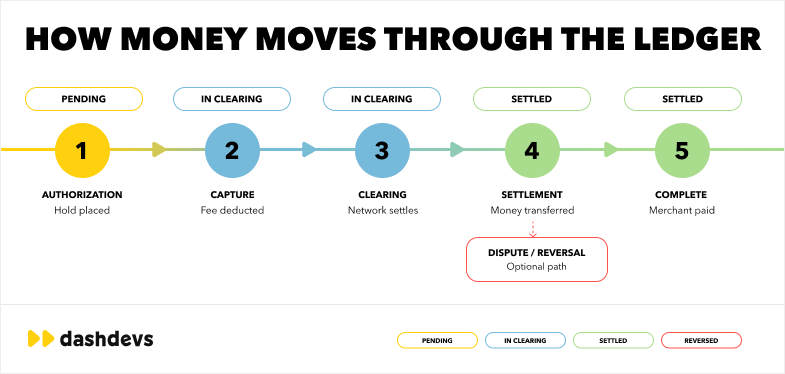
- Execute — user or system signs; status webhooks / events update your ledger.
- Fallback — if confirmation stalls past SLA, cancel or re-route per policy (never double-pay).
- Reconcile — on-chain truth matches internal balances and any fiat settlement.
Enterprise crypto payment gateway providers that only wrap a single bridge skip steps 3 and 5. That works in a sandbox. It fails under real corridor mix.
If you are still shaping the fiat–crypto balance model, pair this routing layer with a fiat-to-crypto payment platform design — one ledger story across both rails.
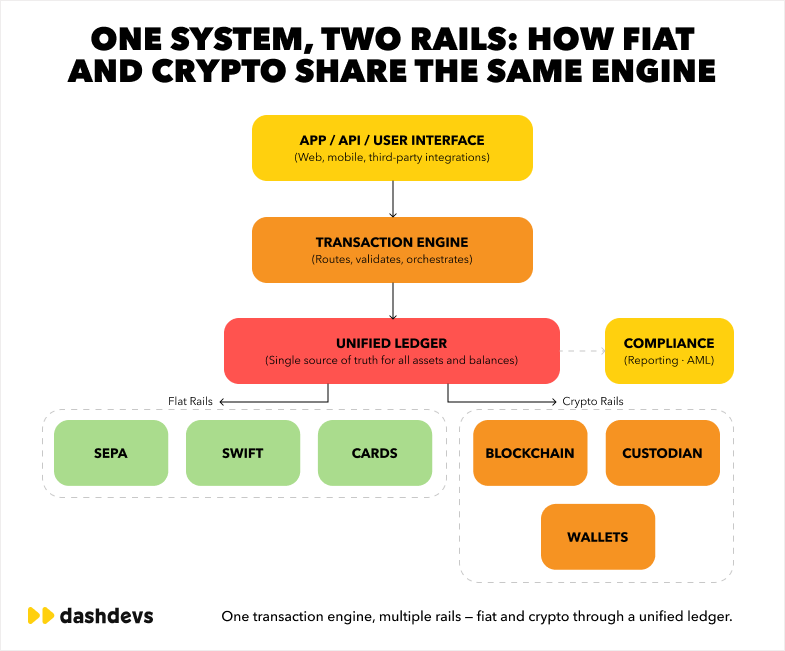
At-a-Glance: 7 Cross-Chain Fallback Solutions Compared
| Provider | Model | Best for | Watch-out |
|---|---|---|---|
| LI.FI | Bridge + DEX aggregator API/SDK | Broadest integrator coverage | Larger surface; configure route risk carefully |
| Across | Relayer / intent-style ETH–L2 bridge | Fast, fee-predictable L2 corridors | Narrower outside Ethereum L2 set |
| deBridge | Validator / DLN intent transfers | EVM–Solana and low-latency cross-ecosystem | Focused corridors vs ultra-broad aggregators |
| Stargate | LayerZero liquidity / stable corridors | Unified liquidity stablecoin moves | Tied to LayerZero ecosystem dynamics |
| Socket | App-embedded routing (Bungee heritage) | Product UX with custom route logic | Needs active monitoring of liquidity |
| Squid | Axelar GMP cross-chain swaps | Token-agnostic swaps + messaging | Coverage follows Axelar connectivity |
| Circle CCTP | Native USDC burn/mint | Enterprise USDC settlement | USDC-centric; not a general bridge aggregator |
1. LI.FI — Best Overall Crypto Bridge Aggregator for Developers
LI.FI is the default pick when product teams want one integration that can quote across dozens of chains and many underlying crypto bridges. It combines bridge aggregation with DEX hops so a cross-chain swap can execute as a constructed multi-step route rather than a manual handoff.
For cross-chain payment providers building wallets, treasuries, or payout products, the API and SDK matter as much as the routes: you can enforce integrator fees, filter bridges, and embed routing inside your own UX instead of sending users to a generic swap screen. Jumper is the consumer UI on the same engine — useful for demos, not a substitute for policy-aware production routing.
| Strength | Breadth — often 30–60+ chains depending on route set; strong developer tooling |
| Fallback role | Primary aggregator that can pivot when one bridge is congested or expensive |
| Fit | Teams that need a crypto bridge aggregator as the default routing brain |
Limitation: breadth increases smart-contract and dependency surface. Large tickets need explicit route allowlists, slippage caps, and monitoring — the same discipline you would apply to multi-acquirer payment gateway integration.
2. Across Protocol — Best for Fast ETH–L2 Stablecoin Corridors
Across specializes in fast, capital-efficient transfers of USDC, USDT, and ETH between Ethereum and major L2s. Relayers front liquidity so recipients get funds quickly, then settle through verification — typically under two minutes on core corridors, versus slow canonical exits.
For cross-chain stablecoin payments inside the Ethereum L2 universe, Across is often the speed and fee-predictability leader. Use it as a preferred route in your orchestrator when the destination is Arbitrum, Base, Optimism, or similar — and keep an aggregator fallback for everything outside that corridor.
| Strength | Speed + capital efficiency on ETH–L2 |
| Fallback role | Preferred primary for L2 payouts; LI.FI/deBridge as escape hatches |
| Fit | Consumer apps and treasuries living mostly in the Ethereum L2 set |
3. deBridge — Best Cross-Chain Bridge Path for EVM–Solana
deBridge focuses on low-latency transfers across EVM ecosystems and Solana using a validator / intent design rather than shallow wrapped-token pools. That matters for payment-sized tickets: pool-based bridges can slip hard when destination liquidity is thin.
If your product’s cross-chain payment gateway must support Solana wallets alongside EVM, deBridge belongs on the shortlist as a specialist primary with aggregator backup. Intent-style execution also maps cleanly to payment mental models — quote, fill, settle — when you define clear expiry and refund behavior.
| Strength | Cross-ecosystem speed without pool slippage traps |
| Fallback role | Primary for Solana-touching corridors |
| Fit | Multi-ecosystem wallets, exchanges, and B2B payouts |
4. Stargate — Best LayerZero Path for Unified Stablecoin Liquidity
Stargate, built on LayerZero messaging, is known for unified liquidity style transfers of native assets across connected chains. For teams standardizing on LayerZero-connected networks, it remains a core option for bridge stablecoin payments where deep, shared liquidity is the priority.
Treat Stargate as a strong corridor specialist inside a broader fallback graph — not as your only crypto payment provider. When LayerZero routes congest or your destination sits outside the mesh, your orchestrator should already know the next hop.
5. Socket — Best for Embedded Cross-Chain Payment Routing in Apps
Socket (with Bungee heritage) is built for developers who want flexible, app-embedded routing rather than a one-size consumer bridge UI. That makes it a natural fit for crypto payment orchestration inside vertical products — gaming wallets, neobank crypto modules, marketplace escrow — where UX ownership matters.
Socket shines when you invest in route monitoring and liquidity checks. Without that ops layer, “flexible routing” becomes opaque failures. Pair it with clear status contracts in your backend the same way you would for classic fintech integration services.
6. Squid (Axelar) — Best for Cross-Chain Swaps Plus Message Passing
Squid uses Axelar’s general message passing to power token-agnostic cross-chain swaps and actions across connected networks. When a payment is not only “send USDC” but “swap then deliver and trigger a contract action,” Squid’s model is more natural than a pure asset bridge.
Coverage follows Axelar connectivity and liquidity. Use Squid where GMP workflows are the product differentiator, and keep a simpler bridge or CCTP path for plain stablecoin settlement.
7. Circle CCTP — Best Enterprise Path for Native USDC Settlement
Circle’s Cross-Chain Transfer Protocol is not a classic aggregator, but it is one of the most important cross-chain fallback solutions for enterprise stablecoin payment rails. CCTP burns USDC on the source chain and mints on the destination — avoiding wrapped representations that complicate treasury accounting.
For businesses building enterprise stablecoin payment rails or evaluating stablecoins for cross-border payments, CCTP is often the preferred primary for USDC, with LI.FI or another aggregator as fallback when the destination or asset sits outside CCTP support. That pattern is the core of durable stablecoin payment infrastructure: native settlement first, aggregator redundancy second.
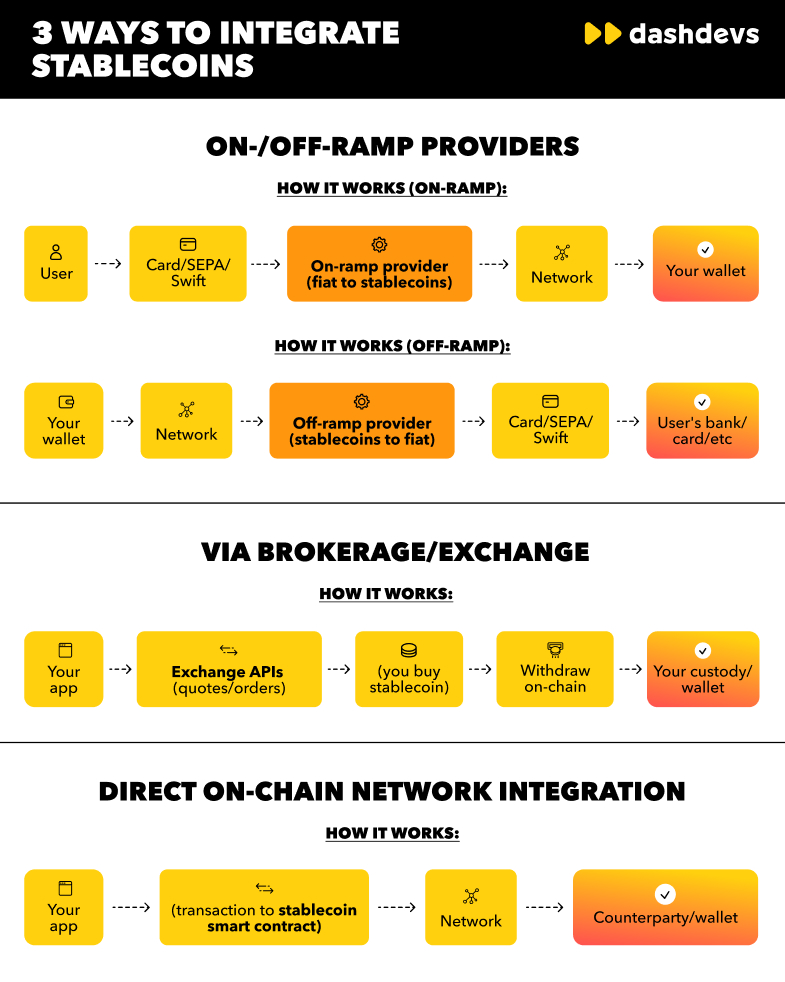
| Strength | Native USDC, cleaner treasury semantics |
| Fallback role | Preferred USDC path; aggregator for non-USDC or unsupported chains |
| Fit | B2B payouts, treasury, regulated products standardizing on USDC |
How to Choose Cross-Chain Payment Providers Without Getting Locked In
Selecting among the best crypto payment providers is less about logos and more about operating constraints. Use this checklist before you sign an integration plan.
| Criterion | What good looks like | Trap |
|---|---|---|
| Corridor map | Written list of chain pairs + assets for 18 months | Marketing “200 chains” with none of yours deep |
| Fallback policy | Second route defined per corridor with SLA timers | Manual ops chat when primary stalls |
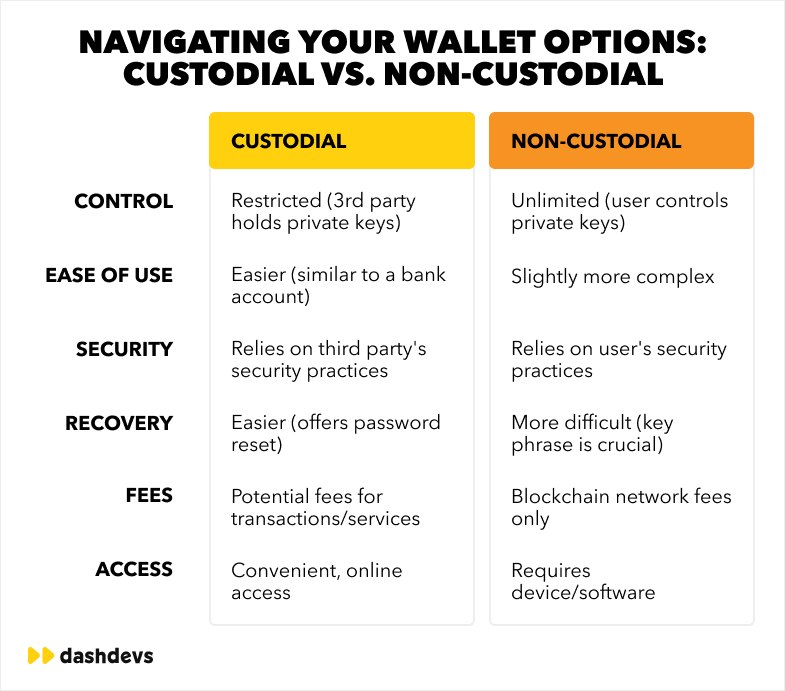
| Custody model | Matches product policy; prefer clear non-custodial flows when required | Silent custodial intermediate wallets |
| Fee transparency | All-in: protocol + gas + spread + integrator fee | Headline APY-style fee slides |
| Status model | Idempotent intents, clear failed/expired states | Double-spend risk on retries |
| Compliance hooks | Sanctions / Travel Rule partners you can plug | “Decentralized = no compliance” |
| Exit cost | Ability to add a second aggregator without rewrite | Hard-coded single SDK in every service |
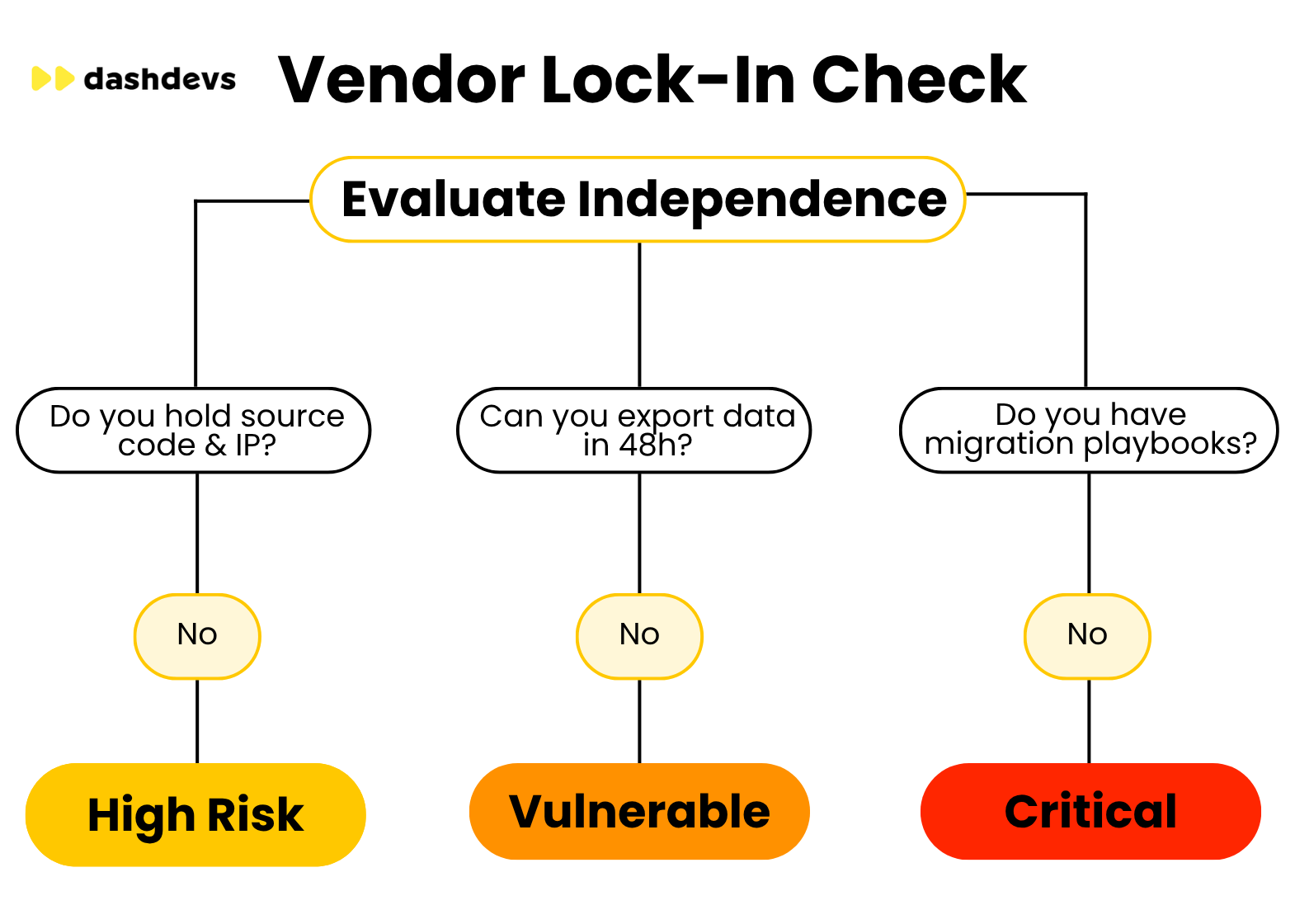
Teams that want non-custodial crypto payment providers — crypto payment providers that don’t hold customer funds — should validate the full path — including any temporary escrow or relayer wallets — and align it with non-custodial wallet providers and a KYC integration provider for the fiat edges.
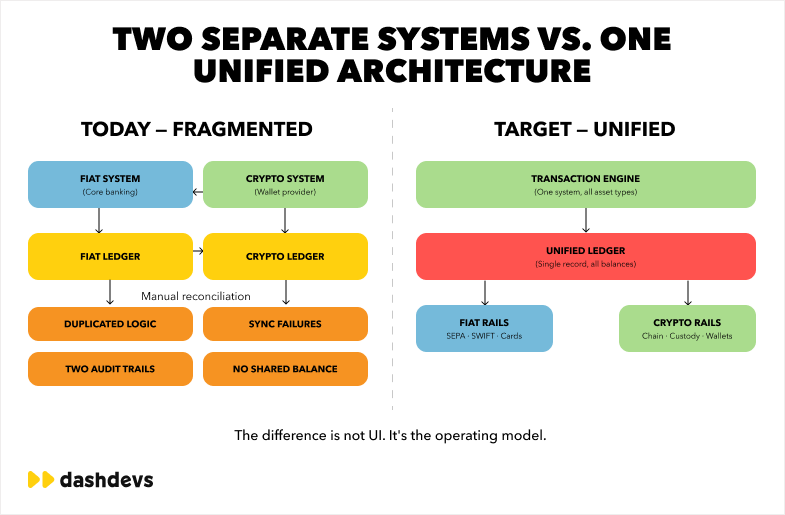
For brand-controlled checkout next to on-chain rails, compare white-label payment gateway providers and modular cores such as DashDevs’ white-label fintech platform. Cross-chain routing that never posts cleanly to your ledger is not a payment — it is a dispute queue.
Where Fallback Fits Next to Fiat, KYC, and Gateway Layers
Cross-chain payment processing does not replace the rest of the money stack:
- Fiat edges still need licensed on/off-ramps and banking partners — see also how cross-border payments providers structure multi-rail payouts.
- Auth and card performance lessons from network tokenization for payment performance still apply when your product mixes cards and crypto.
- Architecture choices for banks and neobanks — including best digital banking solutions — increasingly assume dual-rail (fiat + on-chain) rather than crypto-only islands.
- For protocol selection and build strategy, top blockchain consulting companies and primers on blockchain technology for finance help boards separate hype from operable rails.
Stablecoin payment providers and crypto payments service providers that win in 2026 are the ones that make failover boring: automatic, observable, and reconciled.
What We Have Seen in Production
DashDevs has shipped multi-asset and orchestration-heavy products where routing reliability mattered as much as UI polish — including our digital assets trading and liquidity platform case study, our work with Kleos on non-custodial crypto infrastructure, and our payment orchestration platform case study.
The common thread: treat cross-chain payment routing like acquirer routing. Score routes, set timeouts, never leave “pending” as an undefined state, and keep a human-readable audit trail for compliance and finance.
Practical Build Sequence for Reliable Cross-Chain Crypto Payments
- Freeze the corridor matrix — chains, assets, max ticket size, speed tiers.
- Pick a primary + fallback per corridor (for example CCTP primary for USDC, LI.FI fallback; Across primary for ETH–L2).
- Implement quote → policy → execute → observe with idempotent payment IDs.
- Add circuit breakers — disable a bridge after error budget burn without waiting for a war room.
- Wire compliance and fiat edges before marketing “global crypto payments.”
- Load-test failover — kill the primary route in staging and measure user-visible recovery.
- Reconcile daily against on-chain and partner statements; treat breaks like payment incidents.
Closing: Reliability Is a Routing Problem
The best crypto bridges still matter. The best cross-chain bridge for a given corridor can save basis points and minutes. But reliable crypto payments in 2026 are won by teams that assume every route will eventually fail — and ship cross-chain fallback providers that make that failure invisible to customers.
Choose crypto payment infrastructure the way you choose card acquiring: multi-rail, policy-driven, measurable. Then your product can expand chains without rewriting the money path each time a single protocol hiccups.
Last updated: September 2026
Share article
