


CBDC for Fintech Builders: Pros, Cons, and Real-World Examples

June 18, 2026
- A CBDC (central bank digital currency) is a digital form of sovereign money issued by a central bank.
- Unlike crypto, CBDCs are state-backed and designed to function as regulated digital cash or settlement infrastructure.
- CBDCs can be built for retail use by consumers and businesses, or for wholesale use by financial institutions.
- The main reasons central banks explore CBDCs include payment efficiency, financial inclusion, resilience, monetary sovereignty, and reduced dependence on private payment rails.
- CBDCs are not the same as stablecoins, bank deposits, e-money, or core banking systems — though they may connect to all of them.
- Key trade-offs include privacy, programmability, interoperability, operational complexity, and the impact on commercial banks.
- For fintech builders, CBDCs matter not as hype, but as a potential new layer in wallets, identity, payments, treasury, and digital financial infrastructure.
Most people already use money digitally. They tap cards, send bank transfers, pay through apps. But that does not mean they are using digital sovereign money. Every balance in a banking app is a liability of a commercial bank, not the central bank itself. A CBDC is different. It is a direct digital form of central bank-issued money — the digital equivalent of cash, but without the paper.
This distinction matters more than it might seem. 137 countries and currency unions representing 98% of global GDP are now actively exploring CBDCs — up from just 35 in May 2020. Understanding what central bank digital currency actually is, how it works, and what risks it carries has become essential for anyone building wallets, payment platforms, or regulated financial products.
This guide explains CBDC in plain terms: pros, cons, real-world examples, and what the technology means for fintech product teams. For a structured audio walkthrough of the same themes — including the five forms of money, wholesale versus retail sequencing, and what the digital euro means for card networks — listen to CBDC: What you need you know? | Fintech Garden Podcast 155.
What Is a CBDC?
A CBDC (central bank digital currency) is a digital form of a country’s official currency, issued directly by its central bank. Unlike bank deposits or e-money, it represents a direct claim on the central bank itself — not on a commercial intermediary.
When you hold money in a bank account today, you hold a claim on that commercial bank. If the bank fails, your funds are at risk up to deposit insurance limits. A CBDC changes this: the liability sits with the central bank, which cannot become insolvent in the same way. This is the foundational difference — and also why CBDC design involves genuinely difficult trade-offs.
Five Forms of Money (and Why CBDC Is the Fifth)
A useful way to understand CBDC is to see where it sits among the other forms money already takes. As discussed in Fintech Garden Episode 155, €100 in Europe can exist in five distinct ways today:
| Form | What it is | Who holds the liability |
|---|---|---|
| Cash | Physical notes and coins | Central bank (via bearer instrument) |
| Retail bank balance | Money in a current or savings account | Commercial bank |
| E-money balance | Regulated digital money from a payment institution | Licensed EMI (1:1 backed) |
| Stablecoin | Token on a blockchain, pegged to fiat | Private issuer |
| CBDC | Digital sovereign money in a wallet | Central bank |
Each form operates under different custody, regulation, and risk models. CBDC is not a government stablecoin. Rails are centralised — controlled by the central bank — but users can hold funds in personal wallets, transact offline in some designs, and settle without a commercial bank intermediary for every payment. That combination has no clean historical precedent.

Why Central Banks Are Exploring CBDCs
The drivers behind CBDC exploration vary significantly by country, but several themes recur across jurisdictions:
- Declining cash use — in France, cash was used in just 42% of in-store transactions in 2024, down from 68% in 2016, according to the Banque de France. As physical cash fades, central banks risk losing direct access to sovereign money citizens can use without private intermediaries.
- Payment modernisation — domestic and cross-border infrastructure is aging. Settlement delays, fragmentation, and cost inefficiencies are well-documented, especially in cross-border corridors where correspondent banking adds friction.
- Competition from private digital money — the rise of stablecoins, especially US dollar-backed stablecoins, has alarmed central banks in multiple jurisdictions. The ECB has framed the digital euro as a strategic response to dependence on non-European payment rails — a concern that intensified after Donald Trump promoted USD-pegged stablecoins via executive order in January 2025.
- Financial inclusion — roughly 1.4 billion adults globally remain unbanked. Retail CBDCs, particularly with offline capability, could provide access to sovereign digital money without a traditional bank account.
- Monetary sovereignty — where card networks, mobile wallets, and stablecoin issuers are headquartered outside a country’s jurisdiction, central banks lose visibility into domestic payment flows. CBDCs represent an attempt to preserve that sovereignty.
How Does a Central Bank Digital Currency Work?
At its core, a CBDC works like digital cash issued directly by the central bank. Instead of holding notes and coins, you hold a balance in a digital wallet or mobile app that represents money guaranteed by the state.
When you pay with CBDC in a direct-settlement design:
- The money moves between wallets with settlement on the central bank’s digital ledger
- Transactions can settle instantly, without the multi-day clearing cycles common in card payments
- Fewer intermediaries — commercial banks and card networks — are required to process the payment
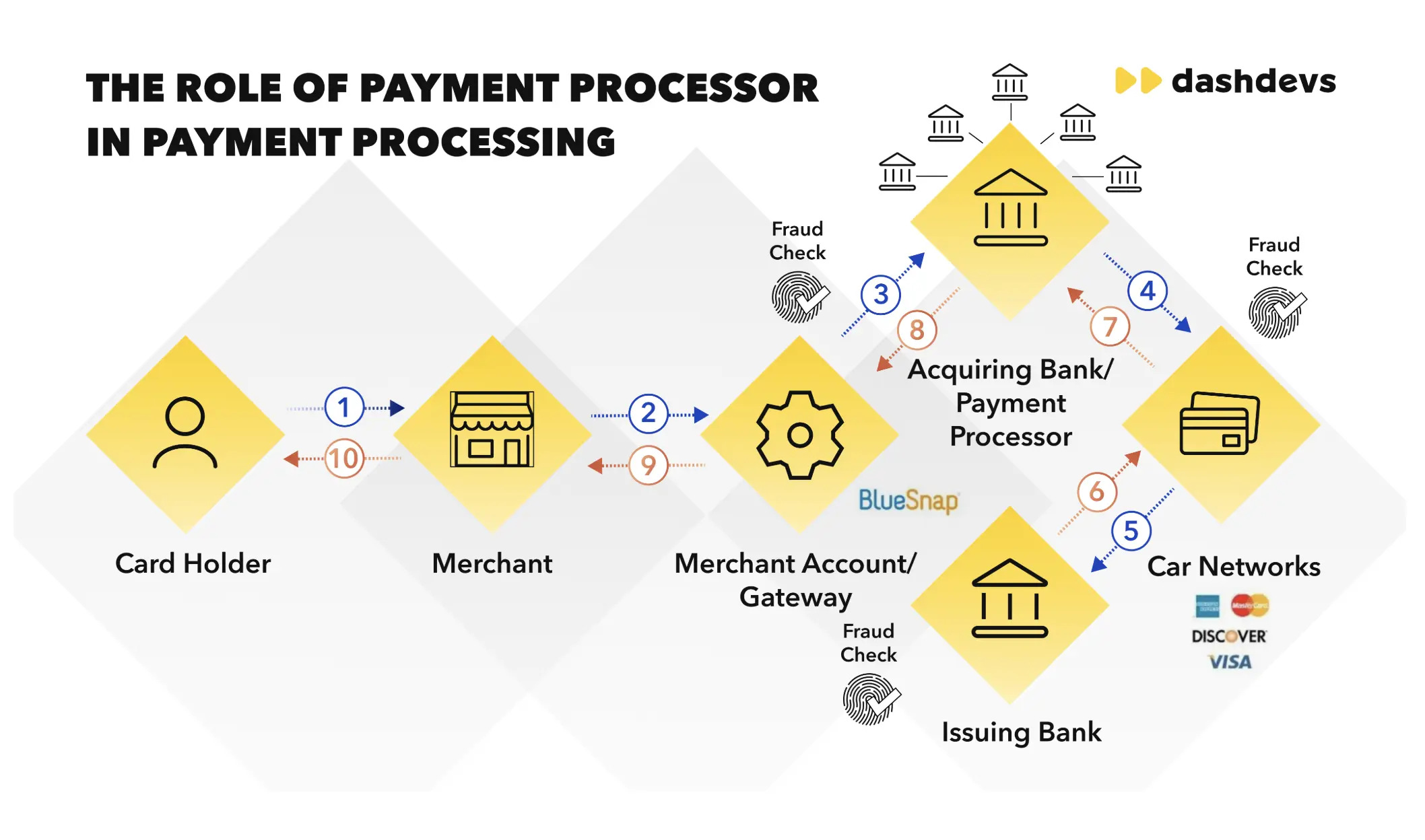
This is different from today’s card payments. A debit card purchase at a shop typically routes through the merchant’s acquirer, a card network (Visa or Mastercard), and the customer’s bank before settlement completes — sometimes a day or more behind the scenes. CBDC simplifies the chain by letting the central bank provide the settlement layer directly.
Commercial banks and payment companies may still play important roles: user-friendly apps, wallets, KYC/AML compliance, and value-added services built on top of the central bank’s digital currency.

The Basic CBDC Operating Model
A CBDC system involves several layers:
- Issuance — the central bank creates digital currency units and sets the rules
- Distribution — delivered either directly to end users or via intermediaries (banks, payment service providers)
- Storage — held in wallets (hardware, software, or account-based)
- Transfer — peer-to-peer or point-of-sale payments, with settlement logic defined by the CBDC design
- Redemption — conversion back into cash or bank deposits at defined rates
In most current designs, intermediaries play a critical role. Rather than the central bank managing retail wallets for every citizen, banks and PSPs distribute the CBDC, handle KYC/AML compliance, and provide the consumer-facing interface. The central bank retains the underlying ledger and rulebook.
Account-Based vs Token-Based CBDC
In an account-based CBDC, transactions are tied to verified identities. The system checks who you are before authorising a payment — similar to how bank accounts work today. This model simplifies compliance and regulatory oversight but raises significant privacy concerns.
In a token-based CBDC, ownership is determined by possession of a cryptographic token. Verification focuses on whether the token is valid, not on who holds it. This model can better support privacy-preserving and offline payments — closer in feel to physical cash — but requires more sophisticated fraud-prevention architecture.
Most real-world CBDC designs blend elements of both, with tiered access: anonymous small-value payments and identity-verified larger transactions.
Retail CBDC vs Wholesale CBDC
A retail CBDC is designed for use by consumers, merchants, and businesses — everyday payments, P2P transfers, and potentially offline transactions. The Sand Dollar (Bahamas), eNaira (Nigeria), and India’s digital rupee are all retail-focused.
A wholesale CBDC is designed for financial institutions — interbank settlement, securities clearing, cross-border payment corridors, and liquidity management. It operates in a closed ecosystem among regulated participants and is not accessible by the general public.
Wholesale CBDC typically arrives before retail. Public discussion focuses on consumer wallets, but the wholesale layer is where deployment often starts: settlement between commercial banks and the central bank, without consumer-scale KYC infrastructure or political complexity. Switzerland’s Project Helvetia has already demonstrated instant interbank settlement. Retail CBDC follows once that foundation exists — a sequencing pattern that matters for product teams building in payments, treasury, or settlement.
Does a CBDC Need Blockchain?
No. This is a common point of confusion.
A CBDC can run on a conventional centralised database, a distributed ledger, a permissioned blockchain, or hybrid infrastructure. The technology choice depends on the design goals: a central bank prioritising control and throughput may choose a centralised ledger; one prioritising resilience and interoperability may opt for distributed infrastructure.
China’s e-CNY uses a hybrid architecture under strict government control, not a public blockchain. The ECB’s digital euro infrastructure has been built using provider-selected components with a synchronous REST interface — again, not a public chain. The CBDC-blockchain association comes partly from early academic literature and partly from the fact that many pilot projects used distributed ledger technology as a testing ground. But the core innovation in a CBDC is regulatory and monetary, not technological.
Example: How a Business Could Save on Payment Fees with CBDC
Consider a medium-sized online electronics store with monthly turnover of about $500,000. Today it might pay roughly 2% in card and processing fees — around $10,000 per month, or $120,000 per year. Those costs cover intermediary services, not the product itself.
If CBDC payments moved directly from customer wallet to merchant wallet at a hypothetical technical fee of 0.1%, monthly cost would fall to about $500 ($6,000 per year). That is illustrative — actual CBDC fee structures will vary by jurisdiction — but it shows why merchants and fintech teams track CBDC rollout closely.
| Metric | Current system (cards, ~2% fee) | After CBDC (0.1% fee assumed) | Savings |
|---|---|---|---|
| Monthly turnover | $500,000 | $500,000 | — |
| Monthly transaction cost | $10,000 | $500 | $9,500 |
| Yearly transaction cost | $120,000 | $6,000 | $114,000 |
For a medium-sized business, that level of savings could fund growth, lower prices, or improve margins — but only if customers actually pay with CBDC and merchants invest in acceptance infrastructure.
CBDC vs Crypto vs Stablecoins vs Bank Deposits
This is where most mainstream explainers fall short. The differences between these instruments are not cosmetic — they determine regulatory treatment, risk exposure, and infrastructure implications.
CBDC vs Cryptocurrency
| Dimension | CBDC | Cryptocurrency |
|---|---|---|
| Issuer | Central bank | Decentralised protocol or private team |
| Legal status | Legal tender / sovereign money | Varies; typically not legal tender |
| Volatility | None (pegged 1:1 to fiat) | High |
| Governance | State-controlled | Algorithmic or community governance |
| Compliance | Full AML/KYC mandatory | Varies; often pseudonymous |
| Use case | Payments, settlement, monetary policy | Speculation, DeFi, value transfer |
Who is in charge, value stability, and purpose are the three clearest divides. CBDCs are run by central banks and designed as everyday money. Cryptocurrencies are usually decentralised, price-volatile, and often used as investment assets.
CBDC vs Stablecoin
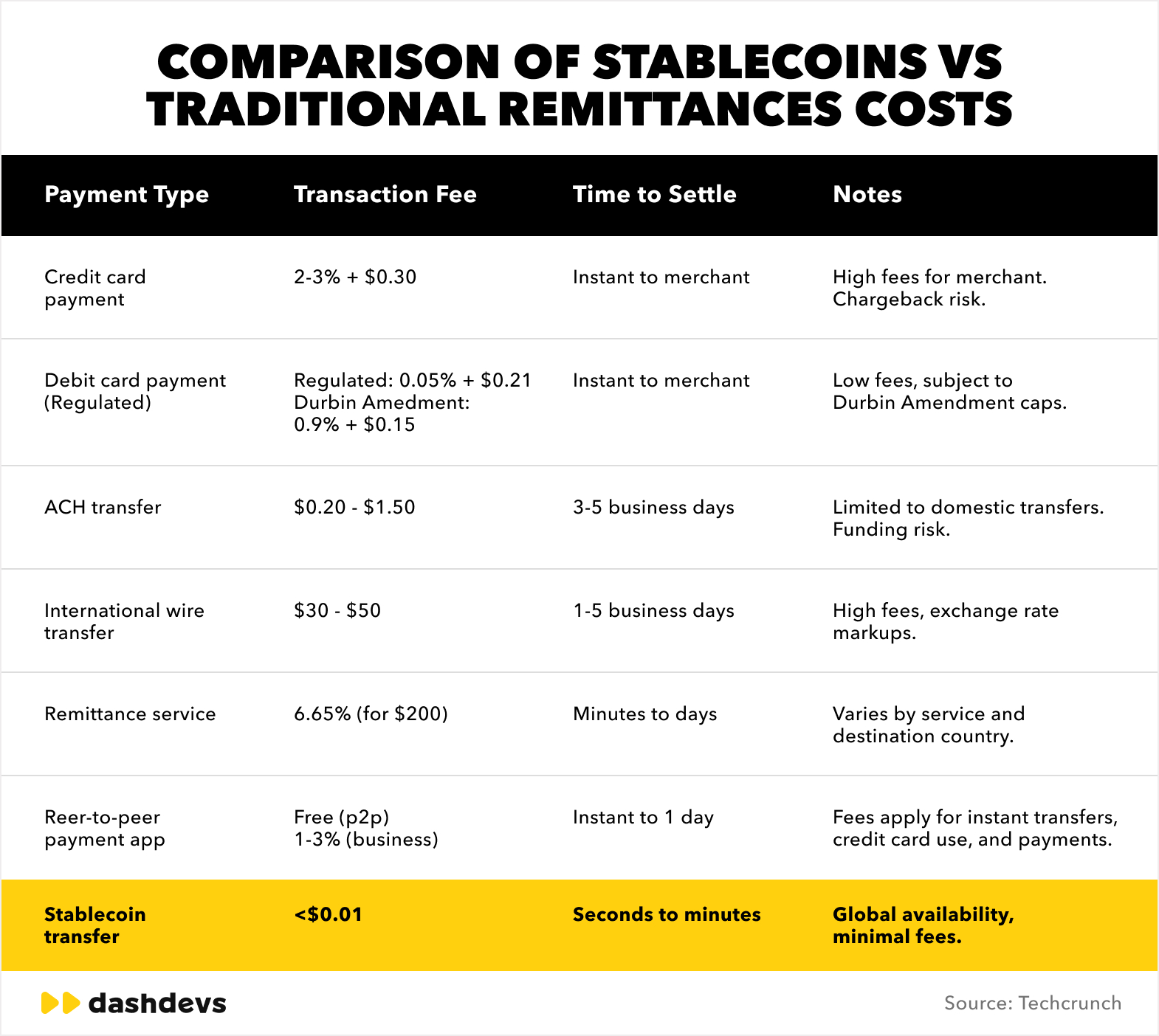
A stablecoin is a privately issued digital token pegged to a fiat currency or a basket of assets. The difference with a CBDC is in the liability structure.
When you hold a CBDC, your claim is on the central bank. When you hold a stablecoin, your claim is on a private company — and its quality depends entirely on the issuer’s solvency and reserve composition. Stablecoins can be highly programmable and efficient for payments, which is why they’ve grown rapidly. For fintech teams building on stablecoin payment rails, understanding where a CBDC sits relative to that infrastructure is increasingly important.
CBDC vs Commercial Bank Money
Commercial bank money — the balance in your current account — is a liability of the bank, not the central bank. During normal conditions, this distinction is largely invisible. During a financial crisis, it matters enormously.
If commercial banks face a stress event, depositors may rush to convert bank money into central bank money (cash or, in a CBDC world, digital sovereign currency). This “flight to safety” dynamic is one of the central concerns in CBDC design — if a retail CBDC is too attractive, it could trigger bank runs during periods of market stress.
CBDC vs E-Money
E-money is private, regulated digital money issued by licensed payment institutions. Balances on PayPal, Revolut, or a mobile money wallet are typically backed by e-money licences. CBDCs and e-money could coexist and even interconnect — a wallet app might hold both e-money and CBDC, with conversion between them handled in the background. But their regulatory status, backing, and risk profile are distinct.
| Instrument | Issuer | Backing | Legal tender | Volatility | Typical users |
|---|---|---|---|---|---|
| CBDC | Central bank | Sovereign | Yes | None | Consumers, institutions |
| Cryptocurrency | Decentralised | None / algorithmic | Rarely | High | Investors, DeFi users |
| Stablecoin | Private company | Fiat reserves | No | Minimal | Payments, DeFi |
| Bank deposit | Commercial bank | Bank assets | No | None | Consumers, businesses |
| E-money | Licensed EMI | Client funds | No | None | Payments, wallets |
CBDC and Cash: Friends or Rivals?
CBDC is not meant to immediately replace cash. Most central banks plan for digital money and physical cash to coexist. Cash offers privacy, universal acceptance without a device, and resilience when networks fail. CBDC can bring convenience, instant settlement, and programmable features.
The design challenge is preserving cash-like properties — especially offline payment and small-value anonymity — inside a digital system governed by a central authority. Engineering offline CBDC is harder than it sounds: devices must validate transactions without live network access, prevent double-spending, and sync state when connectivity returns. That is one reason retail rollout lags wholesale infrastructure.
Types of CBDCs
Retail CBDC
Retail CBDCs are designed for everyday use by consumers, businesses, and merchants. Key features often include peer-to-peer payments without bank intermediation, merchant acceptance for point-of-sale transactions, potential offline functionality (for inclusion and resilience), programmable features such as conditional payments or expiry dates, and tiered access to balance privacy depending on transaction size.
Wholesale CBDC
Wholesale CBDCs are restricted to financial institutions. Use cases include real-time gross settlement between banks, securities settlement (delivery versus payment), cross-border payment corridors between central banks, and intraday liquidity optimisation.
Hybrid, Direct, and Intermediary Models
- Direct model — the central bank manages accounts and payments directly with end users. Maximum control, enormous operational demands.
- Two-tier (intermediary) model — the central bank issues and manages the ledger; commercial banks and PSPs distribute wallets, handle compliance, and provide the customer interface. The most common model.
- Platform model — the central bank provides a programmable infrastructure layer, and private-sector firms innovate on top of it.
Pros of CBDC
These are potential benefits — their realisation depends heavily on design choices, adoption rates, and the specific context of each jurisdiction.
- Instant transfers without bank processing delays, including outside banking hours; offline-capable wallets could extend access where connectivity is unreliable
- Lower transaction fees and smoother settlement for businesses; cross-border payments could become faster and cheaper through wholesale CBDC corridors like mBridge
- Better visibility into financial flows, stronger monetary sovereignty, and tools for targeted disbursements or programmable tax collection for governments
- Settlement finality at central bank money level, without correspondent banking delays
- Reduced payment costs — especially relevant for remittances, where fees remain persistently high
- Payment resilience when private rails fail, if the CBDC system is designed with redundancy
- Financial inclusion through low-barrier wallet access and offline capability for unbanked populations
- More efficient cross-border settlement via wholesale platforms such as mBridge, without relying on US dollar correspondent banking
- Programmable payment logic — automated tax collection, conditional disbursements, time-limited stimulus vouchers
Cons and Risks of CBDC
The main CBDC risks include privacy concerns, pressure on commercial bank deposits, operational complexity, cybersecurity exposure, and the difficulty of designing a system that is both efficient and widely trusted.
Privacy Concerns
A retail CBDC linked to verified identities creates a complete, central record of every transaction made by every user. Different architectures attempt to address this — the ECB’s digital euro design prevents the Eurosystem from directly tracking user balances or payment patterns, with pseudonymisation and encryption for online payments. In the EU, that architecture must also satisfy GDPR: data minimisation, purpose limitation, and clear rules on who can access transaction metadata and under what legal basis. Technical privacy protections are only as robust as the governance frameworks that enforce them.
Pressure on Commercial Bank Deposits
If a retail CBDC is too attractive, consumers may shift deposits out of commercial banks and into CBDC wallets. This reduces the funding base for bank lending and, in an extreme scenario, could accelerate bank runs during periods of stress. Most CBDC designs mitigate this through holding limits and a non-interest-bearing design.
Cybersecurity and Infrastructure Risk
A national CBDC is critical national infrastructure. A successful cyberattack on the core ledger, wallet systems, or intermediary connections could disrupt the entire payment system. The centralised nature of most CBDC designs creates a larger attack surface than distributed alternatives.
Policy and Governance Complexity
Who sets the rules for a CBDC? Who decides which conditions can be embedded in programmable payments? Who has access to transaction data, and under what circumstances? These involve central bank independence, democratic oversight, and the boundary between monetary and fiscal policy.
Adoption Challenges
The most sophisticated CBDC architecture fails if nobody uses it. In China, the e-CNY processed 3.48 billion transactions worth 16.7 trillion yuan by late 2025 — impressive in absolute terms, but still representing only around 0.2% of total payment volume in the same year, according to the Peterson Institute for International Economics.
System Outages and Technical Barriers
If the digital CBDC system fails, users could lose access to funds until service restores. Rural populations and older users without smartphones or reliable internet may be excluded unless offline and assisted-access models are built in from the start.
Is CBDC Good or Bad?
Like many large infrastructure shifts, the answer depends on design and context. CBDCs could make money more inclusive and payments more efficient. They could also introduce surveillance risk, stress commercial banking models, and concentrate operational risk in a single national ledger.
Whether a CBDC turns out positive or negative depends on holding limits, privacy architecture, intermediary roles, fee policy, and whether people trust the system enough to use it. For fintech builders, the practical question is not ideological — it is architectural: how will your product support multiple money types when CBDC rails go live in your target market?
Real-World CBDC Examples
Several jurisdictions now run live or large-scale retail CBDC programs at different maturity levels, according to the Atlantic Council CBDC Tracker. Dozens more are in research or pilot phases.
China’s e-CNY
China’s digital yuan is the world’s largest live CBDC experiment. By November 2025, it had processed 3.48 billion cumulative transactions worth 16.7 trillion yuan — approximately $2.4 trillion, according to Atlantic Council research. There are 261 million registered users across 29 cities. From January 2026, China is transitioning the e-CNY to interest-bearing digital deposit money.
At the wholesale level, China leads Project mBridge, a cross-border settlement platform connecting five central banks that has processed $54.21 billion in cross-border payments, with the e-CNY accounting for over 95% of settlement volume. Integration with WeChat Pay and Alipay has been central to distribution.
Key lesson: Scale and government integration can drive adoption, but competing against deeply embedded private payment platforms remains the central challenge.
The Digital Euro
The ECB moved to the next phase in October 2025 after completing its two-year preparation phase. If EU legislation is adopted in 2026, pilots could begin in mid-2027, with potential issuance readiness by 2029. The digital euro uses a two-tier model and includes privacy-preserving architecture, offline payment capability, and holding limits. Around 70 fintech companies, banks, merchants, and start-ups have participated in innovation platform testing.
Key lesson: The political and legislative process is as complex as the technical one.
The Bahamas’ Sand Dollar
Launched in October 2020, the Sand Dollar was among the first retail CBDCs to go live. Designed for a small island economy where payment infrastructure is fragmented across 700+ islands, it provides an important proof of concept for geographic payment fragmentation. Over 100,000 wallets have been registered, with merchant acceptance growing but still representing a small share of total currency in circulation.
Key lesson: Inclusion-driven design is sound, but building the merchant acceptance network needed for organic adoption remains the hard part.
Nigeria’s eNaira
Nigeria launched the eNaira in October 2021 with significant ambitions for financial inclusion. The Atlantic Council tracker notes that uptake has been slow relative to the scale of the pilot. Consumer incentives, merchant acceptance, and user experience gaps have all contributed.
Key lesson: Ecosystem readiness cannot be assumed.
Jamaica’s JAM-DEX
JAM-DEX became legal tender in Jamaica — one of the first CBDCs in the Caribbean with the same status as cash. Distribution runs through commercial banks and authorised payment service providers. Early adoption was encouraged with government incentives, but overall uptake remains modest, reflecting trust and awareness challenges common to new payment rails.
Key lesson: Legal tender status alone does not guarantee daily use.
India’s Digital Rupee
India launched retail and wholesale digital rupee pilots in late 2022. By March 2025, digital rupee in circulation had risen to ₹10.16 billion — up 334% from 2024, making it the second-largest CBDC pilot globally.
Key lesson: Phased, bank-intermediated rollout with genuine use-case experimentation is producing the most sustainable growth trajectory.
Kazakhstan, UAE, and Saudi Arabia
Outside the largest pilots, several markets are advancing CBDC work on different axes. Kazakhstan’s digital tenge pilot tests retail payments, government services, and cross-border use cases. The UAE leads international cooperation through Project mBridge alongside China, Hong Kong, and Thailand under BIS coordination. Saudi Arabia partnered with the UAE on Project Aber, an early regional wholesale pilot for interbank payments. Together these projects show CBDC development is not only domestic retail — it is also regional settlement and geopolitical infrastructure.
Project mBridge and Cross-Border Experiments
Project mBridge enables direct central-to-central bank settlement in local currencies, bypassing correspondent banking and SWIFT. By late 2025, it had processed $54.21 billion in cross-border transactions. Separately, the US and six other major central banks are collaborating on Project Agorá, which focuses on integrating tokenised commercial bank deposits with wholesale central bank money.
CBDC Project Summary
| Project | Type | Primary goal | Current stage | Key lesson |
|---|---|---|---|---|
| e-CNY (China) | Retail + Wholesale | Domestic adoption | Live, 3.48B transactions | Adoption competes with private platforms |
| Digital Euro (ECB) | Retail | Sovereignty | Next phase; pilot 2027 | Legislative alignment as hard as technical |
| Sand Dollar (Bahamas) | Retail | Inclusion, resilience | Live; limited adoption | Merchant network is the bottleneck |
| eNaira (Nigeria) | Retail | Financial inclusion | Live; low adoption | Ecosystem readiness cannot be assumed |
| JAM-DEX (Jamaica) | Retail | Inclusion | Live; modest uptake | Legal tender ≠ daily habit |
| Digital Rupee (India) | Retail + Wholesale | Inclusion, modernisation | Pilot; fastest-growing | Phased, bank-led rollout is working |
| mBridge | Wholesale | Cross-border settlement | Active; $54B+ processed | Geopolitical as much as technical |
Why CBDCs Matter to the Payments Market
CBDCs could directly change how payments work:
- Instant transfers — money could move in seconds without bank processing delays
- Lower costs — fewer intermediaries could reduce transaction fees, though PSPs may shift revenue toward value-added services, subscriptions, or data products
- Easier cross-border payments — wholesale CBDC corridors could make international settlement faster and cheaper than correspondent banking
- A state-backed safety net — if private payment systems fail, CBDC could provide a reliable public alternative
- Pressure on card networks — if retail CBDC achieves merchant acceptance at scale, card networks and acquirers face a structural challenge because their fee model depends on intermediation CBDC can bypass
- Pressure to innovate — banks and fintechs will need better UX, faster settlement, and clearer multi-money wallet experiences to compete with sovereign digital cash
What CBDCs Could Mean for Banks, Fintechs, and Payment Providers
CBDCs are not just a central bank story. They are an infrastructure design question — and the answers will reshape how digital banks, PSPs, wallets, and payment platforms operate.
For Digital Banks
A retail CBDC introduces a new form of sovereign money that sits alongside, not inside, the traditional banking system. Digital banking platforms will need to consider how CBDC wallets integrate with existing account structures, how treasury flows are affected, and how the payment UX adapts to support multiple money types.
For PSPs and Wallet Providers
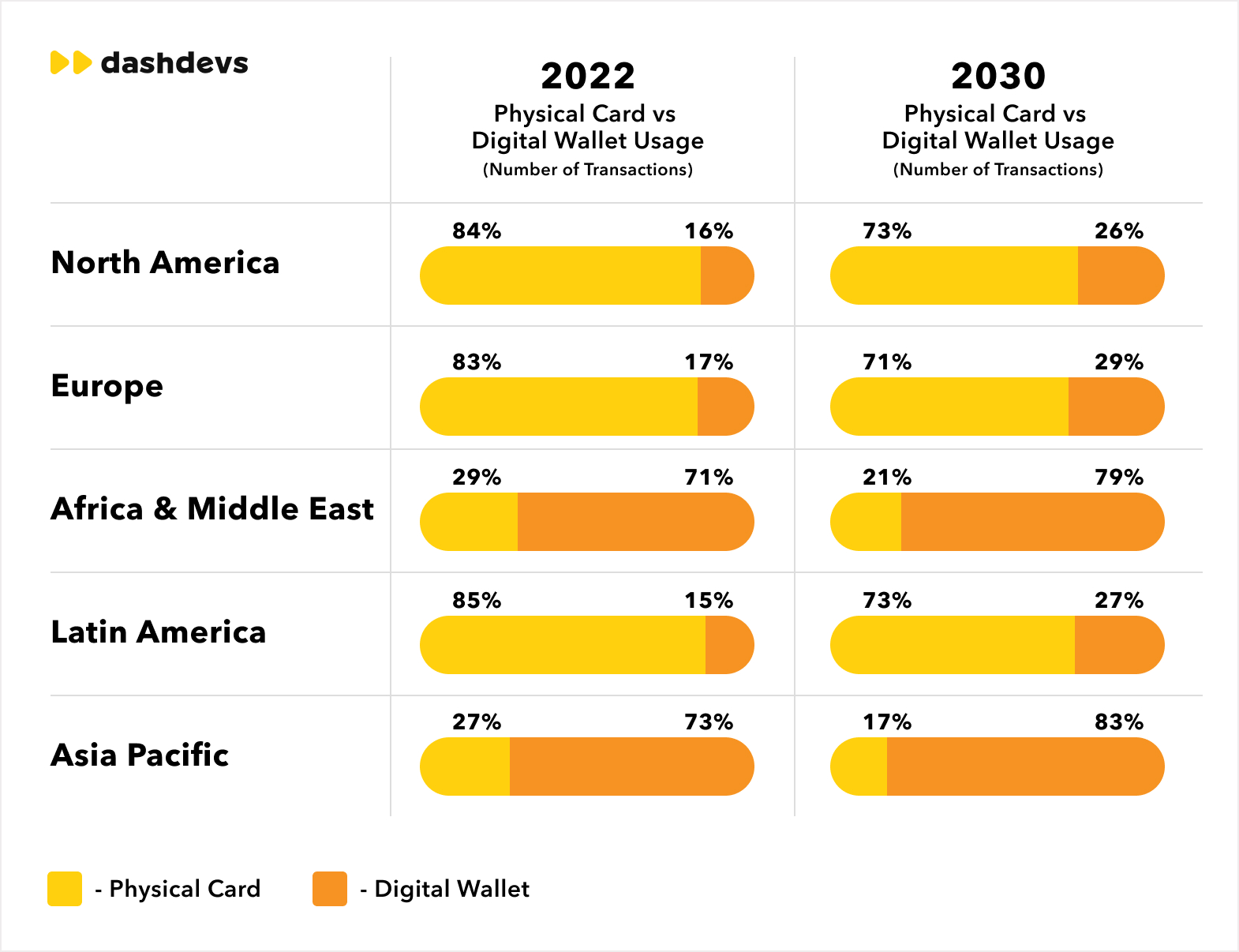
Serving as CBDC intermediaries is a new regulated role with specific certification requirements. For teams building digital wallets, CBDC integration raises questions about multi-currency support, settlement reconciliation, and offline payment handling. The latest innovations in digital wallet architecture — including tokenisation and interoperability — are directly relevant.
For Fintech Infrastructure Teams
At the infrastructure layer, CBDC introduces challenges around identity and access management, ledger design, offline capability, interoperability with existing rails, and cross-border payment infrastructure. DashDevs helps fintech companies design and integrate payment, wallet, and compliance architecture as an engineering partner — connecting your product to evolving money rails through custom builds and fintech integrations.
For Compliance and Product Teams
CBDC programmability introduces complexity: who defines the conditions, who enforces them, and how does the product surface these constraints to users? For teams navigating this, understanding fintech regulation across relevant jurisdictions — US, EU, UK, and MENA — is foundational.
How CBDCs Fit Into the Broader Future of Digital Money
Why the Future May Be Multi-Rail, Not Winner-Takes-All
The most likely near-term future involves multiple coexisting forms of digital money: physical cash, commercial bank deposits, card networks, real-time payment systems, stablecoins, and CBDCs providing the sovereign foundation and interoperability layer.
No single instrument will dominate. Embedding this multi-rail thinking into embedded finance design — whether for banking, payments, lending, or treasury — is becoming a core infrastructure competency.
The US Exception
In January 2025, President Trump signed an executive order halting all US retail CBDC work. The US is the only major economy to formally ban its own CBDC development. However, the US continues to participate in wholesale cross-border research through Project Agorá. The GENIUS Act, enacted in July 2025, provides a regulatory framework for privately issued stablecoins — pointing toward a US strategy that favours private digital dollar instruments over a state-issued CBDC.
Are CBDCs Inevitable?
Of the 137 countries exploring CBDCs, only three have fully launched — the Bahamas, Jamaica, and Nigeria. Despite a decade of research, 49 pilots, and intense policy debate, live retail CBDCs remain rare.
A research paper is not a pilot. A pilot is not a launch. And a launch with mandated government adoption is not the same as organic consumer adoption.
What to Watch Next
- Interoperability standards — whether mBridge and Agorá converge or fragment into geopolitically aligned silos
- Privacy regulation — the digital euro’s privacy design will set a benchmark for GDPR-aligned CBDC architecture
- Merchant acceptance — the practical bottleneck for every retail CBDC
- US stablecoin legislation — the GENIUS Act framework as a de facto CBDC alternative
- Central bank / private sector collaboration — whether the platform model proves more adoptable
- Offline payment engineering — whether CBDC can truly replicate cash-like resilience
Conclusion: Building for the Future of Digital Money
CBDCs matter not because every country will launch one tomorrow, but because they reveal where money infrastructure is heading: more digital, more programmable, more interoperable, and more contested between public and private actors.
The most important shift is not the CBDC itself but the infrastructure design questions it forces. What does it mean to hold sovereign money in digital form? How do wallets support multiple money types? How does settlement finality change reconciliation logic? How does programmability interact with compliance?
These are questions that fintech product teams, digital bank architects, and payment infrastructure builders need to think through now — not because every jurisdiction will launch a CBDC in the next two years, but because the rails are being designed and the rulebooks are being written. For a deeper dive into wholesale sequencing, privacy design, and card-network disruption, revisit Fintech Garden Episode 155 linked at the top of this guide.
DashDevs builds financial infrastructure for digital banks, payment platforms, and fintech companies. If you are designing products that need to navigate evolving digital money rails — including CBDC readiness — talk to our team.
Share article
