


Fintech API Integration: Building the Right Fintech Stack

June 10, 2026
- what fintech APIs are and how financial api integration works in production products
- API categories — identity, banking, payments, open banking, lending — and when each matters
- how to choose fintech api providers and integration approaches for neobanks, wallets, and embedded finance
- implementation, security, scalability, and operational considerations for fintech api integration
- real fintech api examples from DashDevs delivery across payments, compliance, and open banking
Fintech founders, CTOs, and product leads at neobanks, wallets, lending platforms, and embedded finance products face the same decision: which APIs to integrate, in what order, and how much infrastructure to own. The wrong stack creates reconciliation debt, compliance gaps, and provider lock-in before the product reaches scale.
Fintech APIs are the connective layer of modern financial products. Fintech api integration is not a connector project — it is architecture work that defines how money moves, how identity is verified, how data is shared, and how regulators receive evidence.
This guide explains what fintech APIs are, how financial api integration works in real products, how API categories differ, how to select providers, and what implementation teams must plan for before launch.
What Are Fintech APIs?
A fintech API is an interface that lets your application use external financial capabilities — payments, accounts, identity checks, credit decisioning, market data — through documented contracts instead of proprietary bank or processor integrations alone.

Financial apis power neobanks, digital wallets, BNPL products, wealth apps, and embedded finance flows inside non-financial software. Application programming interfaces in this context are not optional utilities; they are how fintech companies access regulated infrastructure at speed.
Short version: fintech apis translate product intent into provider actions — authorize a payment, verify an identity, link a bank account, score credit risk — with traceable outcomes your ledger and compliance teams can audit.
How Fintech APIs Work in Production
Real financial api integration follows a repeatable flow:
- Product layer sends a structured request (payment intent, KYC session, account link)
- Integration layer handles auth, idempotency, and schema mapping
- Provider executes the financial action on its rail or licensed perimeter
- Webhooks and polling return status asynchronously
- Internal ledger and compliance systems record outcomes
- Operations teams reconcile provider files against internal balances
Wallet-led products often prioritize payment and card APIs first. Bank-led models may start with core or BaaS connectivity before UX expansion. Embedded finance products frequently compose payment and lending APIs inside an existing SaaS workflow. The integration pattern differs; the operational discipline does not.
Wallet-led vs bank-led integration priorities:
| Priority | Wallet-led product | Bank-led product |
|---|---|---|
| First integration | Payments, KYC, card issuing | Core/BaaS, compliance, ledger |
| Data model | Transaction-centric | Account-centric |
| Regulatory scope | Often EMI or partner-bank | Full banking license or sponsor model |
| Scaling challenge | Multi-rail routing | Core migration and reporting |
| Typical buyer | Fintech founder, product lead | CTO, head of digital banking |
Most production issues trace back to step five and six — ledger posting and reconciliation — not the initial API call. When a provider webhook arrives late or twice, your system must still produce one correct customer balance and one audit trail. Financial data from open banking feeds, payment files, and card networks rarely align without an explicit reconciliation layer.
Traditional vs modern integration:
| Dimension | Traditional point integration | Modern fintech stack |
|---|---|---|
| Provider model | One acquirer, one bank | Multi-provider orchestration |
| Data flow | Batch files | APIs + webhooks + events |
| Compliance | Manual reviews | API-driven KYC/AML + monitoring |
| Scalability | Rewrite per new rail | Adapter layer + routing rules |
| Best for | Single-market MVP | Multi-rail, multi-region products |
For platform architecture patterns, see our overview of API integration platforms for banks and fintechs.
Fintech Integration Architecture: Layers and Provider Models
Fintech integration succeeds when teams separate layers clearly:
| Layer | Role | Example APIs |
|---|---|---|
| Identity & compliance | Onboarding, screening, monitoring | KYC, KYB, AML, fraud |
| Banking & ledger | Accounts, balances, posting | BaaS, core banking |
| Payments | Authorization, capture, settlement | Card, A2A, RTP, wallets |
| Open finance | Data access, account linking | Open banking, aggregation |
| Lending & wealth | Credit, investments | BNPL, scoring, brokerage |
| Operations | Reconciliation, reporting | Treasury, analytics |
An api for fintech products should fit your licensing model. A technology provider integrating sponsor-bank rails needs different contracts than an EMI building owned wallet infrastructure.
Quote-worthy rule: Integration fails when product teams treat each API as isolated — without a shared transaction model, reconciliation story, and compliance perimeter.
Financial companies increasingly adopt fintech integration platforms for banks that centralize bank integration API connectivity, routing, and monitoring. These platforms reduce point-to-point sprawl but still require your team to own ledger logic, regulatory compliance workflows, and customer-facing error handling. APIs offer speed; your architecture determines whether that speed compounds or creates operational debt.
Identity, Compliance, and Fraud APIs
Trust and regulatory compliance are the first integration layer for most financial products. Without robust identity APIs, platforms face fraud exposure, onboarding friction, and audit risk.
KYC APIs
KYC APIs automate identity verification — document capture, biometric matching, database checks — so onboarding scales without manual review bottlenecks.

Key capabilities: biometric verification, OCR document extraction, watchlist and registry cross-checks.
DashDevs integrated Veriff KYC for a client platform, cutting onboarding time by roughly 90% and reducing fraudulent registrations through automated document and biometric checks.
Related reading: KYC services and fraud detection patterns for fintech apps.
KYB and AML
KYB verifies business entities; AML APIs monitor transactions and screen against sanctions lists. Together they support B2B wallets, neobanks, and marketplace payout products.


DashDevs implemented AML screening for Dozens, reducing fraudulent transaction exposure and automating compliance reporting workflows.
Operational implication: compliance APIs should drive product permissions — what a verified user can fund, transfer, or withdraw — not sit in a separate tool chain reconciled monthly.
Banking, Payments, and Open Finance APIs
Core banking and BaaS
Core banking and BaaS APIs provide accounts, ledger posting, and regulated banking services without becoming a licensed bank. They are foundational for neobanks and wallet products that hold or move customer funds.

Evaluate banking core solutions when deciding between full core licensing, modular BaaS, and orchestration-only models.
DashDevs integrated BaaS infrastructure for MuchBetter, enabling real-time wallet funding, multi-currency flows, and compliant account operations.

Card issuing and payment processing
Card issuing APIs support virtual and physical programs with spending controls. Payment processing APIs handle authorization, capture, tokenization, and settlement across rails.


Apis for debit card integration in fintech apps typically combine three layers: a card program API (BIN sponsorship, card lifecycle), a processor connection (authorization messaging), and internal ledger posting (holds, captures, refunds). Product teams often underestimate dispute handling and chargeback webhooks — capabilities that separate demo integrations from production payment processing.
A fintech payment api layer must connect to internal ledger logic — not only return authorization codes. Fintech api integration for payments includes retry rules, idempotency, fee posting, and reconciliation with acquirer settlement files. When api integrates card and wallet rails in one product, routing rules should reflect customer segment, corridor, and cost — not a single default processor.
MuchBetter and IOL Pay integrations delivered high success rates and faster cross-border settlement through structured payment API design.
For broader payment infrastructure strategy, see payment as a service models and when to compose vs build.
Open banking and embedded finance
Open banking APIs enable account aggregation, payment initiation, and data-driven product features with user consent. They are essential for PFM apps, lending affordability checks, and account-to-account flows. A well-designed open banking layer gives fintech companies verified financial data without storing credentials — reducing fraud risk while supporting faster credit and funding decisions.

DashDevs supported Tarabut, MENA’s first regulated open banking platform, connecting banks and fintechs through standardized APIs.

For implementation detail, read our open banking API guide and open banking integrations services overview.
Cross-Border, Lending, and Wealth APIs
FX and cross-border payments
FX and remittance APIs connect local clearing networks, automate corridor compliance, and normalize settlement timing across currencies.

Cross-border integration adds FX spread logic, return handling, and partner cutoff rules that single-market card stacks do not expose. Financial institution partners in each corridor may require separate KYB, settlement accounts, and reporting formats — plan adapter scope before signing exclusivity.
Lending, BNPL, and wealth
Lending APIs enable credit scoring, instant decisions, and installment logic. WealthTech APIs support fractional investing and portfolio management without building exchange infrastructure.
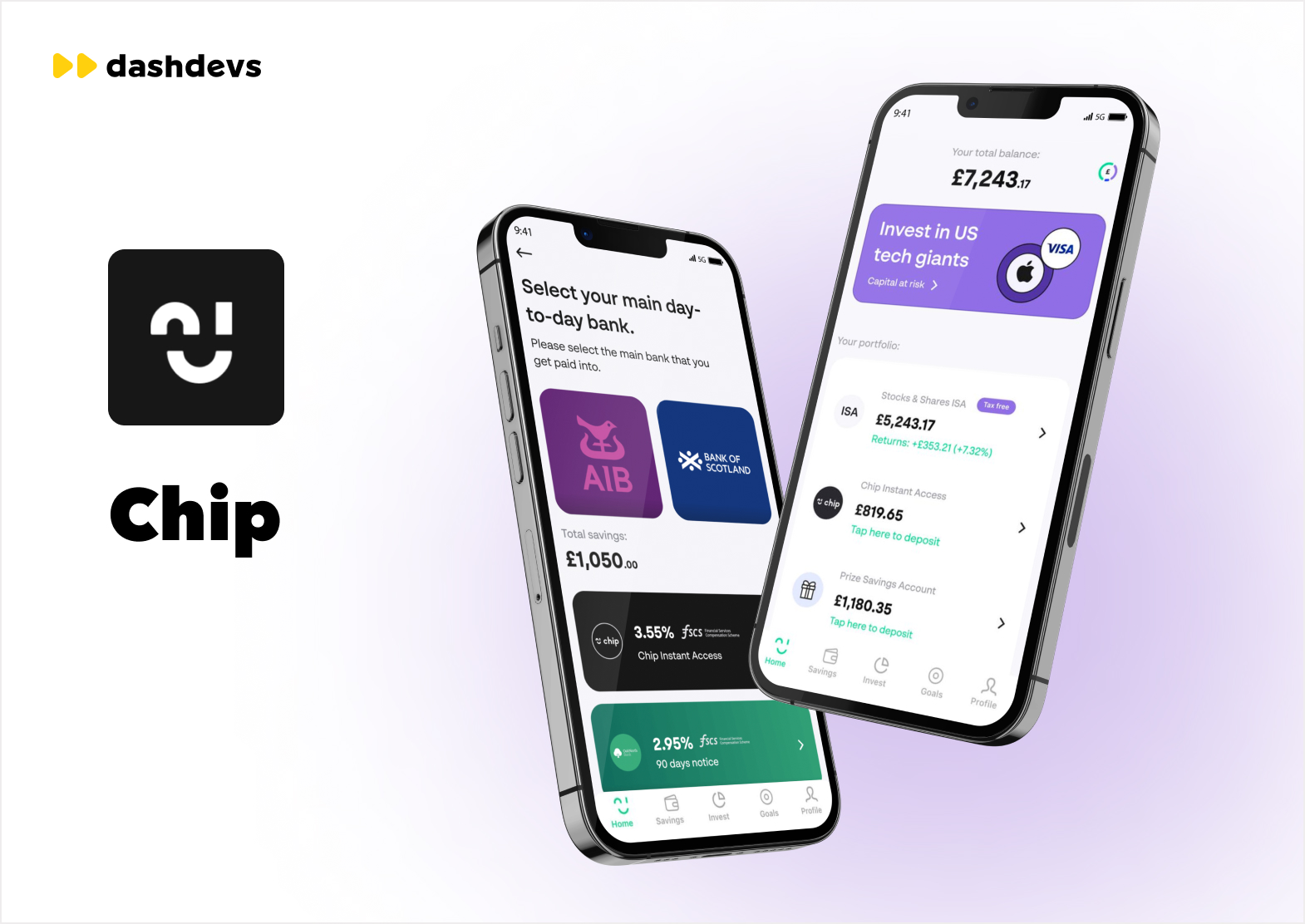
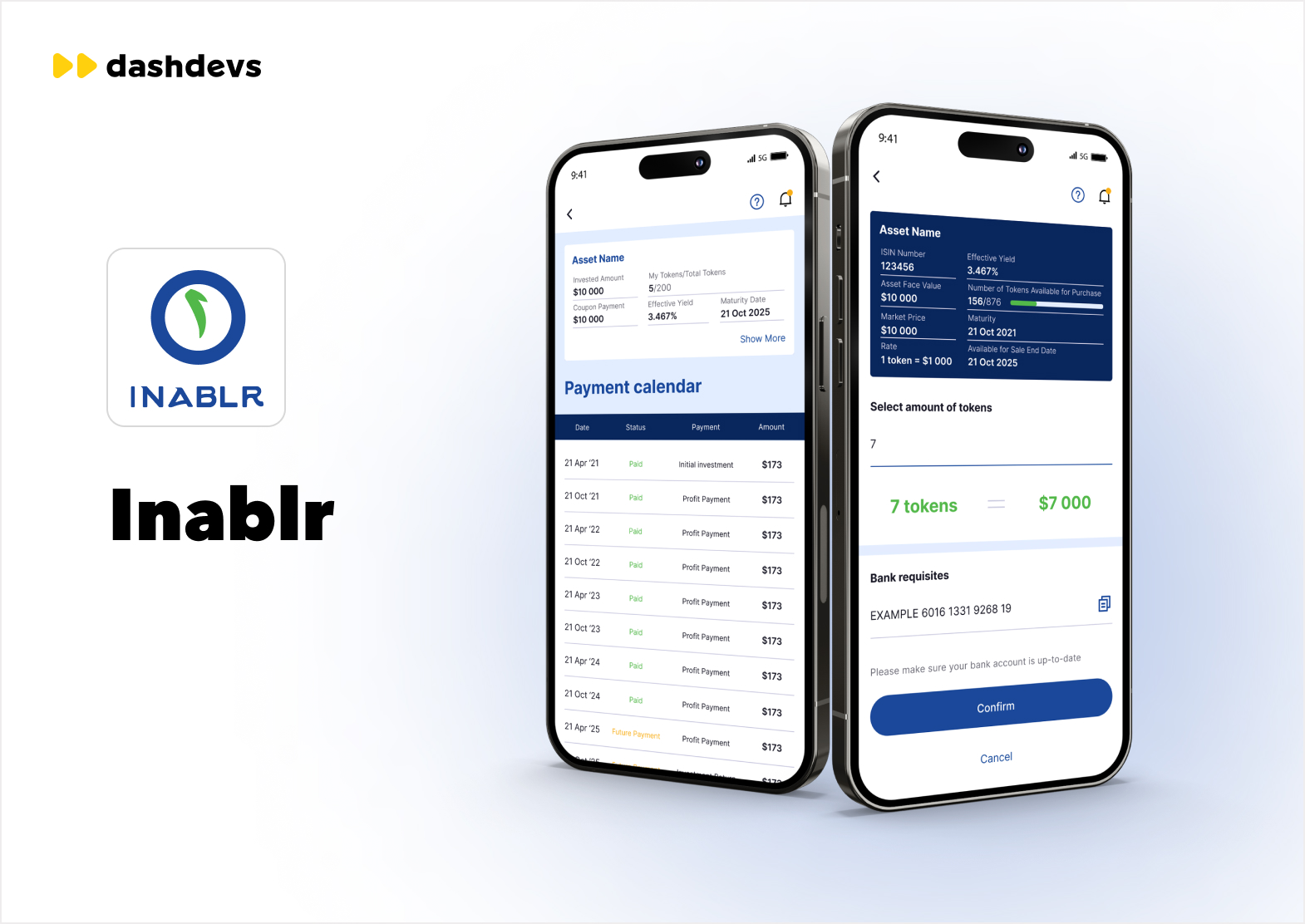
DashDevs delivered investment APIs for Chip and Inablr, combining fractional trading, automated portfolio logic, and market data feeds.
BNPL and embedded lending products should evaluate BNPL app development architecture early — credit lifecycle management is operational work, not a single API call.

Income verification APIs aggregate payroll and bank data for affordability checks — critical for lenders and gig-economy payout products.
Fintech API Examples by Product Type
Concrete fintech api examples help teams map APIs to product models:
| Product type | Primary APIs | Operational focus |
|---|---|---|
| Neobank / wallet | BaaS, KYC, cards, payments | Ledger, reconciliation, compliance |
| Marketplace | Payments, payouts, KYB | Split settlements, seller onboarding |
| BNPL / lending | Credit, KYC, bank data | Servicing, collections, model drift |
| Wealth app | Brokerage, KYC, funding | Custody, reporting, market hours |
| Embedded finance | Payments, lending, open banking | Licensing boundaries, partner SLAs |
These patterns illustrate why fintech integrations vary — the same platform vendor rarely fits every model without customization and adapter design. Account aggregation via open banking may accelerate lending onboarding; a wallet may never need it. Match API categories to financial products your roadmap actually ships, not a generic feature checklist.
How to Choose Fintech API Providers
When evaluating fintech api providers, score against production criteria:
- API documentation, sandbox parity, and versioning policy
- Webhook reliability and idempotency support
- Regulatory coverage for your customer types and markets
- Reconciliation files and exception handling
- SLAs, incident history, and support model
- Commercial structure — fees, minimums, implementation cost
- Exit options — data portability, multi-provider routing
Build vs compose vs partner:
| Approach | Best when | Risk |
|---|---|---|
| Direct PSP/bank APIs | Single market, simple flows | Limited rail flexibility |
| Orchestration platform | Multi-PSP, routing rules | Vendor concentration |
| Modular fintech core | Wallet/neobank speed with control | Integration scope discipline |
| Full custom build | Unique regulated model | Time, compliance load |
Specialized fintech integration services help teams design adapter layers, webhook handlers, and reconciliation before provider contracts lock in architecture.
How to Integrate Fintech APIs: Implementation Checklist
Production integration treats each provider as a dependency with failure modes, not a black box that always succeeds. Sandbox parity matters: if test webhooks differ from production schemas, you will discover gaps under live traffic.
Successful integration follows disciplined steps:
- Define product flows and regulatory perimeter
- Map APIs to ledger events and compliance states
- Select providers by corridor and licensing fit
- Build adapter layer — never hardcode provider logic in product services
- Implement auth, secrets, and PCI scope minimization
- Test sandbox flows including failures, timeouts, and duplicates
- Run reconciliation dry runs before production traffic
- Operationalize monitoring, alerts, and support playbooks

Security and scalability considerations:
- Encrypt data in transit and at rest; rotate credentials
- Rate-limit and circuit-break provider calls
- Log transaction state transitions for audit
- Design for provider downtime — fallback routes or graceful degradation
- Plan horizontal scale for webhook workers and reconciliation jobs
Regulatory compliance remains shared responsibility. APIs help with PCI-ready environments and screening tools, but your product owns customer outcomes and reporting accuracy.
Operational teams should define runbooks before launch: provider outage, stuck settlements, duplicate webhooks, and manual review queues. Scalability is not only request throughput — it is the ability to add a second payment processor or a new KYC vendor without rewriting product services. Adapter layers, event logs, and idempotent workers make that possible.
For teams embedding finance inside non-financial software, licensing boundaries matter as much as API quality. A SaaS platform using lending or payment APIs may trigger financial institution partner requirements, marketing restrictions, and consumer disclosure rules in each market.
Why Fintech API Strategy Matters in 2026
Market data reflects continued investment in API-first finance. KPMG reported global fintech investment of $116 billion in 2025. Stripe processed $1.9 trillion on its platform in 2025. Open banking and embedded finance continue expanding account aggregation and payment initiation across regions.
Teams building a fintech api platform — internal or vendor-composed — should align stack decisions with product roadmap, not feature demos. Open banking adoption continues to expand account aggregation and payment initiation: the Open Banking Impact Report noted UK open banking surpassed 14 billion API calls cumulatively by late 2024, reflecting sustained demand for consent-based financial data access. For broader infrastructure trends, see fintech innovations shaping banking and payments in 2026.
Final Take
Fintech API integration is how modern financial products access banking, payments, compliance, and lending capabilities at speed — when architecture, reconciliation, and compliance are designed deliberately.
The strongest teams treat fintech apis as infrastructure: clear adapter layers, observable transaction flows, provider exit options, and operational ownership after launch. Whether you are launching a wallet, BNPL product, or open banking service, provider selection and integration approach determine maintenance cost as much as MVP timeline.
DashDevs has 15+ years integrating fintech APIs for startups, banks, and embedded finance platforms — from KYC and payment rails to open banking and investment stacks. We help teams build the right fintech stack, not the most crowded one.
Share article
