


From Digital Onboarding to Daily Banking: Maximizing Customer Success Every Step of the Way

October 1, 2026
- 47% of banking customers abandon onboarding midway.
- The right architecture makes KYC/AML invisible to low-risk users while staying audit-ready.
- 70% of financial institutions globally lost clients to slow onboarding in 2025, at an estimated cost of $2.72 billion in annual revenue.
- Banks that optimize onboarding see up to 31% less drop-off and 19% higher long-term retention.
- AI adoption in KYC/AML compliance doubled from 42% to 82% of institutions.
- Onboarding defines customer lifetime value. A customer who completes a smooth first journey is far more likely to adopt additional products within the first year.
Digital customer onboarding in banking is no longer just about opening accounts. It is the first commercial test of your bank’s infrastructure, compliance stack, and product experience, all at once.
Most institutions already know this. What is harder is translating that awareness into a concrete decision: which solution architecture actually solves the drop-off problem without weakening KYC and AML controls?
This guide is written for heads of digital, product, and innovation at banks and credit unions who are evaluating digital onboarding solutions for banks, comparing vendor options, and trying to close the gap between applicant acquisition and active daily use. It covers what to look for in a solution, how to compare the major platforms and vendor types, and when to build, buy, or integrate. It also goes beyond account approval to what actually matters: first funding, first transaction, and 30-day activation.
Onboarding is not the finish line of client acquisition. It is the first real test of trust. How you design this moment determines whether your customers become long-term advocates or walk away before they even start.
Why Digital Onboarding Is Now a Revenue Problem
The business case for better digital onboarding is about revenue leakage at scale.
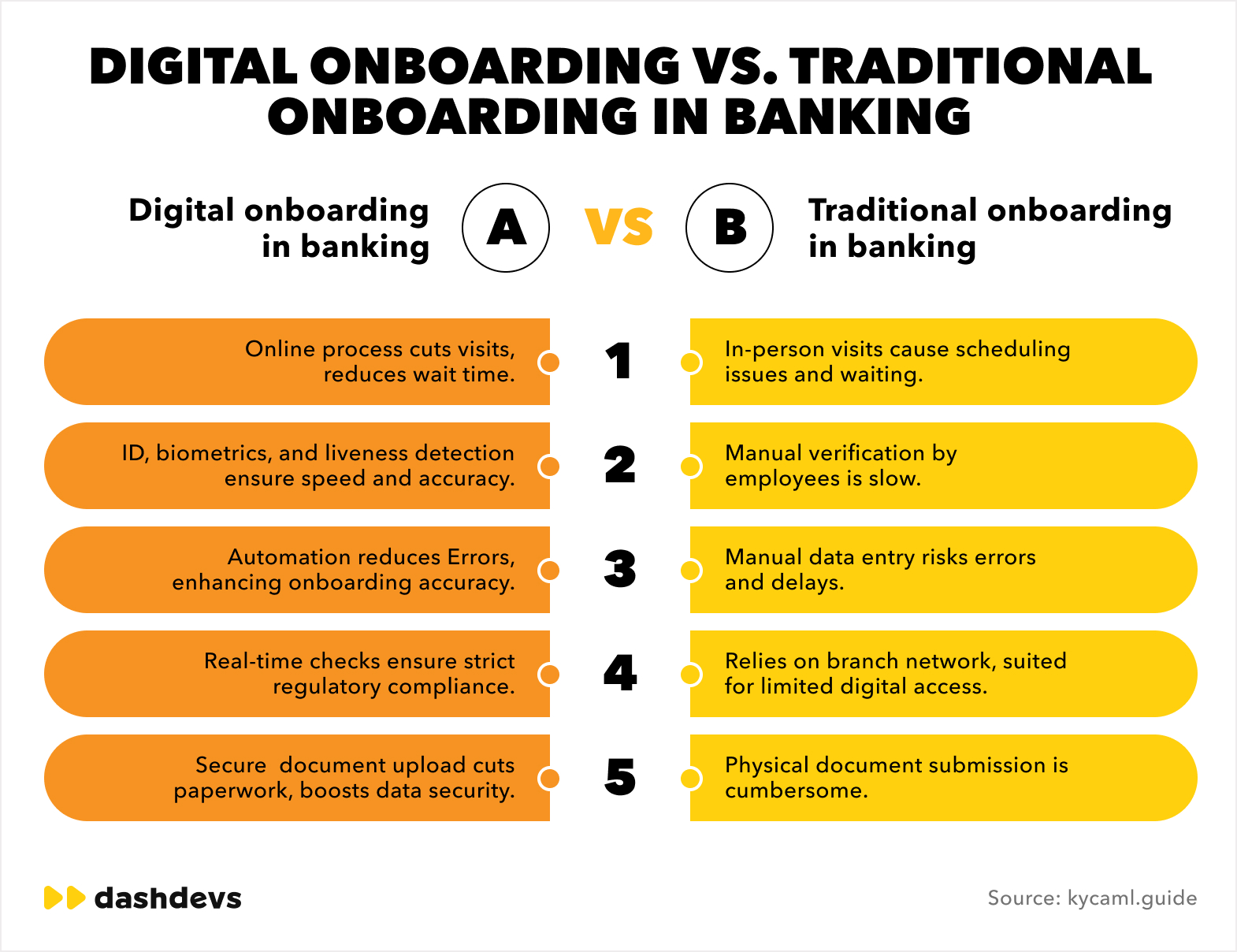
Nowadays, 47% of prospective customers abandon the application process midway due to a poor experience. The same Capgemini World Retail Banking Report 2025 found that only 3% of banks consider their onboarding process seamless. Fenergo’s research with 600 senior decision-makers found that 70% of financial institutions lost clients last year due to slow onboarding, up from 48% in 2023, at an estimated industry-wide cost of $2.72 billion in annual revenue.
These are structural revenue leaks affecting nearly every institution.
Banks spend large sums acquiring leads, then lose them at the very first step. Every abandoned onboarding flow is wasted acquisition spend.
When a bank optimizes its digital customer onboarding flows, conversion rises, and acquisition spend produces more active accounts without increasing the marketing budget. That is the ROI case for onboarding investment in one sentence.
What to Look for in an Onboarding Solution
Choosing a digital onboarding platform is a build-vs-buy-vs-integrate decision with long-term compliance and architecture implications. Before comparing vendors, align your evaluation criteria against the capabilities that actually move drop-off and activation rates.
Document Identity Verification and Liveness Detection
Core IDV covers OCR-based document extraction for passports, national IDs, and driver’s licenses, facial recognition matching the document photo to a live selfie, and liveness detection to block spoofing and deepfake attempts. Deepfake-assisted fraud is now a documented threat in retail onboarding. Any solution you evaluate should have explicit deepfake detection in its liveness layer, not just passive selfie matching.
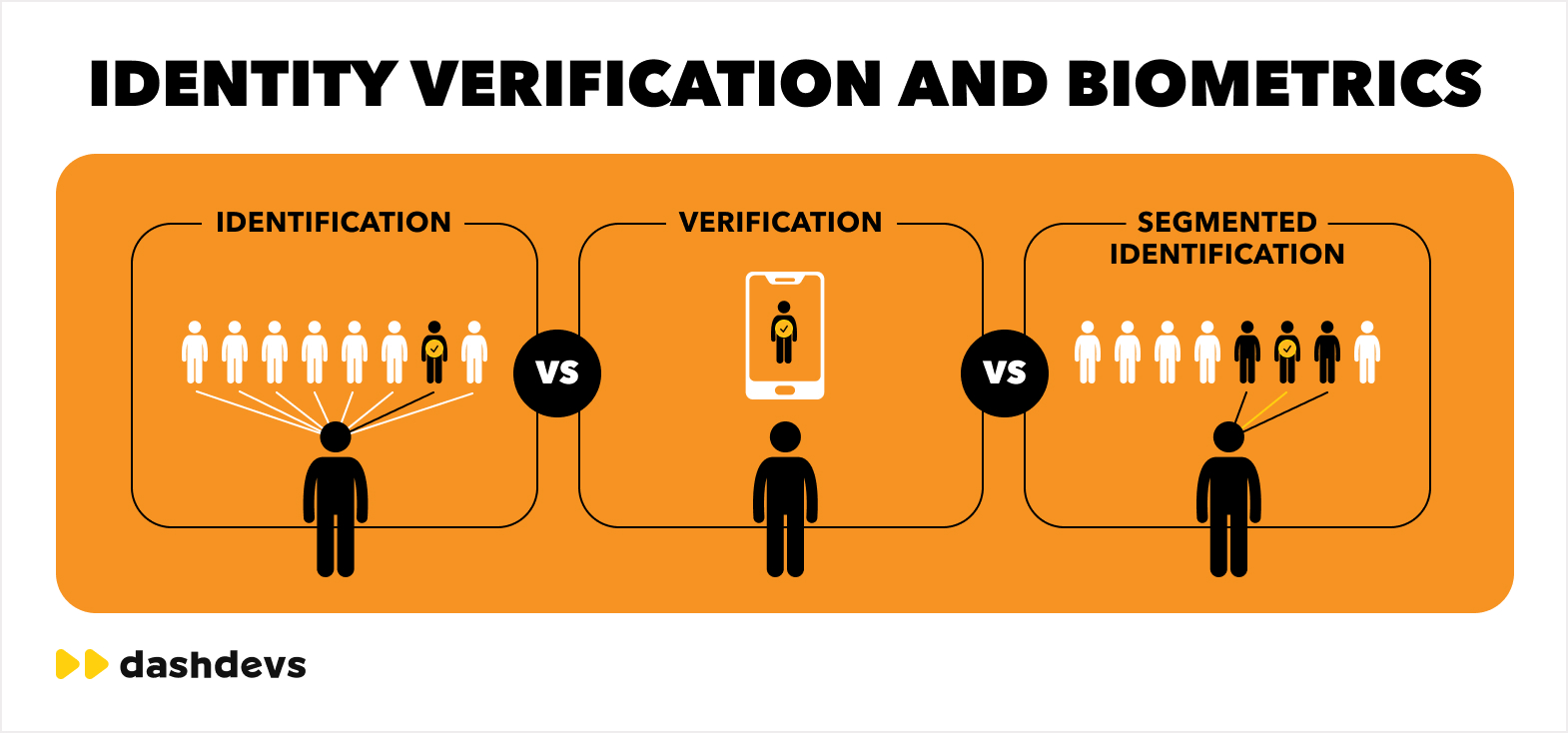
Global coverage matters too. If you serve customers across jurisdictions, the IDV vendor needs document libraries and biometric models trained on the document types your applicants actually carry. Our KYC services work and our guide to choosing a KYC provider cover that vendor shortlist in more depth.
AML, PEP, and Sanctions Screening
Real-time screening against global sanctions lists, politically exposed persons databases, and adverse media is table stakes. What differentiates solutions is the risk-based decision engine sitting on top: low-risk profiles should clear in seconds; genuinely elevated-risk cases should trigger enhanced due diligence with a clear audit trail.
AI use in KYC/AML compliance nearly doubled from 42% of institutions in 2024 to 82% in 2025, per Fenergo. Automation here is no longer optional for institutions competing on speed.
Learn more about KYC fraud detection in fintech apps and AML compliance requirements for fintechs.
E-Signature
In-app or browser-based e-signature with no channel switching. Compliance with eIDAS (EU), ESIGN, and UETA (US) depending on your markets. Multi-factor authentication for sensitive cases. Integration with your CRM and core banking system to remove manual handoffs after agreement execution.
Risk-Based Decision Engine
A configurable rules engine that routes applicants based on risk score, product type, jurisdiction, and channel. Low-risk retail applicants should reach account activation with zero manual intervention. High-risk or corporate applicants should flow into structured enhanced due diligence queues with documented decision trails.
Core Banking and API Integration
The onboarding solution connects to your core banking system, card processor, and downstream CRM. If integration requires custom middleware built from scratch each time, the total cost of ownership scales poorly as the product set grows. API-first architecture with documented connectors for the major core platforms matters more than the vendor demo.
Low-Code Journey Configuration
Compliance and product teams need to modify onboarding journeys, add jurisdictions, change document requirements, and A/B test flows without a full engineering release cycle. Low-code configuration capability is what separates solutions that stay current from those that become technical debt within 18 months.
Funnel Analytics
Step-level completion data, time-on-step tracking, abandonment attribution, and cohort analysis linking onboarding completion to 30-day and 90-day activation. Without this, you are optimizing blind. Our customer onboarding best practices piece goes further into the metrics that matter once the flow is live.
Comparing Digital Onboarding Solution Types and Vendors
The market has several distinct solution categories. Each suits a different bank profile, technical maturity level, and deployment timeline.
| Solution | Best For | Retail / Corporate | Built-In KYC | Deployment Model | Core Integration |
|---|---|---|---|---|---|
| Backbase | Mid-market and enterprise banks doing full digital transformation | Both | Via partners (Sumsub, Onfido) | Cloud / on-prem | Temenos, Mambu, FIS, custom APIs |
| nCino | Commercial and corporate banking workflows | Corporate-heavy | Via Salesforce ecosystem | Cloud (Salesforce) | Major US cores, Salesforce |
| Q2 | US community banks and credit unions | Retail | Via partners | Cloud | FIS, Jack Henry, Fiserv |
| Fenergo | Complex KYB, UBO, and corporate onboarding | Corporate / institutional | Native AML/KYC engine | Cloud / hybrid | Major enterprise cores |
| Entrust | Identity-centric onboarding with strong IDV | Both | Native IDV and biometrics | Cloud / API | Flexible, API-first |
| Salesforce Financial Services Cloud | Banks with existing Salesforce infrastructure | Retail + Corporate | Via AppExchange (Onfido etc.) | Cloud | Salesforce-native |
| Sumsub / Onfido (KYC layer) | Banks adding IDV to existing flows | Both | Core product | API / SDK | Any platform via API |
| Fintech Core (DashDevs) | Licensed banks and PSPs needing modular onboarding without rebuilding infrastructure | Both | Vendor-agnostic KYC integrations | White-label | Core banking APIs, open architecture |
A few observations worth noting when evaluating this list.
Platforms like Backbase and Q2 excel at the front-end journey layer but rely on third-party KYC vendors for actual identity verification. That is not a weakness, but it means you are managing two vendor relationships and two SLA commitments. Fenergo is the strongest choice for pure corporate onboarding complexity: KYB, UBO identification, and regulatory reporting in multi-jurisdiction environments.
For banks that need full-stack modular infrastructure without rebuilding from zero, the white-label and composable platform approach, such as Fintech Core, is worth comparing against both large vendor platforms and custom builds.
Build vs. Buy vs. Integrate: What Actually Fits
The correct architecture decision depends on where your bank sits on three axes: time to market, existing infrastructure, and regulatory complexity. Our build, buy or partner framework scores each of those axes on its own.
Build
Custom-built digital onboarding solutions for banks give maximum control over the journey, compliance logic, and integration layer. It fits banks with large internal engineering teams, unusual regulatory requirements that off-the-shelf solutions cannot handle, or specific data sovereignty constraints.
Timeline: 12 to 24 months for a production-grade retail onboarding stack. Longer for corporate.
Cost range: High; total cost of ownership includes build, maintenance, compliance updates, and the opportunity cost of engineering capacity.
When it fits: Tier 1 banks with dedicated fintech engineering teams; banks in markets where no compliant vendor solution exists; situations where deep product differentiation depends on owning the onboarding layer completely.
Buy
A packaged onboarding platform deployed as a SaaS product. Faster to launch, lower initial outlay, but constrained by the vendor’s configuration ceiling and integration roadmap.
Timeline: 3 to 9 months depending on core integration complexity.
Cost range: Licensing plus integration and customization. Watch for configuration costs that accumulate as compliance requirements change.
When it fits: Community banks and credit unions with limited engineering resources; banks needing a faster path to compliance in a new market; institutions where the onboarding journey is not a primary differentiator.
Integrate (Modular / White-Label)
A composable approach: a reusable infrastructure layer that handles common onboarding modules (KYC, AML, e-signature, analytics) via vendor-agnostic APIs, allowing the bank to swap individual components as requirements evolve.
Timeline: 3 to 6 months to first production launch using pre-built modules; faster with existing vendor relationships already integrated.
Cost range: Lower than full custom build; predictable because reusable infrastructure scales across product lines without rework.
When it fits: Banks launching new digital products at pace; licensed PSPs and EMIs that need onboarding infrastructure without building a full engineering department; institutions that want to switch KYC or AML vendors without rebuilding the onboarding stack.
This is where our composable white-label fintech solution for banks comes in, with vendor-agnostic KYC integrations, e-signature support, and analytics dashboards. Banks use it to launch compliant digital onboarding platforms in months rather than years, without paying to rebuild common fintech infrastructure from scratch.
Pro tip: Store the risk score, the rail each check used, and the reason the engine approved or queued the applicant. After 17+ years integrating KYC and AML vendors, that audit column is cheaper than reconstructing a decision from emails when a regulator asks.
Digital Onboarding in Corporate Banking
Digital onboarding in corporate banking operates on a different complexity level than retail. Celent research commissioned by nCino puts the average commercial onboarding cycle at 49 days and $14,700 per client. That is the single largest remaining efficiency gap in banking onboarding.
Corporate accounts require KYB document verification for entities rather than individuals, automated UBO identification to multiple ownership layers, multi-signatory account configuration with different permissions and mandate structures, and enhanced due diligence for high-risk sectors, including crypto, real estate, and MSBs.
The institutions gaining the most ground on corporate onboarding time are the ones that have automated UBO mapping from public registries and built EDD case management directly into their workflow, rather than treating it as a manual exception.
DashDevs built a compliance-first digital banking platform in Saudi Arabia that handled multi-layer KYB and AML screening in a strict SAMA environment. The platform passed regulatory onboarding, reporting, and transaction-level review, cut false positives by 50%, and halved investigation time from 48 to 24 hours. For banks building or improving the new customer onboarding banking experience for corporate clients, the minimum requirements are a structured KYB API, automated UBO extraction, configurable multi-signatory workflows, and a case management layer for EDD escalations.
The 7-Stage Digital Onboarding Journey
A digital onboarding process has seven stages. Each is a conversion point. Understanding where applicants exit is the starting condition for any optimization.
| Stage | Primary Risk | Best Practice |
|---|---|---|
| Awareness | Weak value proposition at entry | Clear CTA, visible benefit, no registration wall |
| Registration | Over-collection of data | Collect only what is essential at entry |
| Verification (KYC) | Manual review queues, long wait times | Real-time biometric checks, automated review |
| Agreement | Channel switching or printing requirements | In-app e-signature, compliant with applicable standards |
| Funding & Activation | Limited funding options, ACH delays | Instant funding via card, digital wallet, or instant bank transfer |
| First Use | No in-app guidance toward first action | Welcome flow with a single clear prompt, triggered by funding confirmation |
| Retention | No visible next value offer post-activation | Personalized product recommendations triggered by transaction behavior |
The KYC stage carries the highest drop-off risk. Capgemini found that 75% of customers submit incomplete documentation, and less than 29% of data collection during onboarding is currently automated via AI. Real-time feedback on document quality and instant automated review are the primary levers here. Video identification is one extra path for high-risk or high-value applicants when a selfie-plus-document check is not enough.
Measuring ROI of Onboarding
A digital onboarding solution that doesn’t produce measurable outcomes is not a solution. These are the five KPIs that matter.
Abandonment rate. The percentage of applicants who start but do not complete the onboarding flow. Industry benchmark: 47% for retail banking. Target: below 25% for a well-optimized flow.
Time-to-yes. Elapsed time from application start to account approval decision. Retail target: under 10 minutes for low-risk applicants. Corporate target: under 48 hours for standard KYB.
Cost per opened account. Total onboarding operating cost divided by completed accounts. Consumer acquisition in U.S. banking sits around $396 per customer; Curinos has checking acquisition at $559. Onboarding optimization converts more already-acquired prospects into active accounts without additional acquisition spend.
First-funding rate. Percentage of approved accounts that receive at least one deposit within 7 days. Low first-funding rates indicate friction in the activation step, not the verification step.
30-day activation rate. Percentage of approved accounts completing at least one transaction within 30 days. This is the metric that most directly correlates with lifetime value. BCG reports that 60–70% of digitally acquired customers may never activate, meaning they open an account and make no transactions. First-funding prompts and first-use nudges are the primary levers.
DashDevs’ automated digital identity onboarding engine for a Saudi bank cut onboarding time from five minutes to four minutes and reduced onboarding abandonment by 30%, measured against the pre-automation baseline.
Compliance as a Strategic Lever
Banks have traditionally built compliance into onboarding as a cost and a delay. The institutions gaining ground in 2025 and 2026 treat it as a trust signal and a competitive differentiator.
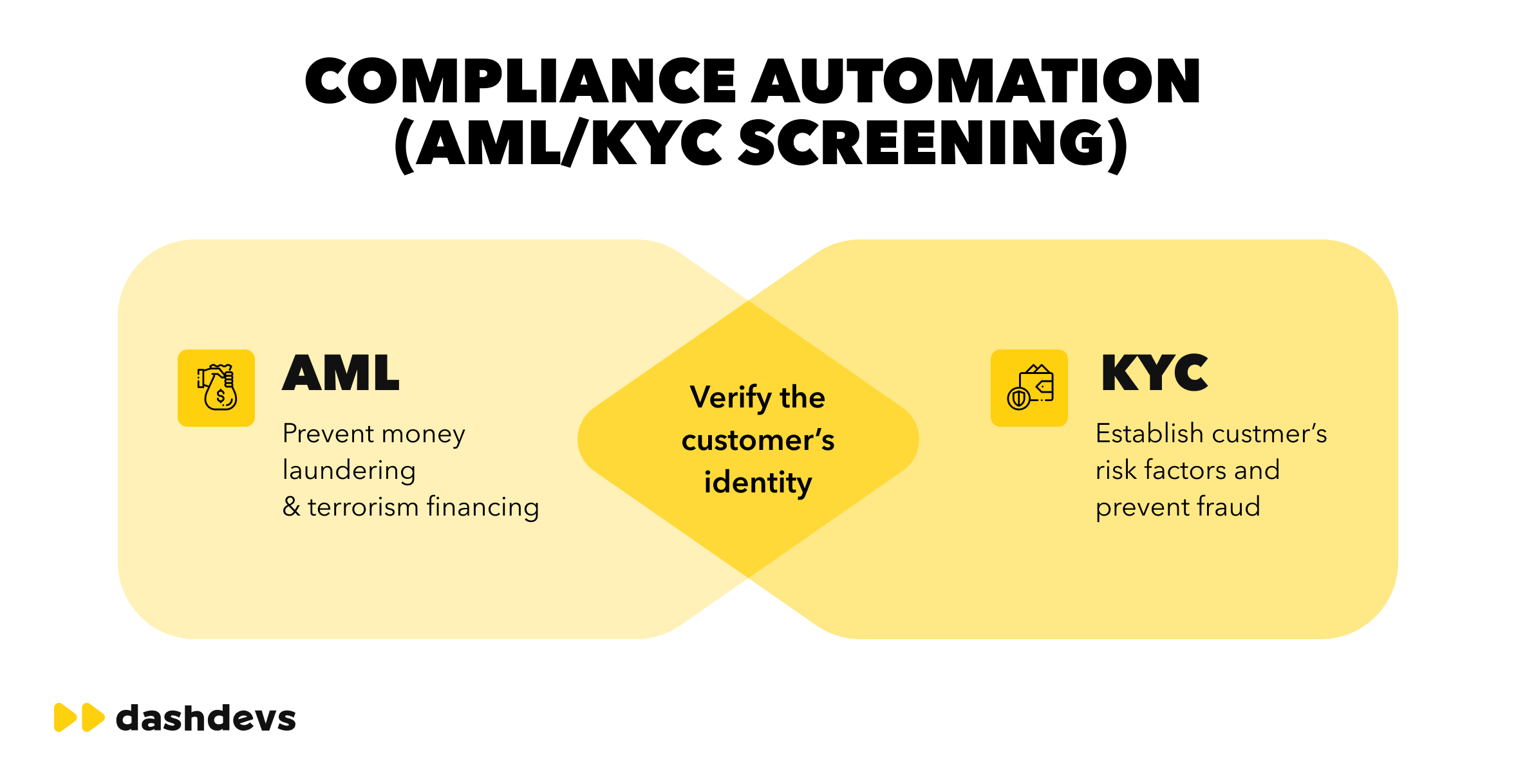
| Challenge | Traditional Approach | Automated Approach | Business Value |
|---|---|---|---|
| KYC checks | Manual reviews, days of waiting | OCR and biometrics verify ID in under 60 seconds | Shorter onboarding, less drop-off |
| AML screening | Staff searching multiple databases manually | Real-time scanning of sanctions, PEP, and adverse media | Higher accuracy, lower regulatory risk |
| Fraud detection | Reactive checks after fraud occurs | AI flags high-risk accounts at entry | Prevents losses, protects reputation |
| Customer experience | Feels bureaucratic and intrusive | Runs in the background, invisible to low-risk users | Trust grows, users feel respected |
With AI integration, current-account digital onboarding times have fallen from days to just a few minutes. Global AML penalties reached $4.6 billion in 2024. In H1 2025 alone, fines totaled $1.23 billion, a 417% increase on H1 2024. The institutions absorbing those fines tend to be the ones with manual, fragmented compliance workflows.
Compliance is no longer just about avoiding fines. When onboarding feels structured and fast, it signals that the institution knows what it is doing. That is a commercial outcome, not just a regulatory one.
DashDevs’ Approach to Onboarding
At DashDevs, digital customer onboarding in banking is treated as the start of customer success, not a technical requirement to clear before the real work begins. The approach combines reusable infrastructure with delivery experience from 100+ fintech products launched across Europe, the UK, and MENA.
One of the projects we’ve already mentioned above in our article, and here are two more delivery proofs worth noting:
Tarabut Gateway: MENA’s first regulated open banking platform. DashDevs designed compliant onboarding flows and integrated 24 banks across Bahrain, Saudi Arabia, and the UAE within a Central Bank of Bahrain regulatory sandbox. The app has more than 200,000 downloads.
MuchBetter: Onboarding flows designed to pass FCA scrutiny while scaling to millions of users. Biometric KYC and AI-driven fraud prevention operate together, so security and adoption do not trade against each other.
We don’t build onboarding just to open accounts. We build onboarding to set the stage for long-term customer success.
If you are building a new digital bank from zero, see how to start a digital bank from scratch and explore the best neobanks currently setting the standard for onboarding experience. Teams that want a full stack can extend the same pattern through banking software development or neobank development.
Onboarding Is the Moment That Decides Whether Acquisition Pays Off
Digital onboarding solutions for banks sit directly between marketing spend and revenue. A bank that acquires a prospect but loses them at KYC has spent $300 to $500 for nothing. A bank that approves an applicant but never triggers a first transaction has an account, not a customer.
The institutions gaining ground are treating onboarding as a growth function: investing in the right solution architecture, measuring the right KPIs, and following the applicant all the way to first use.
Building a frictionless, audit-ready onboarding flow requires balancing complex compliance rules with product design. Whether modernizing a legacy retail journey or architecting complex corporate KYB, getting this step right ensures acquisition spend translates directly into long-term active account value.
Share article
