


How Much Does It Cost to Build a Bank in 2026: The Full Cost Breakdown

June 26, 2026
- Regulatory capital and licensing often absorb 25–45% of year-1 budget but typically fall to 15–25% of cumulative spend by year 3 — a high entry floor, not the largest long-term cost.
- Technology costs for building a bank can vary 5–10x depending on custom build vs white-label vs BaaS stitching, yet platform spend alone rarely decides whether the program succeeds.
- Payroll for compliance, engineering, risk, and operations usually becomes the largest cumulative line item — often 45–55% of total spend by year 3 and the bucket most founders underestimate.
- White-label platforms with full source-code access shift budget from perpetual vendor fees toward in-house engineering and compliance capability; they change where headcount goes, not whether you need a team.
- The total cost of starting a bank is a 3-year operating bet, not a one-time launch invoice — year-1 savings on BaaS fees often produce the steepest cost curve in years 2 and 3.
Most founders who ask about starting a bank picture a license fee and a software invoice. The spreadsheet they eventually build looks nothing like that. Regulatory capital sets the floor. Technology swings the middle. But over a three-year bank startup horizon, the line item that most often breaks the model is people — the compliance officers, engineers, risk managers, and operators who turn permission and software into a bank customers can trust.
Regulated fintech carries a specific version of a problem every young company faces: cash and operational capacity run out before revenue catches up. In banking, payroll and compliance obligations start before a single customer is onboarded, which makes the timing of that pressure earlier and less forgiving than in most software businesses.
That gap matters because most cost guides price only one layer. Licensing consultants quote capital. Vendors quote platforms. Neither answers how much does a bank cost in total, because neither includes the team cost required to actually deliver and run the product. If you are modeling how much money is needed to start a bank, start with four pillars — capital and licensing, technology, team, and ongoing operations — and expect build-versus-white-label to reshape all four, not just the tech row.
This article is a global, cost-first breakdown for 2026. It does not replace jurisdiction-specific licensing guides or architecture deep dives; it tells you where money goes, what moves the number up or down, and how to avoid paying for control you will not use in the first three years. Every section below is organized around money and time — not product features or regulatory strategy you can read elsewhere.
DashDevs has helped deliver regulated banking programs from EMI-scale launches to multi-license digital banks — including Dozens, one of the UK’s early challenger banks. That work shaped Fintech Core, our modular platform for teams that need speed without surrendering architectural control. For app-layer budgets specifically, see our banking app development cost guide for 2026.
Key Takeaways
- Regulatory capital and licensing often absorb 25–45% of year-1 budget but typically fall to 15–25% of cumulative spend by year 3 — a high entry floor, not the largest long-term cost.
- Technology costs for building a bank can vary 5–10x depending on custom build vs white-label vs BaaS stitching, yet platform spend alone rarely decides whether the program succeeds.
- Payroll for compliance, engineering, risk, and operations usually becomes the largest cumulative line item — often 45–55% of total spend by year 3 and the bucket most founders underestimate.
- White-label platforms with full source-code access shift budget from perpetual vendor fees toward in-house engineering and compliance capability; they change where headcount goes, not whether you need a team.
- The total cost of starting a bank is a 3-year operating bet, not a one-time launch invoice — year-1 savings on BaaS fees often produce the steepest cost curve in years 2 and 3.
How Much Does It Cost to Open a Bank? The Core Line Items
Cost breaks into five buckets that scale independently. Treating them as one number is how bank startup budgets fail in year two.
- Regulatory capital and licensing — the permission to operate and the capital regulators require you to hold
- Technology — build, white-label, or BaaS-stitched stack
- The team that ships and runs the product — usually the largest cumulative spend
- Compliance and risk operations — audits, monitoring, reporting
- Ongoing run-cost after launch — infrastructure, support, vendor fees, and regulatory maintenance
The table below is illustrative, not a quote. Ranges vary by license type, market count, and build path.
| Cost bucket | Typical share of year-1 budget | Typical share of year-3 cumulative cost |
| Regulatory capital and licensing (cash + fees) | 25–45% | 15–25% |
| Technology (build, license, integration) | 20–35% | 15–20% |
| Team (delivery + operations) | 30–50% | 45–55% |
| Compliance and risk (post-launch recurring) | 5–15% | 15–25% |
| Run-cost (infra, vendors, support) | 10–20% | 20–30% |
Licensing tells you whether you are allowed to operate. Technology tells you what you operate on. The team determines whether either becomes a working bank — that ordering is the thread running through every section below.
Regulatory Capital and Licensing Costs
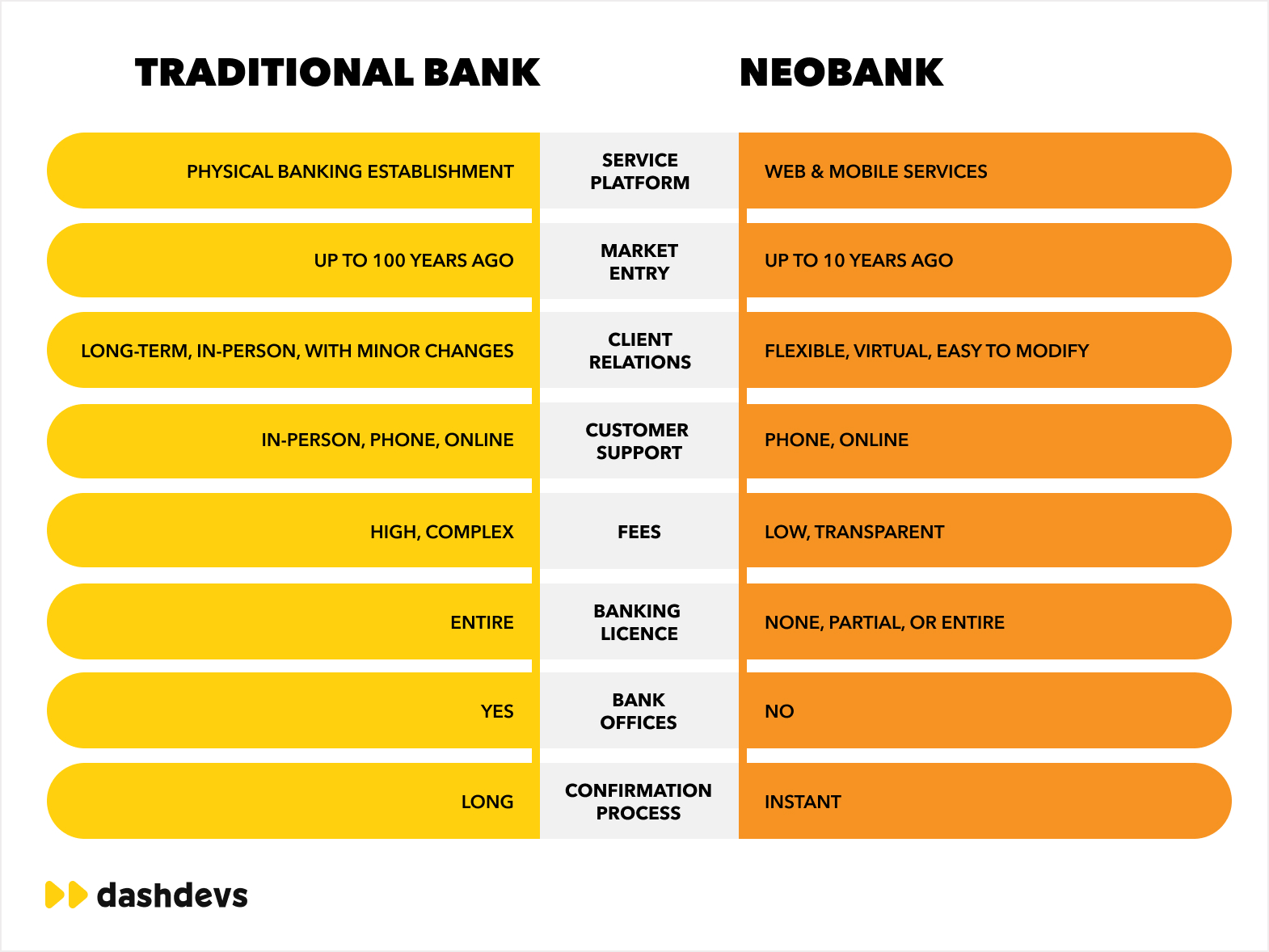
Regulators require minimum capital, ongoing capital adequacy, and application and legal spend before you serve customers. Figures vary by jurisdiction, but the pattern is global: a full bank license demands the highest capital and longest timeline; EMI or e-money and BaaS-sponsored models lower the entry gate but do not remove compliance cost.
| License model | Illustrative minimum capital | Illustrative application / legal cost | Illustrative timeline |
| Full bank license | €5M–€20M+ (jurisdiction-dependent) | €1M–€3M+ | 18–36+ months |
| EMI / e-money institution | €350K–€500K (EU baseline; varies) | €200K–€800K | 9–18 months |
| BaaS-sponsored / partner bank | Partner-dependent; often lower direct capital | €100K–€400K+ program setup | 6–12 months to first product |
Capital requirement alone is a poor predictor of total cost. It is the gate, not the bill. When founders ask how much money do you need to start a bank, the minimum capital line is only the first row — regulators expect funded operations, technology, and staff beyond that floor. The related question, how much money do you need to open a bank in practice, includes application and legal fees, setup spend, and months of payroll before revenue.
For UK-specific licensing models, niche go-to-market, and localized unit economics, see how to start a bank in the UK — this article stays global on cost structure.
Founders who treat licensing purely as a regulatory hurdle tend to underbudget it. Founders who treat it as a strategic asset — something that compounds into trust, partner access, and pricing power — tend to size the spend correctly from the start.
As discussed in Fintech Garden Episode 122 (The Great Unbundling — When Fintech Banks Start Looking Like Banks Again), Igor Tomych and Dumitru Condrea describe a shift that directly affects cost planning:
“Fintechs spent a decade trying to look different from banks. Now the strongest ones are rebuilding the discipline banks always had — balance sheets, compliance depth, and infrastructure control.”
That discipline shows up in the budget: licensing is not a one-time gate fee — it is the start of a compliance and capital structure that compounds in years two and three.
Technology Costs — Build vs Buy and What Each Really Costs
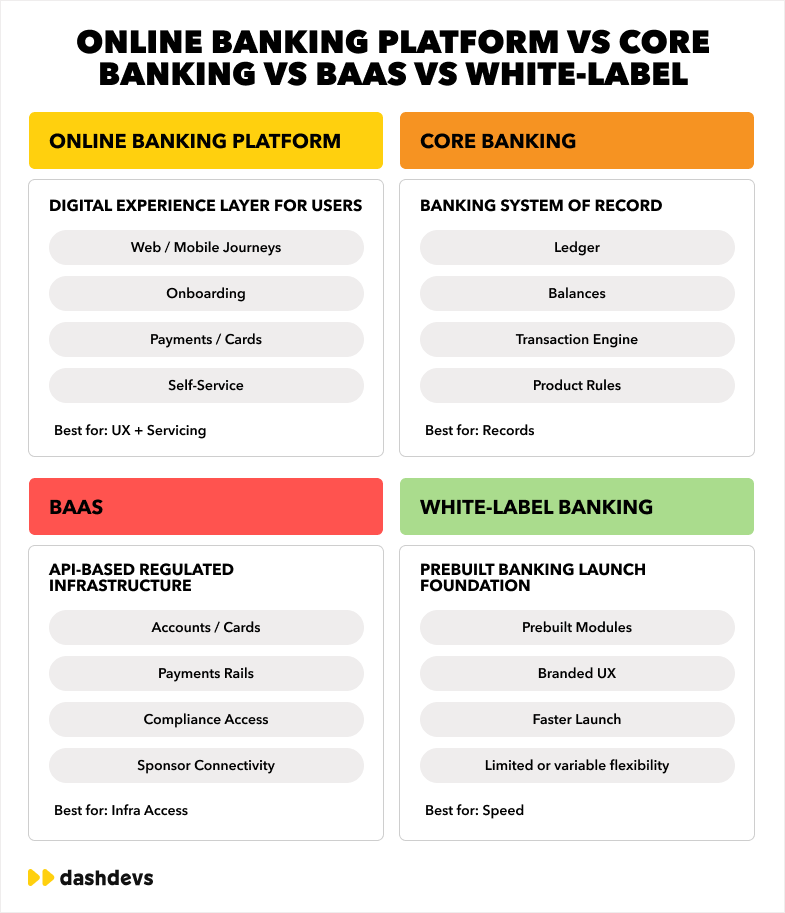
Most cost guides stop here — and founders get the number wrong in both directions. Technology is rarely the largest three-year cost, but it sets launch timing, maintenance burden, and how much engineering headcount you need.
| Path | Illustrative upfront cost | Time to launch | 3-year cost trend | Best fit |
| Full custom build (core, ledger, cards, KYC, orchestration) | €3M–€10M+ engineering | 18–30+ months | Rising (maintenance + team) | Differentiation is core product; capital and license for full control |
| White-label / source-code platform | €500K–€2M license + customization | 6–12 months | Flatter (less vendor lock-in per feature) | Speed with ownership of code and lower long-term vendor tax |
| Pure BaaS / vendor stitching | €200K–€800K integrations | 4–9 months | Rising (fees + integration debt) | Narrow MVP, single market, partner bears license |
Architecture and foundation-versus-differentiation decisions belong in guides on how to build a digital bank — here the question is cash out the door. Compare core banking platforms on license and implementation bands, not feature lists alone. Integration-heavy paths should budget banking API work early — connector maintenance is a recurring cost line, not a one-time sprint.
Why source-code access changes the cost curve
A white-label banking platform with full source-code access converts part of perpetual vendor spend into upfront license plus team spend. You pay less in ongoing transaction or module fees relative to pure SaaS BaaS, but you must staff engineers and compliance leads who understand the codebase and your regulator.
That trade-off is intentional: predictable platform cost, higher internal capability requirement. Banking API integration work still appears in every path; the difference is whether APIs connect an owned core or a patchwork of third-party modules with separate commercial terms.
“Instead of building a bank from scratch, companies can partner with BaaS providers to access pre-built banking infrastructure.” — Fintech Garden episode 108
The cost implication is clear: BaaS lowers the entry invoice but shifts spend toward integration maintenance, partner fees, and the engineering team that keeps the stack coherent. For a deeper comparison of build, buy, and orchestrate paths, see how to build a neobank using vendors, platforms, or APIs.
The Team You Need to Actually Build and Run a Bank — the Real Cost Center
Licensing is permission. Technology is infrastructure. The team is what determines whether either produces a working bank startup that survives audit and scale.
Core roles you cannot skip
| Role / function | Why it is non-negotiable | Rough cost driver |
| Head of Compliance / MLRO | Regulatory accountability, AML program, regulator relationship | Senior hire; €120K–€200K+ equivalent in Western Europe |
| Risk and treasury | Capital, liquidity, limits, partner bank oversight | Senior + analyst; scales with products |
| Core banking / backend engineers | Ledger, payments, integrations, production reliability | €80K–€150K+ per FTE; 4–12+ for credible launch |
| Security and DevOps | PCI scope, pen testing, incident response | Mix of FTE and annual audit spend |
| Product and UX | Regulated journeys, disclosures, servicing | 2–6 FTE early stage |
| Customer support and ops | Disputes, KYC exceptions, manual review queues | Scales with customer count |
| Regulatory legal counsel | Applications, contract review, exam prep | Retainer + project fees |
Delivery experience on regulated consumer banking programs points to the same pattern every time: compliance, core engineering, and product need to run as parallel workstreams from month one — not sequenced in after an “MVP” milestone.
On Dozens, DashDevs supported a multi-license digital bank where orchestration, compliance, and payments had to run in parallel from day one — not as a post-launch retrofit. That delivery model is why team cost on regulated programs rarely tracks a flat org chart: the roles above need to be funded before revenue, not after product-market fit.
As Igor Tomych notes in Fintech Garden Episode 108 (BaaS in the Wild):
“The biggest mistake fintech teams make is building too many features before they build reliable infrastructure.”
In cost terms, that mistake shows up as rework — compliance gaps discovered late, integration debt that doubles engineering headcount, and audit findings that force unplanned hires in year two.
In-house vs outsourced vs agency
| Model | Cost pattern | Speed to assemble | Fit for operating bank |
| In-house team | Highest fixed payroll; highest control | Slow (6–12 months hiring) | Best for multi-year regulated operator |
| Dedicated outsourced team | Mid cost; bench depth | Faster (weeks–months) | Strong for launch + scale without full HR stack |
| Project-based agency | Lowest upfront commitment | Fast for defined scope | Weak continuity for exams and live ops — cost risk, not only savings |
Team cost compounds more than technology cost. It scales with regulatory complexity, market count, and product surface — credit, cards, open banking, crypto rails — regardless of whether you chose custom or white-label. A source-code license reduces vendor tax; it does not remove compliance and engineering headcount that understands both platform and regulator.
What drives team cost up fastest
Three variables move the people line faster than vendor negotiations:
- License scope — EMI programs need a smaller compliance footprint than full credit banks; adding lending or multi-entity structures adds senior hires immediately.
- Market count — each jurisdiction adds reporting, legal review, and often local ops or partner management.
- Product surface — cards, international payments, and merchant acquiring each require specialist engineering and second-line risk review.
Budget hiring in phases tied to license milestones rather than assuming a flat org chart from day one. A bank startup business plan that lists technology first and “compliance later” usually underfunds the cost center that regulators examine most closely in year two.
Regulation is rarely a backend detail in a bank startup’s economics — in many markets, customers ask how funds are held and who supervises the program before they ask about the app’s UX. That trust layer is built by people, not by a platform license.
Include a clear business plan line for hiring and retention in any starting a bank model — salary inflation and specialist scarcity move this bucket faster than cloud invoices.
Compliance, Risk, and Operational Costs After Launch
Post-launch compliance is recurring, not a project. Audits, regulatory reporting, AML and KYC vendor fees, transaction monitoring, dispute handling, and exam prep dominate the out-years.
| Cost driver | Why it scales with volume, not features |
| AML / KYC vendors | Per-check or per-active-user pricing |
| Transaction monitoring | Alert volume rises with payment count |
| External audit and assurance | Annual cycle; scope grows with license |
| Dispute and fraud operations | Headcount + chargeback losses |
| Open banking and scheme obligations | Integration maintenance + certification |
Year-two surprises usually sit in this table: transaction monitoring tiers jump at volume thresholds, audit firms expand scope after first exam findings, and scheme fees rise with card or payment volume. Founders who budget compliance as a flat software line item in year one typically revise it upward by year three — often by a multiple, not a percentage.
“Vendor relationships can make or break a product’s success.” — Fintech Garden episode 110
Each KYC, AML, monitoring, and scheme vendor adds a recurring fee line and an exam surface. DashDevs built an automated digital identity and onboarding flow for a regulated white-label banking setup precisely to keep compliance scalable — reducing manual review load and producing audit-ready trails as volumes grow. That pattern matters for cost modeling: onboarding automation is often cheaper than linear compliance headcount after launch.
Most of this bucket is people — salaried or contracted — not software list price. Open banking integration adds API maintenance and consent-model compliance cost that pure deposit products avoid; model it if PSD2-class obligations apply.
Realistic Bank Startup Cost Scenarios for 2026
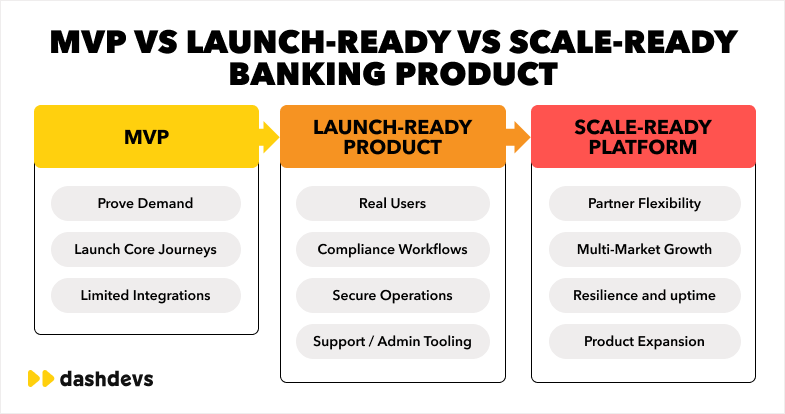
The scenarios below are indicative ranges for planning conversations, not offers or quotes.
| Scenario | Est. year-1 cost | Est. time to launch | Team size (year 1) | Best fit |
| Lean EMI / BaaS-sponsored, white-label core, small expert team | €2M–€5M | 6–12 months | 12–25 FTE equiv. | Focused product, one–two markets |
| Mid-market digital bank, source-code platform, moderate in-house team | €5M–€12M | 12–18 months | 25–50 FTE equiv. | Multi-product, own roadmap |
| Full license, custom-built core, large in-house org | €12M–€30M+ | 24–36+ months | 50–100+ FTE equiv. | Maximum control, credit and multi-market |
In every scenario, team cost is larger than most founders initially model. Vendor-led paths like building your own neobank through platforms and APIs still require a neobank app development company or internal squad for mobile, ledger alignment, and regulatory delivery — the sticker price of software is not the program cost.
How to Control Bank-Building Costs Without Cutting Corners
Cost control is decision quality, not corner-cutting.
- Match license model to go-to-market timeline — do not fund full-bank capital years before product-market fit if EMI or sponsor path covers year-one scope.
- Choose white-label or source-code platforms when differentiation is distribution or UX, not ledger invention.
- Right-size team to current regulatory scope; document what hires attach to each license milestone and market launch.
- Limit vendor sprawl — each additional payment, KYC, or card vendor adds integration cost and exam surface.
- Model three years, not launch month — the cheapest year one often produces the steepest year-three curve under BaaS fee stacks.
“As fintechs evolved, their once-simple models became multi-layered ecosystems.” — Fintech Garden episode 122
Every new product surface — cards, lending, open banking, a second market — adds a cost layer. Budget for that complexity upfront rather than treating each expansion as a small add-on.
The goal is a predictable cost curve, not the lowest day-one invoice.
Wrapping Up
There is no honest single answer to total bank cost in 2026 — only a structure. Capital and licensing set the floor. Technology sets speed and maintenance shape. The team that executes and operates the bank is usually the largest lever over three years, and the most underestimated in first drafts of the business plan.
For many founders, the most cost-predictable path is a license matched to actual scope, a white-label or source-code core that limits perpetual vendor tax, and a right-sized team built for regulation — not a thin MVP hoping compliance arrives later. That combination does not minimize spend; it makes spend legible to boards, investors, and regulators across the full three-year horizon.
DashDevs has delivered regulated fintech programs from EMI-scale launches to full banking experiences — including Dozens, digital identity automation for white-label banking, and values-driven digital banking platforms. For ongoing strategic context on where banking economics are heading, listen to Fintech Garden — our podcast where Igor Tomych and guests break down licensing, infrastructure, and the real cost of building in regulated markets.
If you want a tailored cost model for your license path, technology choice, and team plan, contact us for a structured conversation.
Share article
