


How to Build a Cryptocurrency Exchange: A Practical Guide

September 29, 2026
- Global crypto exchange volume hit $95 trillion, and most new entrants underestimate what it takes to compete at production scale.
- Architecture is step one. Teams that design first and license-check second burn months rebuilding compliance flows that could have been built in from day one.
- A custom CEX build starts at $420,000 with monthly opex of $10,000–$30,000; a modular-core approach cuts that timeline by up to 60% without losing compliance control.
- MiCA's CASP authorization became mandatory on July 1, 2026. Any exchange serving EU users without a license is now in breach across all 27 member states.
Most teams that ask how to build a cryptocurrency exchange have already made one critical mistake: they think it is primarily a technology problem. It is not. It is a compliance, architecture, and liquidity problem that technology must solve at the same time.
The market case is clear. The crypto exchange market reached $95 trillion in 2026 and is forecast to reach $204.97 trillion by 2031, per Mordor Intelligence. Centralized exchanges account for 86.1% of that volume, with derivatives representing 77.5% of total trading activity. Perpetual trading volume on centralized exchanges alone hit a record $86.2 trillion in 2025, a 47.4% year-on-year increase, according to CoinGecko’s 2025 annual crypto report. The opportunity is real. What is equally real is that most early-stage exchange builds collapse in one of three places: regulatory non-compliance, a matching engine that cannot sustain peak load, or a custody architecture that creates unacceptable counterparty risk.
This guide is for CTOs, product heads, and founders at licensed or soon-to-be-licensed financial institutions. It covers every step from jurisdiction selection to post-launch opex, with the architecture decisions that actually matter in production.
Step 1: Choose Your Jurisdiction and Secure the Right License
Licensing is not a late-stage compliance task. It defines your architecture from day one.
The regulatory landscape for crypto exchanges tightened sharply across 2025 and 2026. MiCA became the world’s first comprehensive crypto licensing framework, and its CASP authorization regime became fully mandatory on July 1, 2026. Any exchange serving EU users without a license must exit across all 27 member states. France issued 14 enforcement notices in Q4 2025 alone. Germany’s BaFin blocked access to six offshore exchange domains targeting German users without authorization.
The compliance pressure outside the EU follows the same trajectory. Travel Rule legislation is now enforced in 85 of 117 jurisdictions, per FATF’s 2025 targeted update, and thresholds vary significantly by region. Licensing also now drives commercial differentiation: in January 2026, 73% of institutional investors said they planned to increase digital asset allocations, and they increasingly direct that capital to licensed, audited venues with stronger reporting standards.
Regional licensing overview
| Jurisdiction | License type | Timeline | Key requirement |
|---|---|---|---|
| EU | CASP (MiCA) | 6–18 months | EUR 150K min capital, Travel Rule at EUR 0 |
| UK | FCA crypto registration | 6–12 months | AML/CFT compliance, senior management approval |
| Singapore | MAS Major Payment Institution | 12–18 months | SGD 250K base capital |
| UAE (ADGM/DIFC) | VASP authorization | 6–12 months | Travel Rule at AED 0 from Feb 2026 |
| Hong Kong | VASP license (SFC) | 12–18 months | Travel Rule at HKD 0 |
Choosing the wrong jurisdiction does not just create legal risk. It forces you to retrofit compliance flows into a product that was never designed for them, and that rebuild almost always costs more than getting it right upfront.
Step 2: Define Your Exchange Architecture
The right architecture decision at this stage saves 12 months of technical debt later.
A centralized exchange requires six core infrastructure layers:
- Matching engine: order book management, trade execution, price discovery
- Wallet and custody layer: hot/cold wallet split, key management, signing infrastructure
- Compliance layer: KYC/KYB, KYT, Travel Rule, AML monitoring, audit trail
- Ledger and settlement: real-time balance tracking, reconciliation, double-entry accounting
- Liquidity management: internal market makers, external LP integrations, rebalancing logic
- User-facing interfaces: trading terminal, mobile app, back-office console

Each layer has production-scale constraints that are invisible in the MVP phase. The matching engine that handles 500 test orders per second behaves very differently at 30,000 TPS under live load. Teams that skip architecture design discover these constraints six months after launch, under regulatory scrutiny.
Pro tip: Score the six layers independently before you hire a vendor. A matching engine that looks cheap is a liability if your license needs Travel Rule payloads on every fill, and a custody provider that looks institutional is a liability if you cannot isolate signing authority. After 17+ years building regulated financial products, that scoring conversation is the cheapest hour on the whole project.
For those evaluating whether to construct these layers internally or leverage pre-engineered modules, our analysis of build vs. buy vs. partner provides a structured framework for the early design phase.
Step 3: Build a Production-Grade Matching Engine
The matching engine is the exchange.
Most vendor pitches describe matching engines in terms of throughput numbers. The harder questions concern fairness, latency distribution, and behavior under failure conditions. In production, what matters is not average throughput. It is p99 latency, which defines the worst-case experience for every trader on the platform at peak load.
A production-grade matching engine for a licensed CEX requires:
- In-memory order book with sub-millisecond internal matching execution and sub-50ms end-to-end API round-trip latency
- Event-driven processing via message queues (Kafka or equivalent) for auditability
- Elastic scaling that absorbs traffic spikes without degrading fairness
- 24/7 uptime architecture with zero-downtime deployment paths
Price-time priority is the standard for centralized exchanges. Any deviation, including undocumented tie-breaking logic, creates regulatory exposure in jurisdictions that require best-execution documentation.
A matching engine built for “fast enough” in testing is a matching engine that fails during the one market event that actually matters. Sub-millisecond internal execution, sub-50ms round-trip latency, and elastic scaling are regulatory and commercial requirements.
For more on the infrastructure behind real-time trading environments, see our guide to real-time trading platform development.
Step 4: Design Your Custody Infrastructure
Cold storage is an architecture decision.
Custody is where most early-stage exchanges take on unacceptable risk. The common mistake is treating custody as a configuration task: picking a third-party custody provider and connecting it via API. The production reality is more complex.
A licensed exchange needs a custody architecture that answers three questions simultaneously:
- Where are private keys held, and who controls signing authority?
- How are hot and cold wallet balances managed to maintain liquidity without over-exposing assets?
- How does the architecture respond to a key compromise without taking the exchange offline?
The industry standard is a 95:5 cold-to-hot wallet ratio, maintained through automated rebalancing. This requires threshold-based monitoring, scheduled sweep logic, and KMS-secured key signing. None of these are provided by default in standard custody integrations.
For teams evaluating the build vs. buy decision on custody specifically, our comparison of crypto custody infrastructure covers the trade-offs in detail. For institutions requiring BitGo-level security with full operational control, see how we structured institutional-grade custody through our BitGo integration.
Step 5: Implement KYC/AML and Travel Rule Compliance
Compliance is a flow you architect.
The most common compliance failure mode is bolting KYC onto a product that was never designed around it. The result is a workflow that passes manual review but breaks at scale, generates false-positive rates that destroy onboarding conversion, or creates audit trail gaps that fail regulatory inspection.
A production-grade compliance stack for a licensed exchange in 2026 requires:
- KYC/KYB for individual and corporate onboarding, with tiered verification levels aligned to transaction limits
- KYT (Know Your Transaction) for ongoing blockchain transaction monitoring beyond onboarding
- Travel Rule compliance: enforced at EUR 0 in the EU, meaning every crypto transfer triggers originator/beneficiary data sharing
- AML screening against global sanctions lists with real-time transaction monitoring
- Full audit trail: every compliance decision logged, timestamped, and retrievable on demand for regulators
Choosing the right KYC provider matters significantly. Our comparison of KYC providers covers Onfido, Veriff, and Plaid against the specific requirements of a regulated exchange. Well-designed compliance flows also reduce onboarding friction. In our APAC exchange build, optimized KYC/KYB/KYT flows cut average customer verification time by 60% while maintaining full EMI and VASP alignment.
Step 6: Connect Liquidity
An exchange without liquidity is a trading interface. The order book is what makes it a market.
Liquidity is the most underestimated operational layer of a new exchange. Most teams plan for it late and budget for it incorrectly. Three practical models exist:
- Internal market making: the exchange operates its own reserves, managing spread and inventory risk in-house
- External LP integration: APIs connect designated market makers who post bid/ask quotes
- Hybrid model: internal reserves plus external LPs, with automated rebalancing to maintain target depth
The hybrid model is the production standard for new exchanges. It avoids the capital intensity of pure internal market making while maintaining tighter spreads than pure external LP dependency.
For a detailed breakdown of how we unified trading and liquidity for digital asset markets and crypto-fiat infrastructure, see our liquidity business case.
Step 7: Build On/Off Ramps
Fiat rails are the commercial bridge between your exchange and actual users.
Crypto-native users can fund an exchange directly from a wallet. Most retail and institutional users need fiat on-ramps first. Key requirements for a licensed exchange:
- Local payment rails connected to your target markets (SEPA, Faster Payments, ACH, or regional equivalents)
- Card processing with 3DS2 and full PCI DSS compliance
- Stablecoin support for USDT/USDC on-ramp and cross-account settlement
- Fiat withdrawal flows with AML screening on every outbound transaction
The fiat-side infrastructure is where most crypto-first teams underestimate complexity.
See our guide to compliant crypto on/off-ramps for regulated fintechs for the full requirements list, and our article on how to build a fiat-crypto platform for the ledger architecture behind unified balance systems.
Step 8: Choose Between Build, White Label, and Modular Core
This is the decision that determines your timeline, opex, and long-term control.
Most teams frame this as a cost question. It is a control, compliance, and time-to-market question with cost as one variable among several.
Build vs. white label vs. modular core
| Dimension | Custom build | White label | Modular core |
|---|---|---|---|
| Build cost | $420K–$1.2M+ | $30K–$150K | $150K–$400K |
| Monthly opex | $10K–$30K | $5K–$15K (fees) | $8K–$20K |
| Time to launch | 12–24 months | 2–4 months | 3–6 months |
| Compliance control | Full | Limited by vendor | Full |
| Vendor lock-in | None | High | Low |
| Custom logic | Unlimited | Restricted | Extensible |
When you create your own crypto exchange on a white-label product, you trade compliance control for speed. That trade-off becomes a liability the moment your licensing regime requires a workflow the vendor does not support. Teams that want long-term flexibility consistently land on the modular-core or custom build path.
The modular-core approach builds on a pre-certified compliance and infrastructure foundation while retaining full control over business logic, UX, and integrations. It compresses timelines by up to 60% compared to a full custom build, without the vendor lock-in of a white-label product. Our white label fintech platform gives teams a detailed view of what that baseline covers. For teams at the build/buy/partner decision point, our custom fintech software development framework lays out the evaluation criteria by institution type.
The teams that rebuild their exchange 18 months after launch are not the ones who chose the wrong technology. They are the ones who chose the right technology for the wrong constraints.
Step 9: Configure Trading UI and Back-Office
The trading interface is what users see. The back-office is what keeps the exchange alive.
Trading terminal requirements
- Real-time order book and chart integration. TradingView is the production standard. Our TradingView API integration guide covers the implementation specifics.
- Market, limit, and stop-loss order types at minimum
- Portfolio and wallet overview with transaction history
- Two-factor authentication and session management
For guidance on building a compliant crypto wallet layer alongside the trading terminal, our digital wallet app development guide covers both the technical and compliance requirements.
Back-office console requirements
- User management with tiered permission controls
- Compliance queue for KYC review and escalation
- Liquidity monitoring with threshold alerts
- Transaction audit log with structured export for regulatory reporting
- Limit management by user verification tier
Teams that underinvest in back-office tooling pay for it in operational costs. Manual compliance review at scale is not sustainable. The back office must support automated escalation and bulk review from day one.
Watch-Outs: Where Crypto Exchange Development Fails in Production
These are the failure patterns that appear most often, not in theory but in live systems under regulatory scrutiny.
Custody without key isolation. The May 2024 DMM Bitcoin exploit resulted in a $305 million loss, exposing critical vulnerabilities in multi-signature wallet architecture and private key management, as later documented by CoinDesk. Third-party custody integrations that do not isolate signing authority create exactly this type of single point of failure.
Compliance as an afterthought. Retrofitting Travel Rule flows into an order execution architecture designed without them is a six-month rebuild at minimum.
Liquidity without rebalancing logic. A 95:5 hot/cold ratio means nothing without automated monitoring and sweep logic to maintain it under real trading volume.
Matching engine not tested at p99. Average latency benchmarks hide the tail behavior that determines real-world fairness and regulatory compliance.
Single-jurisdiction thinking. Building for one license and then expanding almost always requires partial rebuilds of KYC flows, the compliance ledger, and the reporting layer.
For teams that want to build a crypto trading platform, the structural overlap between exchange and trading platform requirements is significant. Architectural decisions made for one affect the other, and that dependency must be designed for.
What We Built for a Licensed APAC Fintech
A licensed APAC fintech partnered with us to build an end-to-end system housing fiat, stablecoins, and crypto liquidity under one roof. Peak loads reached 30,000 transactions per second, requiring millisecond-level execution without compromising fairness. The client’s EMI and VASP licenses required airtight KYC/KYB/KYT and Travel Rule compliance, plus full audit visibility to satisfy regulators.
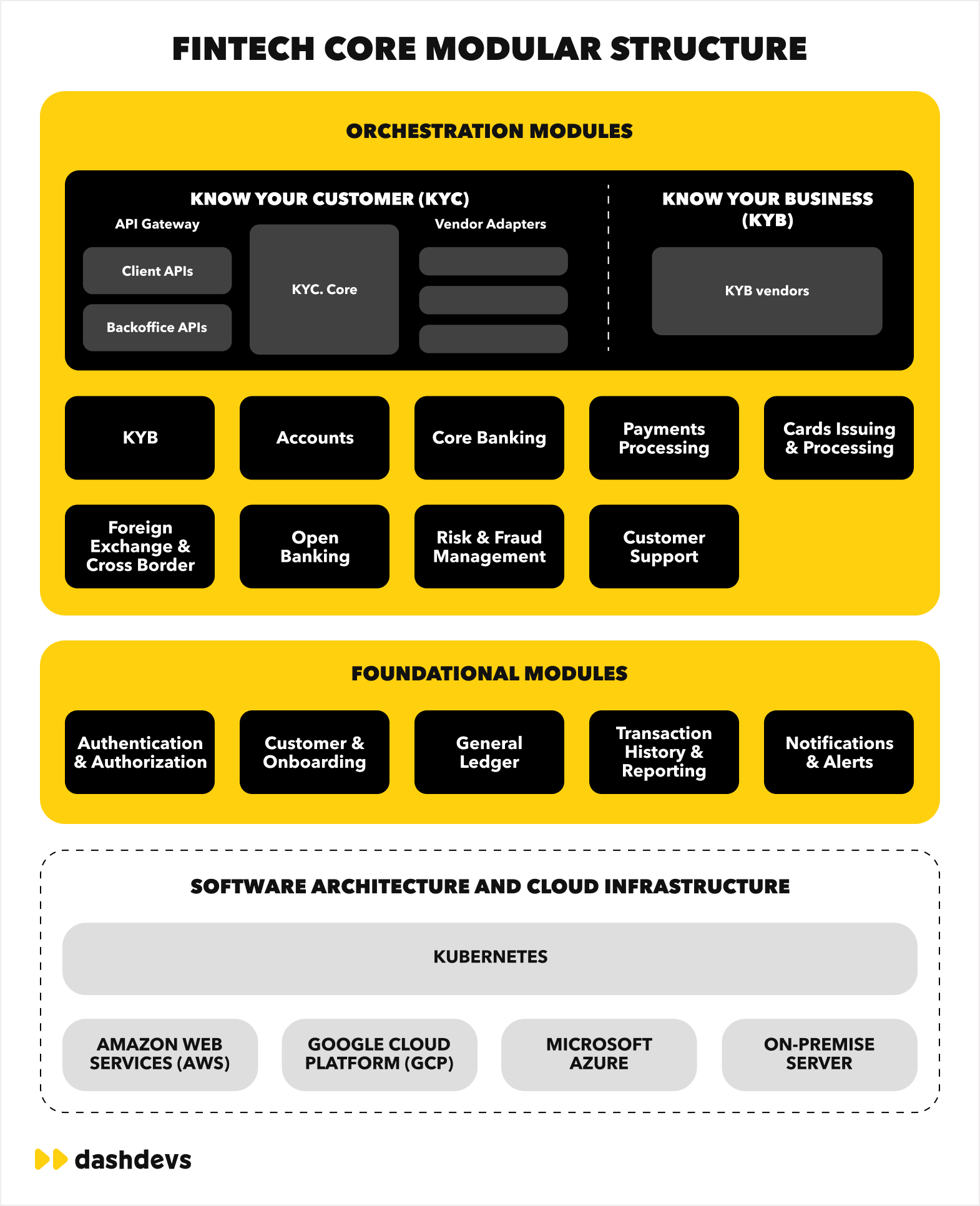
We built a modular architecture on a unified ledger and matching engine, with in-memory processing, asynchronous event queues, and KMS-secured key management. The result: sub-40ms latency, 30K+ TPS sustained throughput, a 95:5 liquidity ratio through automated rebalancing, and 60% faster onboarding. All delivered in six months with a 12-person team. The platform supports 20+ crypto assets, full fiat on/off ramps, and institutional market maker APIs, without rewriting a single core module as the client expanded to new jurisdictions.
See the digital assets trading platform we built for a licensed APAC fintech for the full technical and compliance breakdown.
Architecture Is the Product
How to build a crypto exchange is the wrong question to start with. The right question is: what regulatory regime, custody model, and liquidity architecture does this business require, and can the technology we choose support all three simultaneously?
Every layer in a production exchange has dependencies that run in both directions. Licensing informs architecture. Architecture constrains custody. Custody determines the liquidity model. The teams that get this right treat development as a systems design problem. The market rewards that discipline: Asia-Pacific already holds 42.9% of global exchange volume, the Middle East and Africa is the fastest-growing region at a projected 23.5% CAGR through 2031, and the entire market is forecast to more than double by 2031.
The specific path (custom build, white label, or modular core) depends on where your institution sits: licensed already, licensing in progress, or launching under a partner’s regulatory umbrella. Each starting position produces a different optimal architecture, timeline, and opex profile.
Evaluating the architecture for a licensed exchange or adding blockchain software development services to an existing financial product? DashDevs has built and scaled this stack in production.
Share article
