


Creating a White Label Banking Product: A Buyer's Guide to Build vs. Buy

July 5, 2026
- White label banking is a go-to-market strategy — not a license. You still need a sponsor bank, EMI, or BaaS partner, plus compliance headcount, regardless of how polished the UI looks.
- Four build paths — full custom, BaaS stitching, closed vendor white label, and source-code modular platform — differ more in control, timeline, and year-3 economics than in launch features.
- Technology typically absorbs 20–35% of year-one budget on a white-label path versus 40–60% on full custom build; team and compliance still become the largest cumulative spend by year three.
- Modular architecture matters because provider swap, market expansion, and product line extension are operational requirements — not post-launch nice-to-haves.
- 2026 market research points to rising white-label and BaaS demand — but vendor selection should still hinge on production references, ledger ownership, and three-year TCO, not category growth alone.
- Fintech Core sits between perpetual SaaS lock-in and multi-year custom build: source-code modular platform, pre-integrated providers, and production evidence from regulated neobank programs.
Most teams evaluating white label banking start with the wrong question. They ask which vendor has the prettiest demo app. The question that determines whether the program survives year two is different: how much control do you need over ledger logic, provider contracts, and compliance workflows after launch — and what happens when your first sponsor bank, PSP, or market expansion forces an architecture change?
White label neobank development is a buyer decision spanning licensing, technology, operations, and capital — not a procurement checkbox. Teams evaluating white label neo bank development face the same licensing and compliance gates whether they buy a closed stack or a source-code platform. This guide walks through decisions before, during, and after building: a practical framework for build vs. buy, a platform comparison, cost ranges, compliance obligations, and the modular platform architecture that separates programs that scale from demos that stall. Fintech Core — DashDevs’ source-code modular stack — is positioned throughout as the path that resolves the classic tradeoff between closed white-label SaaS and multi-year custom build.
What white label banking actually buys you
White label bank products are pre-built banking stacks — ledger, onboarding, payments, cards, admin — that a brand customizes and launches under its own name. White label fintech extends the same model to wallets, embedded finance features, and B2B payment products without every team rebuilding core infrastructure. A mature white label fintech platform bundles those modules with admin tooling, audit trails, and provider adapters so product teams focus on brand and distribution rather than ledger mechanics.
What you get:
- Product infrastructure (accounts, ledger, transaction history, notifications)
- Integration scaffolding for KYC, payments, card issuing, and open banking
- Admin and back-office tooling for operations and support teams
- Accelerated path to MVP compared with greenfield engineering — typical for white label neo bank development and full white label neobank development programs alike
What you do not get automatically:
- A banking license or EMI authorization
- A compliance team, MLRO, or audit-ready AML program
- Freedom from sponsor-bank or BaaS commercial terms
- Long-term provider flexibility on closed SaaS stacks with no source access
White label financial services make sense when speed and capital efficiency matter — and when leadership accepts that regulated delivery still requires people, processes, and licensing strategy. Buyers comparing white label digital banking software vendors should ask whether the stack supports their target license class and market count on day one, not only at roadmap end. For context on where the market is heading, see banking trends for 2026 and beyond — composable stacks, embedded finance, and AI-assisted operations are reshaping what buyers should demand from white label digital banking products and white label digital banking software roadmaps.

DashDevs answers: what we’ve seen in production
Can I launch a fintech without my own EMI licence?
Yes. In DashDevs projects, Chip launched a UK savings and investment app in 3 months with a 5-person team by connecting to a partner bank rather than applying for an EMI licence. Chip still needed PCI DSS-compatible controls and APIs to multiple banks. The partner-bank path sets capital and audit duties; the 3-month software clock does not replace them.
How long from a ready core to a live banking product?
Kleos shipped its MVP on Fintech Core in 10 weeks, including Stanhope IBANs, real-time balance sync, and SEPA/SWIFT. Licensed EMI programmes on Fintech Core typically reach production in 12 weeks. The range depends on whether the banking partner is already contracted and whether KYC is already in the stack; Kleos used Sumsub in that same 10-week MVP.
When did a custom bank beat a short modular launch?
Dozens went from product vision to a licensed UK digital bank in 9 months with 60 specialists and a custom core, because the team rejected existing BaaS cores. Nine months is longer than a 10–12 week Fintech Core MVP. Dual FCA permissions (e-money plus MiFID) were the constraint, not the number of mobile screens.
What team sizes have DashDevs actually run on launch programmes?
Chip ran with 5 people over 3 months. iOL Pay ran with 8 people over 3 months on a $150K budget. Dozens needed 60 specialists over 9 months. The jump is product scope: a savings app on a partner bank versus a licensed bank with cards, investing, and 20+ vendors.
Before you build: the four-path decision framework
Treat platform selection as a control, timeline, and economics problem. Most buyers fit one of four paths:
| Path | Best for | Typical MVP timeline | Control profile | Year-3 risk |
|---|---|---|---|---|
| Full custom build | Unique regulated products, deep IP requirements | 12–18+ months | Maximum | Engineering drag, integration debt |
| BaaS + assemble | Fastest license path, narrow product scope | 4–8 months | Low on core rails | Vendor lock-in, fee compression |
| Closed white-label SaaS | Standard neobank feature set, minimal engineering | 3–6 months | Low | Limited swap-out, per-user economics |
| Source-code modular platform (Fintech Core) | Neobank or embedded finance with provider flexibility | 3–6 months MVP | High on product layer | Requires in-house or partner engineering |
Decision questions to answer first
Before signing any vendor contract, align internally on six answers:
- License path — own EMI/banking license, or sponsor bank / BaaS? This sets capital floor and timeline more than software choice.
- Product scope — full white label neo banking platform, embedded accounts/payments inside an existing app, or a narrower white label bank MVP with cards and wallets?
- Market count — single jurisdiction MVP or multi-market architecture from day one?
- Provider strategy — one PSP forever, or multi-rail orchestration with swap capability?
- Team model — in-house engineering, dedicated partner, or hybrid?
- Exit plan — what happens if BaaS pricing changes, sponsor relationship ends, or you outgrow vendor limits?
If you cannot answer #6, you are buying launch speed — not a platform. Compare sponsor options against top BaaS platforms in 2026 before locking product architecture. Many white label banking as a service bundles pair sponsor rails with product software — understand which layer each contract covers before you model white label neo bank development economics.
White label banking is a delivery model, not a regulatory shortcut. The platform accelerates product; it does not replace the license, the MLRO, or the reconciliation discipline.
Expert take: board questions before vendor shortlist
Procurement teams that skip structured diligence usually discover gaps at sponsor onboarding — not at demo day. Before any RFP goes out, align the board or investment committee on five answers:
- What must we own in year three? Ledger rules, provider contracts, audit replay, or only UX and distribution?
- What is our license exit? EMI application, sponsor bank, or phased BaaS — and what happens if the sponsor relationship ends?
- What is the three-year TCO floor? Platform fee plus BaaS per-transaction economics plus compliance headcount — not year-one CapEx alone.
- Who operates reconciliation daily? Finance and ops headcount is rarely in the vendor quote but always in the P&L.
- What is the replatform trigger? Define in writing when you would swap PSP, issuer, or core vendor — and whether your stack supports it without rewrite.
If question #5 has no answer, you are buying a launch demo — not a white label banking platform that survives production scrutiny.
What 2026 market reports mean for white label buyers
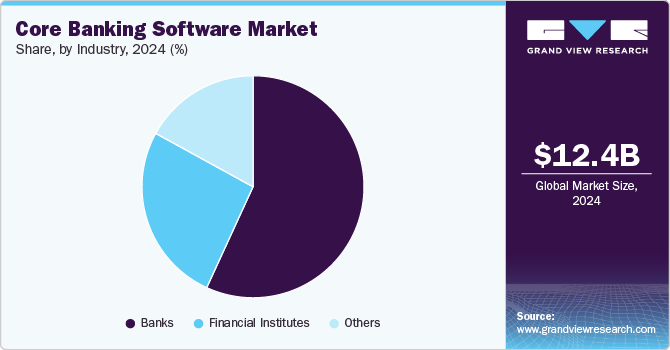
External research in 2026 consistently points the same direction: demand is shifting from API-only BaaS toward branded, launch-ready banking products — exactly the category white label neo bank development occupies.
According to Finextra’s 2026 white label digital banking trends analysis, the combined white-label and BaaS segment is projected to reach roughly $60 billion by 2030, with some forecasts as high as $85 billion by 2032. Buyers are no longer asking whether to embed financial services — they are asking how fast they can launch under their own brand without surrendering architecture control at the first provider renegotiation.
Accenture’s Banking Top Trends FY26 report frames composable, modular infrastructure as a primary modernization path for banks and fintech entrants alike — ledger, payments, and onboarding orchestrated as replaceable modules rather than monolithic cores. That aligns directly with how source-code white label fintech platform stacks like Fintech Core are procured: buy speed for MVP, preserve swap-out for year three.
Expert read: When a vendor cites “2026-ready” without citing live regulated references in your license class, treat market tailwinds as irrelevant. Growth in the category increases vendor count — not vendor quality. Your job is to filter on production evidence, ledger ownership, and adapter depth.
Platform comparison: what buyers should evaluate
Use the same scorecard for every vendor — including custom SIs and white label banking solutions providers:
| Evaluation criterion | Why it matters | Ask the vendor |
|---|---|---|
| Source-code access | Can you modify ledger rules, workflows, and integrations? | Escrow, license scope, modification rights |
| Provider swap | Can you change KYC, PSP, or issuer without rewrite? | Adapter pattern, live swap examples |
| Ledger ownership | Who holds financial truth — you or the vendor cloud? | Double-entry model, export, audit replay |
| Production references | Live regulated programs, not demos | Case studies, license class, markets live |
| Compliance tooling | KYC/KYB, transaction monitoring hooks, audit logs | Pre-integrated vs bring-your-own |
| Commercial model | CapEx license vs perpetual SaaS vs revenue share | 3-year TCO, not year-one license fee |
White label banking platform vendors differ less on mobile UI and more on orchestration depth — how cleanly accounts, ledger postings, payment rails, and card programs connect. Review top core banking solutions for the vendor landscape your modular layer will integrate with, not replace.
For embedded finance use cases — adding accounts or payments inside a non-bank product — compare how platforms support partial module adoption versus full white label digital banking stacks in our overview of embedded finance companies and integration patterns. A white label neo banking platform built on modular principles can start with payments-only scope and expand toward full white label bank functionality without replacing the ledger — a common pattern in white label neo bank development when the first market validates before geographic expansion.
Vendor red flags buyers should walk away from
These patterns surface repeatedly in white label neobank development evaluations — regardless of how polished the demo looks. Treat them as hard stops unless the vendor can show live counter-examples:
- No production references in your license class — only sandbox demos and pitch decks
- Perpetual SaaS with no export path for ledger data, audit logs, or customer records
- Single-provider lock-in on KYC, PSP, and issuer with no adapter documentation
- Compliance treated as add-on — AML tooling quoted separately with no integration spec
- Pricing tied to MAU only — ignores transaction volume, rails count, and jurisdiction expansion
- No answer on year-three economics — vendor optimizes for signature, not your TCO model
Boards approving white label neobank development budget should require written answers on all six scorecard criteria above before shortlist sign-off.
Cost data: what white label neobank development actually costs
Illustrative ranges only — final numbers depend on license class, markets, team location, and feature scope. Use these for board-level planning, not vendor quotes. White label neo bank development budgets differ from consumer app builds because compliance, sponsor fees, and reconciliation ops scale with transaction volume — not user count alone. Finance teams modeling white label neobank development should separate platform CapEx from three-year BaaS and AML vendor run rates; conflating them is the most common error in white label neo bank development business cases we review.
| Cost bucket | White label + modular platform | Full custom build | Notes |
|---|---|---|---|
| Platform / technology (year 1) | $200K–$600K | $800K–$2.5M+ | License, implementation, integrations |
| Regulatory capital & licensing | $350K–€2M+ gate | Same | EMI vs full bank; not avoided by white label |
| Team (year 1) | $600K–$1.8M | $1M–$3M+ | Compliance, engineering, product, ops |
| Compliance & vendors (year 1) | $150K–$500K | $150K–$500K | KYC, AML monitoring, audits, legal |
| MVP timeline | 3–6 months | 12–18 months | After license path clarity |
White label neo bank development on a modular stack often lands at less than one-third the upfront engineering cost of full custom — but only when buyers model three-year TCO. Per-transaction BaaS fees, AML vendor renewals, and payroll scale with volume and jurisdiction count regardless of how the app was built. Sponsored white label bank programs and EMI-led white label neo bank development paths share the same compliance cost floor; the platform choice mainly shifts engineering timeline and provider flexibility.
Teams planning how to launch a neobank should budget compliance and operations as ongoing programs, not one-time setup. Technology saves months; it does not remove headcount.
Expert take: year-three TCO — where white label budgets actually go
Year-one spreadsheets over-weight platform license fees and under-weight what boards see in year three: BaaS transaction margin, AML vendor renewals, sponsor reporting headcount, and engineering spent on provider migrations.
| TCO layer | Often missing from RFP | Typical year-2–3 impact |
|---|---|---|
| BaaS / sponsor per-transaction fees | Quoted as “commercial detail” | Compresses unit economics as volume scales |
| Compliance ops headcount | Assumed “existing team” | MLRO, transaction monitoring, audit response |
| Provider migration cost | Not modeled | Six-figure re-integration if stack is closed SaaS |
| Multi-market expansion | Single-jurisdiction MVP only | Duplicate KYC, reporting, and data residency work |
| Reconciliation discipline | Deferred to post-launch | First sponsor audit exposes ledger gaps |
Finance teams approving white label neo bank development should require a three-year model with at least two volume scenarios — conservative and target — before vendor selection. A platform that wins on year-one CapEx but loses on per-transaction economics or replatform risk is the most common buyer regret we see in regulated programs.
Compliance and licensing: what the platform does not absolve
Every white label banking program needs explicit ownership of:
Identity and onboarding. KYC/KYB workflows, sanctions screening, and ongoing due diligence — integrate via dedicated KYC integration services or pre-built module adapters, but the regulated entity owns policy and audit response.
AML and transaction monitoring. Rules, alert triage, SAR processes, and model governance sit with your compliance function. Platforms provide hooks and data; they do not operate your MLRO desk.
Licensing and sponsor relationships. Whether you hold an EMI license or ride a sponsor bank, contractual and regulatory accountability stays with you. White label banking as a service from a BaaS partner covers rails — not your product risk appetite or customer communication. Evaluate white label fintech vendors on the same sponsor-fit criteria you apply to core banking partners.
Payments and card compliance. PCI scope, strong customer authentication, dispute operations, and scheme rules apply to white label banking apps the same as any issuer or program manager model.
Data residency and reporting. Multi-market white label digital banking requires jurisdiction-aware data storage, regulatory reporting calendars, and audit trails — architected before launch, not retrofitted after the first examiner visit. The same applies to white label digital banking software deployed across EU and UK entities under a single product brand.
Compliance is parallel to build, not sequential. Teams that treat it as “phase two” after MVP usually slip launch by two quarters or ship a product that cannot pass first audit. White label neobank development timelines should assume compliance hardening in phases 1–4 of delivery — not a post-launch bolt-on.
Expert take: sponsor-BaaS alignment checklist
Sponsor banks and BaaS partners evaluate your operating model — not your UI. Before pilot, confirm in writing:
- Who holds MLRO accountability and SAR filing responsibility
- Which system is the financial source of truth for examiner requests — your ledger or the sponsor’s
- How KYC decisions, limits, and block lists sync between your admin and sponsor reporting
- What incident and outage notification SLAs apply when your platform affects sponsor reputation
- Whether product changes (new rails, markets, card programs) require sponsor re-approval
Misalignment here is the leading non-technical cause of white label banking launch delays. Technology velocity is irrelevant if sponsor governance cannot keep pace.
Modular architecture in Fintech Core: technical foundation
White label fintech platform programs that survive production share one property: modular architecture with low coupling between ledger, orchestration, and provider adapters. Closed monoliths launch fast and swap slow. Build a white label neobank on modular principles when provider flexibility and multi-product expansion are part of the business plan — not hypothetical. Buyers entering white label fintech for the first time often underestimate how often provider contracts change in years two and three.

Fintech Core is DashDevs’ modular banking platform for white label neobank development — source-code access, pre-integrated providers, and production use on regulated programs including UK challenger bank Dozens. Two lenses:
Technical: Core ledger layer + orchestration modules + UX-agnostic APIs + provider adapter library + deployment on Kubernetes (cloud or on-premise).
Business: Selective module adoption for embedded finance, or full-stack assembly to launch a neobank MVP in months — without surrendering swap-out paths when PSP, KYC, or issuer contracts change.
Layer 1 — Foundational modules (always on)
| Module | Function |
|---|---|
| Authentication & authorization | MFA, biometrics, role-based access |
| Customer & onboarding | KYC/KYB workflows, admin approval paths |
| General ledger | Double-entry balances across fiat, crypto, equity-like instruments |
| Transaction history & reporting | Searchable activity, statements, exports |
| Notifications & alerts | Multi-channel event delivery, security alerts |
The general ledger is the financial truth layer for every white label banking software build on the platform — not a reporting afterthought.
Layer 2 — Orchestration modules (swap or extend)
| Module | Function | Provider swap |
|---|---|---|
| KYC / KYB | Identity verification, risk scoring | Yes — adapter pattern |
| Banking accounts | Account types, balance management | Core + sponsor integration |
| Core banking logic | Business rules, transaction initiation | Configurable |
| Payment processing | ACH, SEPA, SWIFT, cards | Yes — payment gateway integration orchestration |
| Card issuing | Virtual and physical programs | Yes — Stripe, Marqeta-class adapters |
| FX & cross-border | Rates, conversion, compliance | Configurable |
| Open banking | PSD2-style AIS/PIS connectivity | Yes |
| Risk & fraud | Monitoring, scoring, case management | Yes |
| Customer support | Ticketing, chat, admin tools | Configurable |
Design principle: internal business logic stays stable; provider-specific code lives in extensions. Switching card issuer or KYC vendor should not require rewriting ledger or onboarding core — a requirement most closed white label banking platform SaaS products cannot meet. Payment modules orchestrate rails through the same adapter model used in standalone payment gateway integration services programs.
Expert take: what “adapter swap” means in a vendor contract
Buyers hear “modular” in almost every pitch. In procurement terms, adapter swap means:
- Documented interface boundary between core ledger and each provider module — not hard-coded vendor SDK calls in business logic
- Live swap reference — at least one production example of changing KYC, PSP, or issuer without redeploying the ledger
- Contractual data export — full customer, transaction, and audit log export if you leave the vendor
- Test environment parity — sandbox that mirrors production adapter behavior, not a stub that hides integration debt
If a vendor cannot demonstrate all four, “modular” is marketing language. White label neobank programs built on adapter discipline survive PSP or sponsor renegotiation in year two — closed stacks usually do not.
Layer 3 — Deployment
Fintech Core deploys on AWS, GCP, or Azure via Kubernetes — or on-premise for buyers with data residency requirements. Infrastructure choice is a compliance and commercial decision, not purely technical.
During the build: six-phase delivery model
Whether you build a white label neobank or embed banking into an existing product, DashDevs typically runs six phases:
- Discovery & scope — license path, markets, modules, provider shortlist, compliance gap analysis.
- Architecture & provider wiring — adapter implementation, ledger configuration, environment setup.
- Core implementation — module activation, API integration with your front-end or new app build.
- Compliance hardening — KYC rules, monitoring thresholds, audit logging, penetration testing.
- Pilot & sponsor approval — limited cohort, reconciliation discipline, operational runbooks.
- Scale & extend — additional modules, markets, rails, and white label banking apps feature expansion.
Front-end is intentionally separate: most brands require custom UX. Fintech Core supplies APIs and admin; your team or DashDevs’ neobank app development company practice supplies the customer experience. White label neo bank development timelines assume parallel UX work — not a sequential handoff after backend completion.
Typical MVP window: 3–6 months with parallel compliance work — versus 9–18 months for equivalent scope built from scratch. Programs that treat neobank development as a product-only exercise usually discover ops gaps at pilot; modular platforms accelerate code paths, not reconciliation discipline.
Expert take: parallel workstreams that protect the MVP date
The six phases above fail when run sequentially. Production white label neobank development programs run these workstreams in parallel from week one:
| Workstream | Runs parallel with | Common slip if sequential |
|---|---|---|
| Sponsor / license diligence | Discovery & scope | Backend built before sponsor approves product scope |
| UX design & front-end build | Core implementation | Three-month gap after APIs are “ready” |
| Compliance policy & AML rules | Compliance hardening | Rules written after features ship — rework |
| Reconciliation runbooks | Pilot prep | First cohort exposes ledger gaps under live volume |
| Provider sandbox certification | Architecture wiring | Production launch blocked on PSP UAT |
DashDevs front-loads reconciliation design in phase 1 — not phase 5 — because sponsor approval and pilot cohorts expose financial truth gaps faster than feature checklists do.
After launch: what separates scale from stall
Post-launch buyers succeed when they plan three capabilities early:
Provider migration. First PSP contract renegotiation or sponsor change should not trigger a rebuild. Modular adapters exist precisely for this moment.
Product line extension. Wallets, credit, savings, or B2B embedded finance modules attach to the same ledger — relevant if you started with a narrow white label banking app and expand toward full white label neobank scope.
Operational reconciliation. Ledger sum-to-zero checks, sponsor reporting, and dispute workflows run daily — not quarterly fire drills.
Programs that treat launch as the finish line usually rediscover the same truth: neobank development is an operating commitment, not a one-time software purchase. The platform reduces rebuild risk; it does not remove ops discipline. White label neo bank development that plans for reconciliation and provider migration on day one avoids the costly replatforming cycles that stall most year-two programs.
Why Fintech Core resolves the build-vs-buy dilemma
Closed white label vendors optimize for fastest demo. Custom build optimizes for maximum control. White label fintech platform buyers often need both — speed without permanent lock-in.
| Dimension | Closed SaaS white label | Full custom | Fintech Core |
|---|---|---|---|
| Time to MVP | Fast | Slow | Fast |
| Source-code ownership | No | Yes | Yes |
| Provider swap | Limited | Yes (expensive) | Yes (adapter model) |
| Upfront engineering cost | Lower | Highest | Moderate |
| 3-year flexibility | Low | High | High |
Fintech Core is how DashDevs productizes fifteen years of regulated fintech delivery — not a generic template rebranded, but a white label banking solutions stack hardened on live neobank and embedded finance programs. It is the recommended path when leadership asks: can we launch in one quarter and still own the architecture in year three?
The bottom line
White label banking is the fastest credible path to regulated financial products when paired with the right license strategy, compliance program, and modular technology. The mistake is choosing software before choosing control — then discovering your white label bank cannot change PSP, issuer, or market rules without a rewrite.
Decide path first. Model three-year cost second. Treat compliance as parallel work third. Then evaluate platforms on swap-out depth, ledger ownership, and production evidence — not demo polish. White label fintech buyers who skip that sequence usually overpay for launch speed and underfund year-two ops.
Creating a white label banking product with Fintech Core means buying time without buying lock-in: white label neobank development at MVP speed, modular platform flexibility at scale, and a partner in DashDevs that has shipped regulated programs before your first audit. Whether your roadmap centers on a full white label neo banking platform or a phased white label bank rollout, the same modular core supports both — the buyer’s job is choosing control and economics first, software second.
Share article
