


ISV Payments Explained: Embedded Payments for Software Vendors

August 9, 2026
- ISV payments monetization is a model choice—referral, revenue share, PayFac-lite, or full PayFac—not a single integration ticket.
- Ramp time and capital/compliance load jump sharply once you leave referral and take underwriting or merchant-of-record duties.
- Model depth should follow proven attach rate and dispute volume—not a competitor’s press release about ‘embedded PayFac.’
- ISV integrated payments win when checkout, refunds, and settlement share one ledger narrative with your product objects.
- DashDevs steps in as a build partner when orchestration, reconciliation, and product UX matter more than a reseller brochure.
SaaS founders do not lose the embedded-payments decision on API docs. They lose it on model selection: referral looks free until you leave margin on the table; full PayFac looks rich until capital, sponsorship, and dispute ops show up on the board pack. ISV payments are how independent software vendors turn checkout into a revenue stream—and how they inherit payment risk if they pick the wrong depth.
This guide is for founders, CEOs, CFOs, and product leaders who must quantify that trade-off across referral, revenue share, PayFac-lite, and full PayFac. You will get unit-economics framing, ramp and capital commitments, org design implications, contract levers, ISV payments examples by vertical, and a clear line for when a build partner like DashDevs belongs in the path—not in a partnership slide deck.
What ISV payments actually mean for SaaS leadership
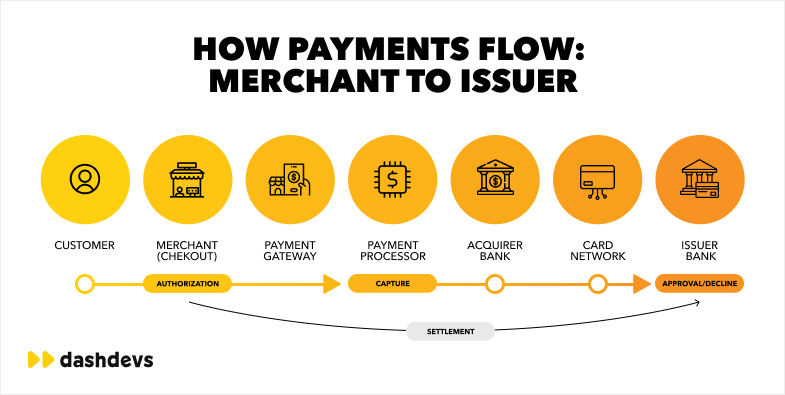
ISV payments (independent software vendor payments) are payment flows embedded inside software your merchants already run—field service, dental practice, property management, vertical CRM, or point of sale—not a separate PSP website. Merchants accept payments in-context; you monetize volume, improve retention, and own more of the payment experience.
In the ISV in payments market, serious buyers evaluate three questions before feature grids: who is merchant of record, who underwrites risk, and who owns the customer relationship management surface when a chargeback lands. Answer those in writing. Only then pick rails, SDKs, and a logo.
The payments decision for an ISV is not “which SDK.” It is “which P&L and which compliance calendar we are willing to run.”
ISV payment solutions that stick treat payments as product surface area—receipts, payouts, refunds, reporting—inside the developed software, not as a bolted widget. If finance still reconciles in spreadsheets while product ships a shiny checkout, you shipped theater.

Why this is a founder decision, not only an eng ticket
Engineering can embed a hosted field in a sprint. Founders own the irreversible parts: multi-year residual contracts, brand promises that “we handle payments,” and the support burden when money is late. A payments-model mistake compounds monthly with volume. Treat model depth like pricing strategy—review it with finance, not only with the payments vendor AE.
Why independent software vendors payments became a board topic
Independent software vendors payments moved from “nice referral” to strategic line item as vertical SaaS replaced generic tools. Merchants expect to accept payments where work happens. Platforms that force a hop to an external checkout lose conversion and open the door to competitors with ISV integrated payments.
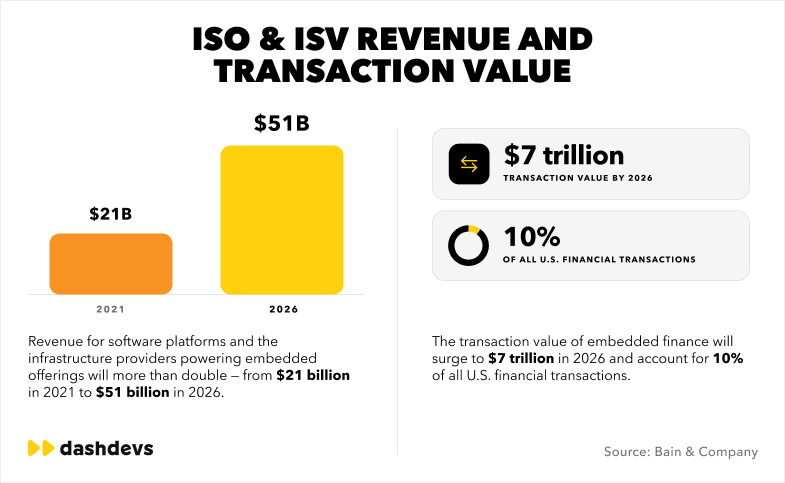
Payment processing for integrated software vendors also changes retention math: switching away from your SaaS means replatforming payments history, payouts, and staff habits. That switching cost is why integrated software vendors treat payments as a moat—not only as transaction fees. Boards now ask for independent software vendors payments forecasts the same way they ask for net revenue retention.
Integrated software vendors that win on attach rate also win on support deflection: fewer “where do I get paid?” tickets. Embedded payments for ISVs further align with how buyers shortlist payment processing companies: coverage of payment methods, settlement honesty, and dispute tooling matter as much as headline interchange.
The board pack questions investors will ask
If you raise or report to a board, expect these five:
- What is payments contribution margin after clawbacks and support—not gross residual?
- What percentage of ARR uses native checkout vs external billing?
- Who can freeze a merchant Friday night, and under which policy?
- What is concentration risk on a single processor or sponsor?
- What is the exit path if residuals or sponsorship terms turn hostile?
Independent software vendors payments strategies that cannot answer (3) and (5) are not strategies—they are demos with invoices attached.
Unit economics founders should run before picking a model
Direct answer: do not choose PayFac because a competitor announced it. Choose depth when contribution margin at realistic attach rates funds the ops you will need at that depth.
A simple contribution model
Use conservative inputs:
| Input | Example (illustrative) | Notes |
|---|---|---|
| Active merchants | 800 | Paying SaaS accounts |
| Payments attach rate | 35% | Merchants processing in-app |
| Avg monthly volume / attached merchant | $18,000 | Industry-dependent |
| Your take (bps or share) | 15–40 bps net, or share of markup | Model-specific |
| Monthly clawbacks / fraud drag | 5–15% of gross payments revenue | Higher in card-not-present |
| Support + tooling cost | $8–25 per attached merchant / month at scale | Rises with PayFac depth |
Illustrative path: 800 × 35% = 280 attached; × $18k = ~$5.0M monthly volume. At 20 bps net after partner split, gross ~$10k/month before clawbacks and support. That may fund a specialist and tooling—or it may not. If your model only works at 70% attach and 40 bps, you are underwriting hope.

If payments contribution cannot fund the risk and support work the model requires, you chose the wrong depth—or the wrong pricing.
What “good” attach looks like by stage
| Stage | Healthy signal | Red flag |
|---|---|---|
| First 50 live merchants | Attach climbs week over week; support tickets are product bugs, not money mysteries | Merchants “try once” and return to Stripe outside your app |
| 200–500 attached | Settlement questions drop; finance trusts daily files | Month-end still needs hero spreadsheets |
| 1,000+ attached | You debate pricing power and corridors, not basic reconciliation | One enterprise forces a PayFac rewrite under deadline |
ISV payments that stall at low attach usually have a workflow problem (checkout outside the job), not a processor problem.
Four monetization models (and what you actually buy)
Direct answer: most teams should start with the lightest model that proves willingness-to-pay, then graduate only when volume and ops capacity justify it.
| Model | How you monetize | Typical ramp | Capital / compliance load | Best when |
|---|---|---|---|---|
| Referral | Bounty or residual for sending merchants to a processor | Weeks | Low — marketing + tracking | Validating demand; thin payment roadmap |
| Revenue share | Share of transaction fees without full underwriting | Weeks–2 months | Low–medium — contract + reporting | Want margin without becoming a facilitator |
| PayFac-lite | Branded boarding, better economics, sponsor still holds heavy risk | 2–6 months | Medium — KYB workflows, support SLAs | Need brand control and margin, not full MoR |
| Full PayFac | Program economics, pricing control, often MoR / facilitation duties | 6–18 months | High — capital, sponsorship, underwriting, disputes | Payments are a core P&L, not a feature |
ISV with payment facilitation is the deep end: you take on facilitation economics and the operational machine that makes them real. ISV payment processing at referral depth is mostly partner configuration and UX glue.

Referral buys speed. PayFac buys control. Confusing the two is how SaaS teams fund a compliance team they never budgeted.
Referral — prove demand without pretending you are a bank
You integrate a partner checkout or deep link, track referrals, and collect fees. Payment processing for ISV here means minimal PCI scope if you stay out of card data—and minimal leverage on pricing.
Founder checklist:
- Instrument attach and drop-off by step (open checkout → auth → settle)
- Confirm residual reporting is machine-readable, not monthly PDFs
- Keep your brand honest: do not imply you underwrite if you do not
Use referral to prove attach rates before you negotiate revenue share. Many Series A teams skip this and overbuy facilitation.
Revenue share — margin without owning risk (mostly)
You stay out of underwriting but earn a larger slice of processing margin. Contracts matter: residual duration, clawbacks on fraud, and whether multi-MID platforms are allowed. This is still not ISV payment facilitation—you are monetizing distribution, not risk.
Negotiate explicitly:
| Lever | Why it matters |
|---|---|
| Residual term and portability | Determines exit cost if the partnership sours |
| Fraud / chargeback clawback windows | Protects you from surprise negative months |
| Sub-ISO / multi-location rules | Vertical SaaS rarely stays one MID per brand |
| Data access (auth, settle, dispute events) | Without events, your product ledger lies |
| Non-solicit and merchant ownership | Clarifies who can sell to “your” merchants later |
PayFac-lite — brand control with a sponsor’s perimeter
Branded merchant application, unified support entry points, and improved pricing through a sponsor. You look like the payments provider in product UX while a licensed partner holds much of the regulatory perimeter. Integrated payments platforms often sell this path as “embedded PayFac” without the full capital stack.
Operational reality: your support team becomes the front door for money questions even when the sponsor owns underwriting. Staff for that. Train for that. Document escalation paths before launch.
PayFac-lite fits when merchants churn if checkout feels “not yours,” but your balance sheet cannot absorb full program capital. Keep the contract line crystal clear on who declines merchants and who funds reserves.
Full PayFac — when payments are the business
You pursue payment facilitation economics: underwriting policy, reserves, pricing, and dispute ownership. ISV embedded payments at this depth become a regulated program, not a feature flag. Expect sponsorship diligence, residual systems, and a real risk committee.
Budget for people, not only licenses: underwriting analyst capacity, dispute specialists, compliance ownership, and engineering for monitoring workflows. Teams that “do PayFac with two backend engineers and a CSM” discover the gap in month two of live volume.
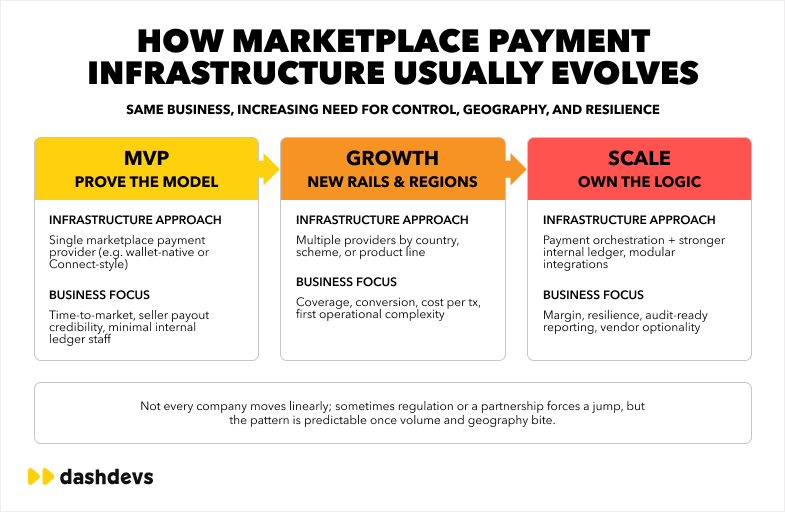
Ramp time, capital, and compliance by model
| Commitment | Referral | Revenue share | PayFac-lite | Full PayFac |
|---|---|---|---|---|
| Engineering to first live merchant | 2–6 weeks | 4–10 weeks | 2–4 months | 4–9 months (often longer) |
| Legal / commercial | Partner terms | Revenue-share MSA | Program addenda + branding | Sponsorship, residual, underwriting policy |
| Capital at risk | Near zero | Near zero–low | Working capital for ops | Reserves, sponsorship deposits, fraud exposure |
| Compliance ops | Light KYC of partner | Reporting + audit rights | KYB UX, support, monitoring SLAs | Full program compliance + merchant monitoring |
| Who owns disputes | Processor | Usually processor | Shared / escalated | You or program (contract-defined) |
| Org add (typical) | RevOps tracking | Finance analyst time | Payments CSM + escalation owner | Risk + compliance + disputes pod |
Integration timelines slip when finance wants custom split payouts, multi-entity settlement, or corridor expansion before the first vertical is stable. Sequence matters: one corridor, one merchant persona, then expand methods—especially once ISV payments move past a single MID.
When your roadmap includes wallets, multi-rail routing, or bank-grade settlement visibility, compare these ISV paths with payments as a service adoption—PaaS-style infrastructure can sit under several of the models above without forcing an immediate full PayFac.
An 18-month graduation path that boards understand
| Phase | Objective | Exit criteria to advance |
|---|---|---|
| 0–3 months | Referral or light share live in one vertical | Attach ≥ target; settlement file automated |
| 3–9 months | Harden UX; negotiate better share or PayFac-lite | Support cost per merchant trending down; dispute rate known |
| 9–18 months | Corridor #2 or facilitation depth | Contribution margin funds named ops roles |
Skipping Phase 1 to “look like a fintech” is a common founder failure mode—and expensive to unwind.
ISV integrated payments: what “good” looks like in product
ISV integrated payments succeed when payment is invisible until it is valuable: invoice → pay → receipt → payout, all inside the same job workflow. Failures cluster around three gaps: reconciliation that finance cannot trust, refund paths that bypass your ledger, and support tickets that bounce between SaaS and processor.
Checklist for product leaders:
- Payment methods match the merchant’s industry (cards, ACH, wallets, local APMs)—not a global catalog dumped into checkout
- Refunds, voids, and partial captures update your domain objects the same day
- Admins see fees and net settlement without exporting five CSVs
- Roles and permissions align with how offices already run customer relationship management and cash handling
- Point of sale and back-office paths share one money narrative
- Webhooks are idempotent and replayable; ops can rebuild a day without vendor screenshots
ISV payment processor choice is secondary to this product contract. A strong processor with a weak ledger story still creates month-end pain.

Event model: the non-negotiable backbone
Before arguing SDKs, define domain events your system must own:
| Event | Product implication |
|---|---|
| authorized / declined | UX and inventory holds |
| captured / voided | Revenue recognition triggers |
| refunded (full/partial) | Customer trust and inventory |
| settled / fee assessed | Merchant payout expectations |
| chargeback opened / won / lost | Risk workflow and reserves |
| payout created / failed | Support load and churn risk |
Payment integration that starts with UI and ends with events is backwards. Events first, chrome second.
ISV payments examples by vertical
ISV payments examples only help if you map model depth to how money moves in that vertical.
| Vertical | Typical flow | Model that usually fits first | Watch-outs |
|---|---|---|---|
| Field service / home services | Invoice on-site, card or ACH | Revenue share or PayFac-lite | Offline capture, tips, technician roles |
| Healthcare / dental | Patient balance, recurring plans | Revenue share | PCI + PHI boundaries; refund policy |
| Property / HOA | Rent and dues, scheduled ACH | PayFac-lite | NSF handling, multi-property MIDs |
| Vertical CRM / membership | Subscriptions + one-off upsells | Referral → revenue share | Churn when billing UX is weak |
| Retail POS | Card-present + ecommerce | PayFac-lite or full PayFac | Hardware, tips, inventory sync |
| Cross-border B2B SaaS | Multi-currency invoices | Partner + orchestration | FX, local methods, payout timing |
How to read the table as an operator
Field service teams care about capture after the job is done; if your flow forces prepay only, attach dies. Property platforms live or die on ACH returns—card-only roadmaps fail quietly. Retail POS without tip and offline paths loses stores even if ecommerce looks fine in demos.
Payment remittance and payout-heavy products should read payment remittance models and costs alongside this matrix—payout rails change facilitation scope faster than card acceptance does.
For corridor expansion after domestic card rails work, treat cross-border payment integration solutions as a separate workstream, not a checkbox on the same sprint as your first MID.
Org design: who you hire at each depth
| Depth | Minimum ownership | Usually too thin |
|---|---|---|
| Referral | Product + RevOps tracking residuals | “Anyone can check the partner dashboard” |
| Revenue share | Finance owner for reports + clawbacks | No reconciliation SLA |
| PayFac-lite | Named payments ops lead + escalation matrix | CSMs inventing underwriting answers |
| Full PayFac | Risk/compliance lead + dispute capacity + engineering for monitoring | Founder-as-underwriter after Series B |
Founders underestimate the soft cost: every ambiguous money ticket hits CSAT and churn. Staff ahead of volume spikes, not after App Store reviews mention unpaid payouts.
Build vs partner: where DashDevs steps in
DashDevs is not a card network. We are a build partner when your differentiation is product workflow, orchestration, and operational honesty—not when you only need a reseller brochure.
Bring engineering help when:
- You need ISV payment integration across more than one processor or acquirer without rewriting checkout twice
- Settlement, fees, and refunds must hit an internal ledger your finance team will defend
- You are assembling a stack—gateway, KYB, fraud, payouts—with an open banking solution provider or bank APIs in the same journey
- White-label UX and merchant portals matter; shortlist leading white label payment gateway providers then harden the product layer
- You need a financial data integration partner to keep CRM, ERP, and payment events consistent
If payments sit next to banking-like balances or stored value, evaluate whether a composable end-to-end banking platform such as Fintech Core is a faster substrate than bolting accounts onto a pure gateway. Teams comparing account ledgers should also scan core banking providers before promising in-app balances.

Vendor selection discipline still applies. Use a fintech integration vendor framework before you sign exclusivity. When capacity is the bottleneck, fintech development outsourcing is often the difference between a six-month slide and a controlled release.
The right build partner reduces irreversible commitments—not the number of logos on your architecture slide.
What “good engagement” looks like in practice: discovery that maps merchant personas and money states; an architecture that separates product ledger from processor quirks; a pilot corridor with exit tests before multi-year lock-in.
Decision framework: which model should you pick?
Score each statement. Three or more “yes” answers in a deeper column usually means that depth is premature—or underfunded.
| Signal | Stay on referral / revenue share | Consider PayFac-lite | Consider full PayFac |
|---|---|---|---|
| Monthly payment volume still experimental | Yes | ||
| Merchants churn if checkout leaves your app | Yes | Yes | |
| You need branded pricing and statements | Yes | Yes | |
| Board expects payments as a material margin line | Yes | ||
| You can staff underwriting / risk / disputes | Partial | Yes | |
| Multi-country methods within 12 months | Partner-led | Sponsor-led | Program-led |
| Contribution margin funds named ops roles | Optional | Required | Required |
Also separate merchant acquiring language from SaaS packaging. If sales decks say “we are the merchant service provider,” make sure legal and sponsorship agreements agree—see how to evaluate a merchant service provider before that claim reaches customers.
A one-page founder decision rule
- If attach is unproven → referral or light share
- If attach is proven and brand matters → PayFac-lite with sponsor clarity
- If payments margin is a company pillar and you can hire the machine → full facilitation path
- If (3) is true but eng capacity is not → build partner before sponsorship signatures
Common failure modes (and how to avoid them)
- Signing a PayFac path to win a single enterprise deal you cannot operationalize
- Shipping checkout without settlement events your ERP can post
- Promising local payment methods without a corridor owner
- Treating PCI as “the processor’s problem” while your mobile app logs PANs
- Locking a five-year residual without exit tests for portfolio portability
- Pricing payments as a loss leader forever, then discovering support costs erased SaaS margin
- Letting sales promise same-day payouts your sponsor cannot fund
Integrated payments platforms market speed. Your job is to buy speed without buying a compliance surprise. Payment processing isv programs that survive audit week have boring runbooks: who freezes a merchant, who funds a reserve, who answers the card brand.
Speed without a freeze policy is not go-to-market. It is deferred incident response.
Closing recommendation
Pick the shallowest model that still improves conversion and retention, measure attach rate and support load for a quarter, then graduate deliberately. ISV payments reward teams that treat money movement as product architecture—not as a partnership slide. Every ISV payment decision should name the owner of disputes before the first merchant goes live.
Founders who win this category do three things early: instrument money states like product metrics, refuse contracts they cannot exit, and hire ops slightly ahead of volume. When you need that architecture built against real processor and ledger constraints, bring a partner who has shipped ISV payments before—not only a rate card.
Share article
