


Recurring Payment Systems: Key Decisions for SaaS and Fintech Companies

July 21, 2026
- At low volume almost any billing setup works; past tens of thousands of active subscribers, a recurring payment system becomes infrastructure that shapes revenue, ops cost, and engineering load.
- Separate soft declines, hard declines, and card-lifecycle failures — retry logic, account updater, and dunning design drive involuntary churn more than feature checklists.
- Stripe Billing, Chargebee, Recurly, and Zuora cover most teams for a long time; usage-based pricing, multi-entity, multi-currency settlement, and routing optimization are the usual breakpoints.
- Build vs buy depends on volume, pricing complexity, PCI/SCA surface, and whether authorization and recovery rates are treated as business KPIs — not just engineering preferences.
- Implementation is the hard part: wiring billing to processors, ledgers, ERP, and compliance workflows usually matters more than picking a logo from a vendor shortlist.
At low subscription volume, almost any billing setup works well enough. A few thousand active subscribers, a handful of plan tiers, one processor — finance closes the month, support handles the odd card decline, and nobody calls a recurring payment system an architecture problem. That comfort ends quietly. Somewhere between roughly 10K and 500K active subscribers, the same stack starts deciding how much revenue you actually collect, how many engineers babysit failed runs, and how expensive it becomes to ship a new pricing model.
This piece is for Heads of Payments, VPs of Engineering, and CTOs who already know what recurring payments are. The SERP is full of definitions. What is missing is an infrastructure decision guide: when off-the-shelf billing platforms still fit, where they bend, how failed payment recovery behaves at volume, and how to frame build vs buy without a slide-deck fantasy.
When Recurring Payments Stop Being a Feature
A recurring payment system becomes infrastructure — not a checkout feature — when failed renewals, pricing changes, or multi-entity settlement start shaping revenue and engineering cost.
It is the combination of subscription state, tokenized payment methods, gateway or processor connectivity, retry and dunning policy, invoicing, and the reporting that finance and product trust. Automatic payment systems look identical on a demo day. They diverge the moment you need to process recurring payments across multiple entities, currencies, or pricing schemes while keeping involuntary churn under control.
Operators usually hit the inflection when one of these shows up:
- Pricing outgrows simple seats × monthly or annually — usage based billing, credits, minimums, or mid-cycle changes become normal.
- Failed-payment volume turns into a dedicated ops queue, not an occasional Zendesk ticket.
- Finance asks for revenue recognition, multi-entity splits, or tax treatment the billing tool was never configured to own.
- Product wants local payment methods, ACH/direct debit mandates, or routing that one processor cannot optimize alone.
If you are still evaluating “how to set up recurring payments” for a first product, stop here and pick a managed billing platform. If you are deciding whether Stripe Billing alone still holds, or whether Chargebee, Recurly, Zuora, or custom orchestration belongs in the stack, keep reading. The rest of this guide assumes you already run recurring payments in production and need the recurring payment system to survive the next growth stage.
In short: treat billing as a system when complexity or recovery volume — not vanity subscriber count — starts driving P&L and roadmap risk.
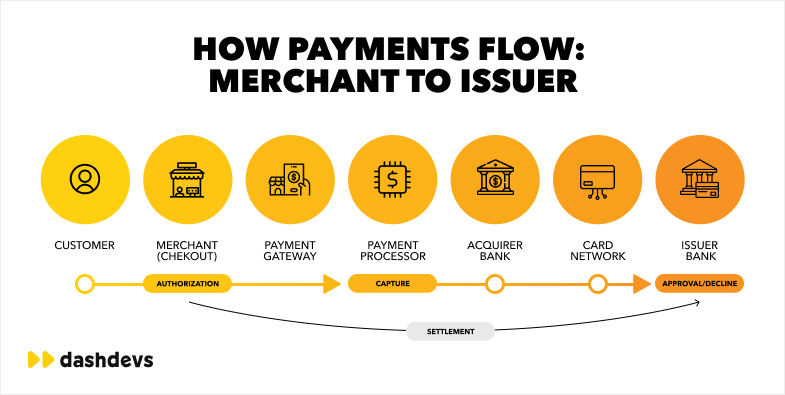
How a Recurring Payment System Works at Infrastructure Depth
Operators need four layers to work together: vault, billing state, gateway/PSP, and retry policy. Missing any one of them is how “we turned on subscriptions” becomes a quarterly incident review.
Tokenization and the vault. Card and bank credentials should never live in your application database. A PCI-scoped vault (processor-hosted or certified third party) stores payment details and returns tokens. Your recurring billing system schedules charges against those tokens. Scope of PCI DSS — and whether SCA/PSD2 applies on initial setup vs. subsequent MIT (merchant-initiated) transactions — is decided here, not in a policy PDF.
Billing layer vs. gateway. The billing layer owns plans, entitlements, invoices, proration, trials, and subscription status. The payment gateway integration services layer (or PSP) authorizes, captures, and settles. Confusing the two is how teams buy “billing” and still lack a coherent payment gateway for recurring payments when declines, 3DS challenges, or network tokens appear.
Subscription state and retries. When a charge fails, something has to decide: retry when, with which network data, after which customer message, and when to mark the subscription past_due or canceled. That logic is the difference between an automated payment system and a spreadsheet of exceptions. Mature recurring payment processing treats retry policy as product configuration with measurable lift — not a cron that fires blindly for seven days. A weak recurring payment system hides those decisions in opaque vendor defaults.
Transaction processing under load. At scale you are running specialized transaction processing systems: idempotent charge attempts, webhook reconciliation, ledger postings, and support tooling that can explain why subscriber X was not charged on Tuesday.
If that sounds like building a custom payment gateway, you are already past “flip a Billing switch” territory. Teams we work with at DashDevs usually discover this boundary when webhook reconciliation and ledger postings start competing with product roadmap time.
Failed Payments Are the Product: A Practical Taxonomy
Failed payments — not plan catalogs — are the core operational challenge of any recurring payment system. Classify decline types or your recovery metrics lie.
| Decline class | Typical causes | System response | Risk if mishandled |
|---|---|---|---|
| Soft | Insufficient funds, velocity holds, issuer blips | Intelligent retries, timing windows, optional alternate path | Burned auth rates, issuer fatigue |
| Hard | Stolen card, closed account, permanent do-not-honor | Stop retries fast; clear update-payment path | Wasted fees, customer ignore patterns |
| Card lifecycle | Expiry, reissued PAN | Account updater, network tokens, pre-dunning prompts | Fake “voluntary” churn |
Intelligent retry logic, account updater, and dunning campaign design (channel, tone, cadence, and when to restrict product access) directly set involuntary churn. Industry analyses of Stripe-scale subscription data put involuntary churn in the ballpark of roughly one-fifth to two-fifths of total churn for many SaaS categories (Churnkey / Stripe-linked benchmarks) — enough that recovery design is a revenue problem, not a support script. When you evaluate recurring payment software, ask for recovery-rate benchmarks by decline class — not a checkbox that says “dunning emails included.”
On Fintech Garden episode 112, Igor Tomych and Dumitru Condrea framed payment orchestration around acceptance-rate optimization and automation of financial processes — the same lens that should govern renewal runs when volume makes every basis point of recovery visible on the P&L.
In short: if your recurring payment management cannot separate soft, hard, and lifecycle failures, you cannot optimize recovery — only average it.
Where Off-the-Shelf Platforms Bend (Without Dismissing Them)
Stripe Billing, Chargebee, Recurly, and Zuora remain the right answer for a long stretch of growth. Extend or supplement them when pricing, entities, currencies, routing, or ERP depth outgrow clean configuration.
Watch for these breakpoints:
- Highly customized usage-based pricing that the platform can only approximate with workarounds, webhooks, and shadow ledgers.
- Multi-entity operations — separate legal entities, tax IDs, or settlement accounts that need clean isolation in invoicing and payouts.
- Multi-currency settlement where FX timing, local payment methods, and recognition rules outgrow the default catalog.
- Payment routing optimization across multiple PSPs for auth-rate or cost — the territory of payment orchestration rather than a single-homed billing UI.
- Deep ERP or revenue recognition integrations that turn the billing tool into a fragile middleware project.
Recurring payment solutions in this tier still earn their keep; many teams keep Chargebee or Recurly as the system of record for subscriptions and add orchestration, a stronger vault strategy, or custom rating beside them. The mistake is treating “we bought a recurring payment platform” as the end of architecture.
Payment Performance Is a Business Metric
A recurring payment system must maximize collectible revenue, not only schedule charges. If you do not own authorization and recovery KPIs, you are flying the billing stack without instruments.
Track:
- Authorization rate on renewal attempts (by method, country, and decline code).
- Retry success rate within your dunning window.
- Payment recovery rate as a share of initially failed invoices.
- Involuntary churn attributed to payment failure vs. true cancellation.
Even a one-point lift in authorization or recovery compounds across tens or hundreds of thousands of subscribers. That is why comparing the best payment processing companies and billing vendors on list-price features alone misses the point. Ask how they improve network tokens, smart retries, and updater coverage — and how you will measure lift after go-live. Recurring payments that “succeed” in the processor but fail finance reconciliation still count as operational debt.
Automatic payment processing without performance ownership is just a quieter way to leak MRR. Treat the recurring payment system as a revenue engine with owners, dashboards, and targets — the same discipline DashDevs applies when instrumenting payment stacks before a platform swap.
Build vs Buy for Recurring Billing Infrastructure
Most mid-market SaaS teams should buy a billing platform and extend selectively. Build (or heavily customize) only when pricing, orchestration, or compliance constraints make vendor roadmaps the bottleneck — and you can fund the PCI and maintenance cost.
| Factor | Prefer buy / buy+extend | Prefer build / heavy customize |
|---|---|---|
| Pricing model | Fits seats, tiers, standard usage | Proprietary rating, multi-party splits |
| Engineering capacity | Better spent on product | Dedicated payments team already exists |
| PCI / SCA | Need certified vaults and MIT flows fast | Willing to own vault and exemption edge cases |
| Processor strategy | Single PSP is enough for now | Need multi-PSP routing and orchestration |
| Time-to-market | Plan changes must ship in weeks | Differentiation is the billing engine itself |
| TCO lens | License + recovery tooling | Salaries + compliance + forever maintenance |
Total cost of ownership must include failed payment recovery, authorization rate lift, tooling for support, and finance ops — not only license fees vs. salaries. Teams hunting for the best recurring payment system sometimes discover the winning answer is a commercial billing core plus selective custom services, not a greenfield rebuild. Recurring payment systems that look cheap on license fees can still lose on recovery performance.
If you are buying capability as infrastructure rather than assembling every PSP yourself, payment platform as a service models belong in the same conversation: own the decisions, rent the undifferentiated heavy lifting.
Modular Fintech Core building blocks are useful when you need ledger-aligned money movement beside commercial billing — without pretending a single vendor checkbox covers the whole stack.
As Rob Lunn noted on Fintech Garden episode 128, without interoperability between payments, treasury, and accounting, automation amplifies inefficiency. The same applies to recurring payment systems that charge successfully in the processor but never reconcile cleanly into the ledger finance trusts.
Compliance That Changes Platform Selection
Ask how rules change architecture — not whether a vendor “supports compliance.”
- PCI DSS scope decides whether you ever touch raw PANs. Prefer tokenized flows and certified vaults; building your own vault is a multi-year compliance program, not a sprint.
- SCA/PSD2 changes initial checkout and some retry paths in Europe. Platforms differ in how they manage exemptions and MIT indicators — that difference shows up in auth rates, not in marketing pages.
- ACH and direct debit mandates add consent storage, notification duties, and dispute handling that many recurring payment systems treat as an afterthought. If bank rails are strategic, evaluate mandate UX as carefully as card dunning.
Broader fintech regulations across US, EU, UK, and MENA corridors also affect whether you can single-home on one processor or need regional routing. That is an operating constraint, not a legal footnote.
Implementation Is Where Strategy Meets Reality
Platform selection is the easy slide. The hard work is integrating billing with processors, entitlements, tax, ERP, and the ledger — in that order of risk.
Growing subscription businesses typically sequence it like this:
- Stabilize subscription state and tokens.
- Instrument decline taxonomy and recovery KPIs.
- Add updater and smarter retries.
- Introduce orchestration or a second PSP only when measurement proves the gap.
If your product also issues cards or wallets beside subscriptions, card issuing integration solutions collide with the same vault and KYC questions — plan the identity and funding model once, not twice. When you shortlist processors and program managers later, compare card issuing platforms against that shared vault design rather than bolting issuance on as a parallel stack.
Evaluation checklist before you commit
Use this before signing a billing or orchestration contract:
- Decline codes mapped to soft / hard / lifecycle with separate playbooks
- Authorization, retry, recovery, and involuntary churn owned as KPIs (not support tickets)
- PCI scope explicit; no raw PAN path in your app
- SCA/MIT behavior verified for your EU (and other) corridors
- Pricing model fits without a shadow ledger
- Finance can reconcile processor settlements to invoices without weekly heroics
- Clear path to a second PSP or orchestration if auth-rate or cost targets slip
- Support tooling can explain a single failed renewal end-to-end
What we’ve seen building this at DashDevs
Across SaaS and fintech engagements — including work reflected in our Kleos core banking case — the pattern is consistent: teams underestimate data model and decline taxonomy work, overestimate the value of another feature on the billing checklist, and discover too late that finance and support workflows were never redesigned for automated recovery. The recurring payment systems that scale are the ones where product, payments, and finance agree on what “collected” means before the next 10x subscriber jump.
Choosing Among Recurring Payment Systems Without a Fantasy Shortlist
There is no single best recurring payment system for every SaaS or fintech company. Prefer vendors and architectures that expose decline-level analytics, support your pricing model without shadow ledgers, keep PCI scope narrow, and leave a clean path to orchestration when one processor is no longer enough.
Automatic payment systems that look complete in a sandbox still fail production review if they cannot explain yesterday’s failed renewal cohort.
Recurring payments will keep looking simple from the outside. Inside a scaled business they are a system: tokens, state, retries, compliance, and revenue performance wired together on purpose. Choose a recurring payment system with that definition — and treat every basis point of authorization and recovery as product work, not back-office noise.
Share article
