


From Compliance to Opportunity: Building Value with SEPA Instant Payments

October 5, 2026
- Eurozone EMIs and PIs face a hard compliance deadline of April 9, 2027, for both sending and receiving.
- 44% of EU SMEs expect instant payments to cut costs, while 27% expect direct cash flow improvements.
- Transfers settle irrevocably in under 10 seconds, forcing fraud and Verification of Payee (VoP) checks pre-execution.
- ISO 20022 structured address work still belongs on the 2026 roadmap: the EPC delayed the 15 November 2026 unstructured-address cutover, but the destination format has not changed.
- Compliance requires replacing legacy batch processing with continuous system availability, real-time fraud scoring, and dynamic liquidity controls.
For years, Europe’s payment rails have been fast, but not instant. That changed with the Instant Payments Regulation (IPR).
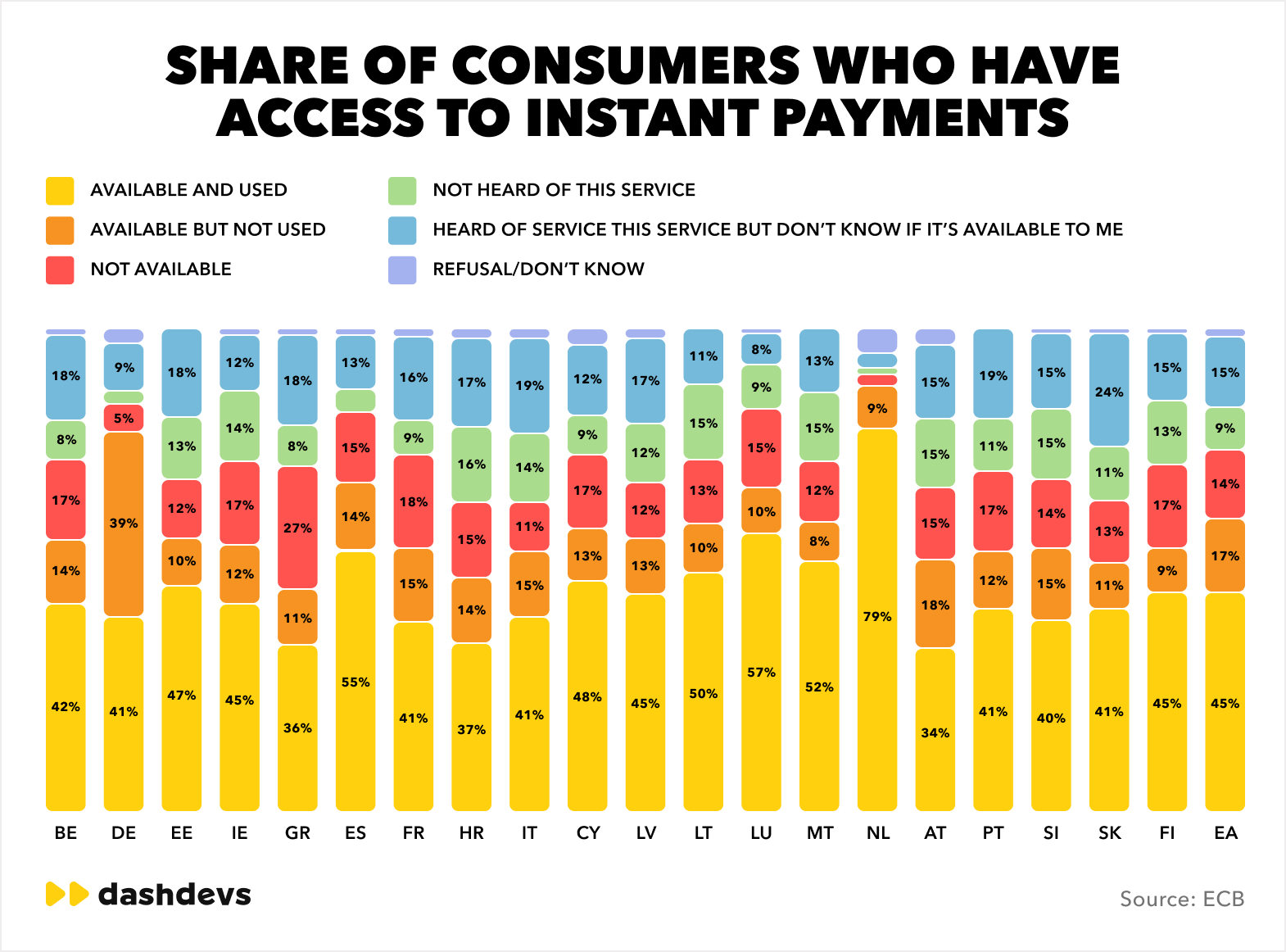
Eurozone Payment Service Providers (PSPs) and banks must now receive and send SEPA instant payments at no extra cost, 24/7/365, with funds credited in under 10 seconds. According to the ECB’s payment statistics for the second half of 2025, instant credit transfers already accounted for 25% of euro-area credit transfer volume by number in retail payment systems. The rails are live. The question is whether your product is on them.
SCT Inst adoption is no longer voluntary for most institutions. Non-compliance now carries direct regulatory risk, not just a competitive disadvantage. This guide is written for CTOs, heads of payments, and product leads at EMIs, payment institutions, neobanks, and fintechs that must run SCT Inst reliably under the Instant Payments Regulation. It covers current compliance status, the technical lifecycle, and practical paths to implementation.
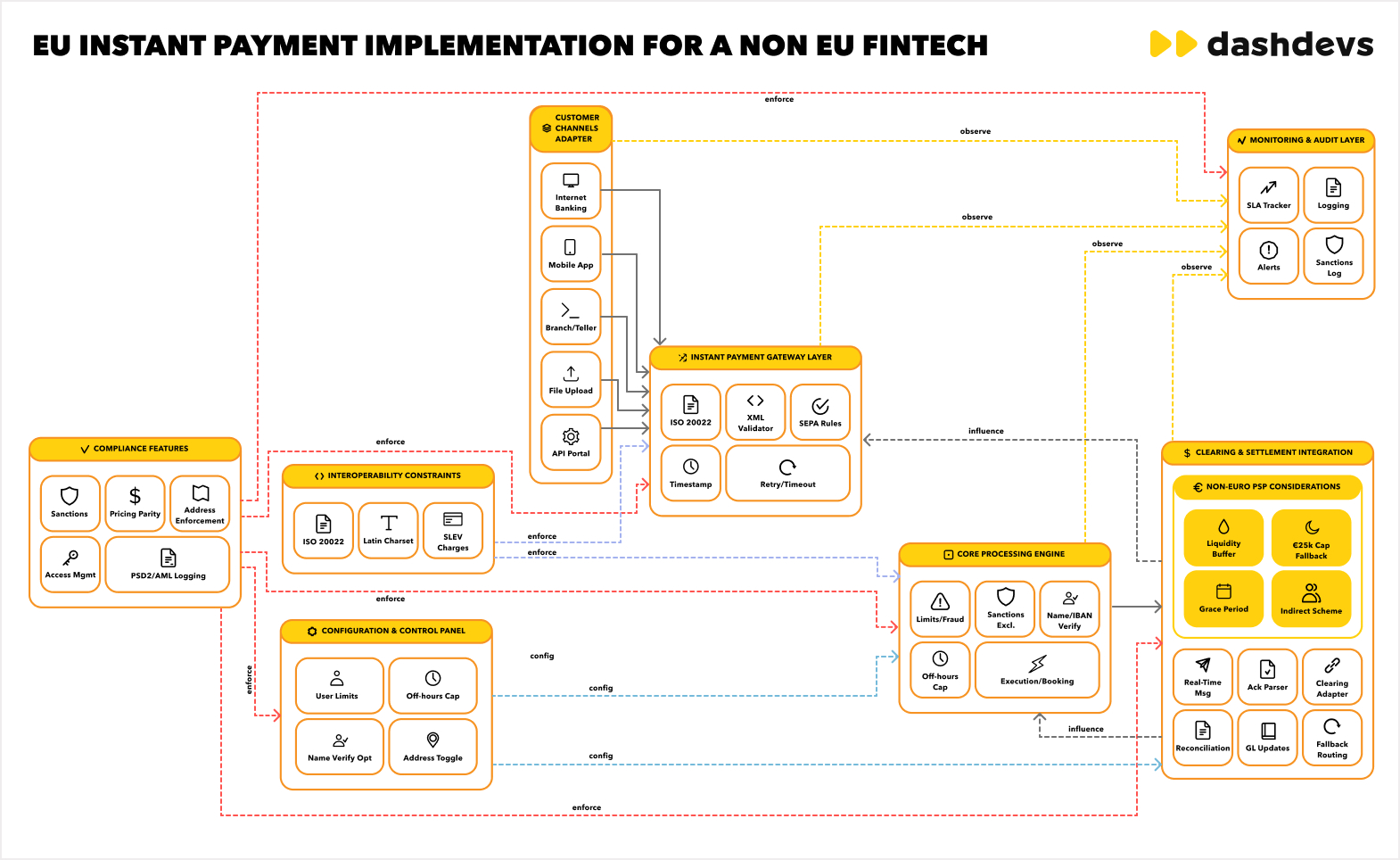
For many financial companies, IPR means rethinking everything from core banking architecture to liquidity management to enable 24/7/365 availability, zero downtime, real-time fraud checks, name verification, and daily sanctions screening.
IPR Timeline: 2025–2027 Status
The Instant Payments Regulation (EU) 2024/886 entered into force on 8 April 2024. Implementation is staggered by institution type and geography:
| Institution Type | Receive Instant | Send Instant + VoP |
|---|---|---|
| Eurozone PSPs (excl. EMIs & PIs) | 9 Jan 2025 — LIVE | 9 Oct 2025 — LIVE |
| Eurozone EMIs & Payment Institutions | 9 Apr 2027 | 9 Apr 2027 |
| Non-eurozone PSPs (excl. EMIs & PIs) | 9 Jan 2027 | 9 Jul 2027 |
| Non-eurozone EMIs & Payment Institutions | 9 Apr 2027 | 9 Jul 2027 |
The 2026 Structured Address Cutover
One additional cutover was scheduled for everyone: from 15 November 2026, unstructured address fields in ISO 20022 messages were due to stop being permitted for SEPA schemes, including SCT Inst. In September 2026 the EPC delayed that unstructured-address end date. A new date is still to be set. The destination has not changed: structured (or hybrid) addresses in pacs.008. Treat the original November 2026 date as the planning target and keep shipping structured formatting now.
If you operate as an electronic money institution or payment institution, April 2027 is your hard deadline for both receiving and sending. Architecture and compliance preparation must be underway now.
For a full breakdown of the ISO 20022 migration timeline, see our detailed guide.
SEPA Instant vs. SEPA Credit Transfer: What Actually Changes
Both schemes move euros within SEPA. The differences matter at the infrastructure level. Initiating an instant SEPA transfer looks identical to a standard credit transfer at the UI level. The divergence happens in your backend: processing timeouts, idempotency requirements, and irrevocability rules that standard SCT doesn’t impose.
| Feature | SCT | SCT Inst |
|---|---|---|
| Settlement speed | Next business day (up to 1 day) | Under 10 seconds, guaranteed |
| Availability | Business hours, banking days | 24/7/365, including weekends and holidays |
| Transaction limit | No regulatory ceiling | €100,000 EPC scheme baseline (higher limits possible via bilateral agreement) |
| Finality | Revocable under dispute conditions | Irrevocable on credit; recall via camt.056 only |
| Pricing | Standard bank fee | Must be equal to or lower than standard SCT |
| VoP requirement | Mandatory from Oct 2025 (eurozone) | Mandatory from Oct 2025 (eurozone); must be provided free of charge to end-users |
| Message format | ISO 20022 (pacs.008) | ISO 20022 (pacs.008) with mandatory processing timeout |
| R-transactions | Standard pain.002, camt.056, pacs.004 | Must complete within the 10-second window or auto-reverse |
The critical operational difference: SCT Inst is irrevocable once credited. Your fraud and VoP checks must fire before the payment leaves your system, not after. There is no recall window comparable to standard credit transfers.
If no settlement confirmation arrives within 10 seconds, the transaction must auto-reverse. Your backend must handle this timeout as a first-class state, not an edge case.
The Business Case for SEPA Instant Payments Adoption
Consumers already expect immediate execution. Businesses, especially SMEs, are rapidly catching up.
According to SWIFT research:
- 44% of EU-based SMEs believe the Instant Payments Regulation will save them money.
- 27% expect it to improve cash flow.
With SEPA instant payments making money visible and usable in real time, treasury stops lagging behind transactions. Suppliers get paid instantly, and refunds clear before customer complaints escalate. Furthermore, three-quarters of consumers who rely on disbursements for core income want those payments instantly, creating a strong push for employers, fintechs, and marketplaces to offer instant payouts as a baseline product feature.
For most early adopters, the initial priority was compliance re-architecture. The real commercial upside lies in building new financial products on top of instant payment rails to link markets, simplify settlement, and open new revenue streams. Institutions that understand banking software development as an infrastructure discipline are best positioned to capture that upside.
Most institutions running SCT Inst in 2026 are doing so alongside existing SWIFT and standard SEPA rails, not instead of them. For institutions managing hybrid payment architectures, see our analysis on how fintechs combine SEPA and SWIFT payments. Our multi-rail payments in Europe guide covers routing when instant is one path among several.
SEPA Instant Use Cases by Vertical
Instant settlement transforms product logic across multiple sectors:
Lending Platforms: Loan disbursement at the moment of approval eliminates the gap between credit decision and funds availability. Borrowers who receive funds instantly convert better and report higher satisfaction. Repayment collection via instant transfer also reduces missed direct debit windows.
Payroll Providers: On-demand pay becomes viable when the rails support it. Contractors, gig workers, and shift employees increasingly expect same-day or per-shift payouts. The IPR pricing parity rule removes the cost barrier that previously made this model uneconomical.
Wealth & Investment Firms: Instant settlement on client-initiated withdrawals reduces friction at redemption. It also enables real-time margin calls and instant top-up flows for trading products.
Travel Agencies & Platforms: Booking cancellation refunds clear in seconds. Dynamic pricing guarantees and hold deposits become more credible when funds move instantly in both directions.
Merchants & E-Commerce: Pay-by-bank at checkout settles faster than cards. SCT Inst clears before goods ship. Combined with shifts in how merchants weigh pay-by-bank vs card payments, instant SEPA payments eliminate float, reduce chargeback exposure, and provide real-time reconciliation. For platforms expanding globally, integrating cross-border payment solutions with local instant rails maximizes conversion.
How SEPA Instant Works: The 10-Second Transaction Lifecycle
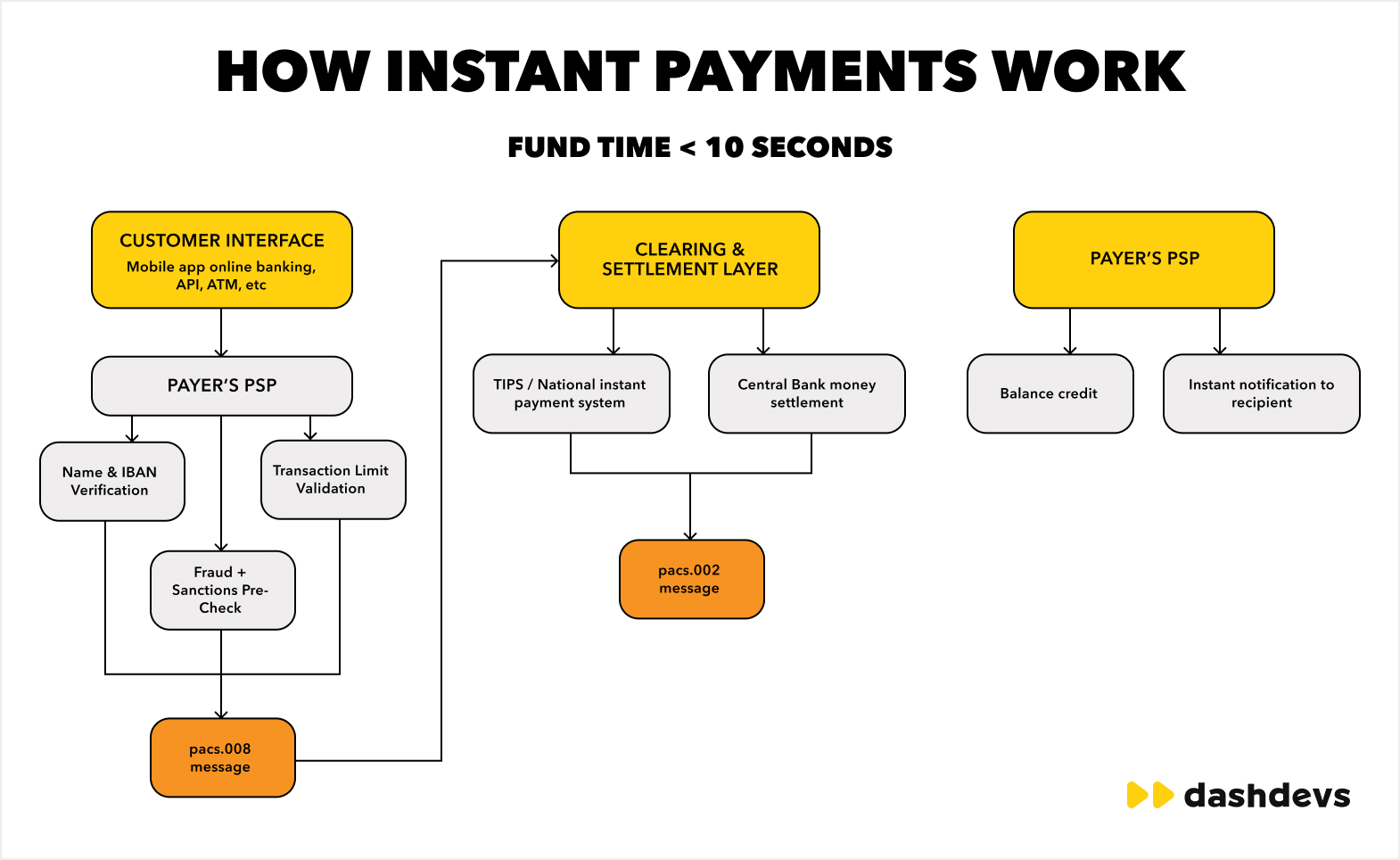
When a payer initiates a SEPA Instant payment via mobile, web, ATM, or API, the system must complete the following sequence within 10 seconds:
VoP Check: The payer’s PSP queries the VoP service to confirm the name matches the IBAN. The result is displayed before payment confirmation. If there is no match, a warning appears; if there is a close match, the registered account name is displayed.
Sanctions & Fraud Scoring: Daily sanctions screening covers the customer base in advance rather than at transaction time. At execution, the risk engine scores the transaction against behavioral baselines, device signals, and velocity patterns in milliseconds.
pacs.008 Dispatch: If all checks pass, the originating PSP sends a pacs.008 ISO 20022 credit transfer message to the clearing layer, such as TIPS (TARGET Instant Payment Settlement) or RT1.
Settlement in Central Bank Money: The clearing engine validates and settles immediately in central bank money, crediting the payee’s PSP within seconds.
pacs.002 Acknowledgment: The payee PSP returns a confirmation message (pacs.002). The payer receives final status confirmation, the payer’s account is debited, and the payee’s account is credited.
Timeout & Exception Handling
If no pacs.002 arrives within 10 seconds, the transaction must auto-reverse. Your idempotency layer must treat the timeout as a definitive outcome, not a retry trigger. Duplicate detection on pacs.008 re-sends is a core production requirement.
Three ISO 20022 message types govern exception handling:
- camt.056: Recall request
- pacs.004: Payment return
- camt.029: Resolution of investigation
When a timeout occurs before receiving pacs.002, issuing a pacs.028 (Payment Status Request) to clearing before triggering auto-reversal is a recommended operational safeguard. It confirms the final transaction state and prevents double-credit edge cases. This is not mandated by the EPC SCT Inst Rulebook, which requires auto-reversal via pacs.004, but teams running at scale treat it as a standard pre-reversal step.
Implementation Paths: Three Approaches
Choosing the right implementation strategy depends on your core stack maturity and speed-to-market requirements:
| Path | Description | Best For | Key Trade-off |
|---|---|---|---|
| 1. Upgrade Existing Core | Extend the current SEPA or core banking system to support instant SEPA processing | Institutions with modern, API-first cores | Migration downtime risk; high dev cost |
| 2. Parallel Instant Layer | Build a separate instant payments module alongside the current infrastructure | Teams needing fast rollout while modernizing in parallel | Dual-system maintenance overhead |
| 3. Direct Clearing or BaaS | Connect directly to TIPS/RT1 or via a sponsor bank/embedded core | Non-bank PSPs, EMIs, and newer fintechs | Liquidity prefunding; BaaS dependency risk |
When evaluating payment gateway integration services for multi-rail builds, Path 3 is often the fastest route to market for EMIs and PIs without legacy SEPA infrastructure. Our work with MuchBetter on multi-rail SEPA Instant payments is a concrete example: direct participation requires meeting DORA-aligned IT continuity standards, maintaining liquidity buffers, and fulfilling scheme governance obligations.
Choosing the Right Path
Most teams pick an implementation path based on speed-to-market. The ones that get burned pick it without accounting for what fails under production load.
Path 1. Upgrading your existing core: The risk is what you discover mid-migration: synchronous DB writes that made sense in batch processing becoming latency bombs under 24/7 instant load. Connection pools that handle overnight batch volumes fine but exhaust within hours when every transaction is real-time. Any end-of-day reconciliation job, blocking I/O on payment status, or legacy ledger commit sitting in your critical path will surface here under live traffic.
Path 2. Building a parallel instant layer: The dual-system approach is fast to launch and slow to maintain. The failure mode is operational. Without a single event stream (Kafka or equivalent) feeding both systems, you get two sources of truth for transaction state. During weekend peak volumes, when your legacy SEPA infrastructure is effectively idle but the instant layer is running at full capacity, ledger drift becomes the norm rather than the exception.
Path 3. Direct clearing or BaaS: The primary failure mode is underestimating weekend liquidity buffering and DORA compliance requirements. Connecting directly requires 24/7 liquidity forecasting and strict IT continuity controls. Relying on BaaS introduces sponsor bank dependency risks.
Core Implementation Requirements
1. 24/7/365 Availability
Instant payment flows never pause. Under the IPR, PSPs must keep systems continuously available without reliance on batch jobs or end-of-day closures. All transactions, reconciliations, and reports must trigger in real time.
Build active-active setups across multiple regional data centers, replacing maintenance shutdowns with rolling blue-green or canary deployments. Deploying modular fintech infrastructure for licensed PSPs and EMIs helps maintain event-driven compliance and high availability.
2. VoP
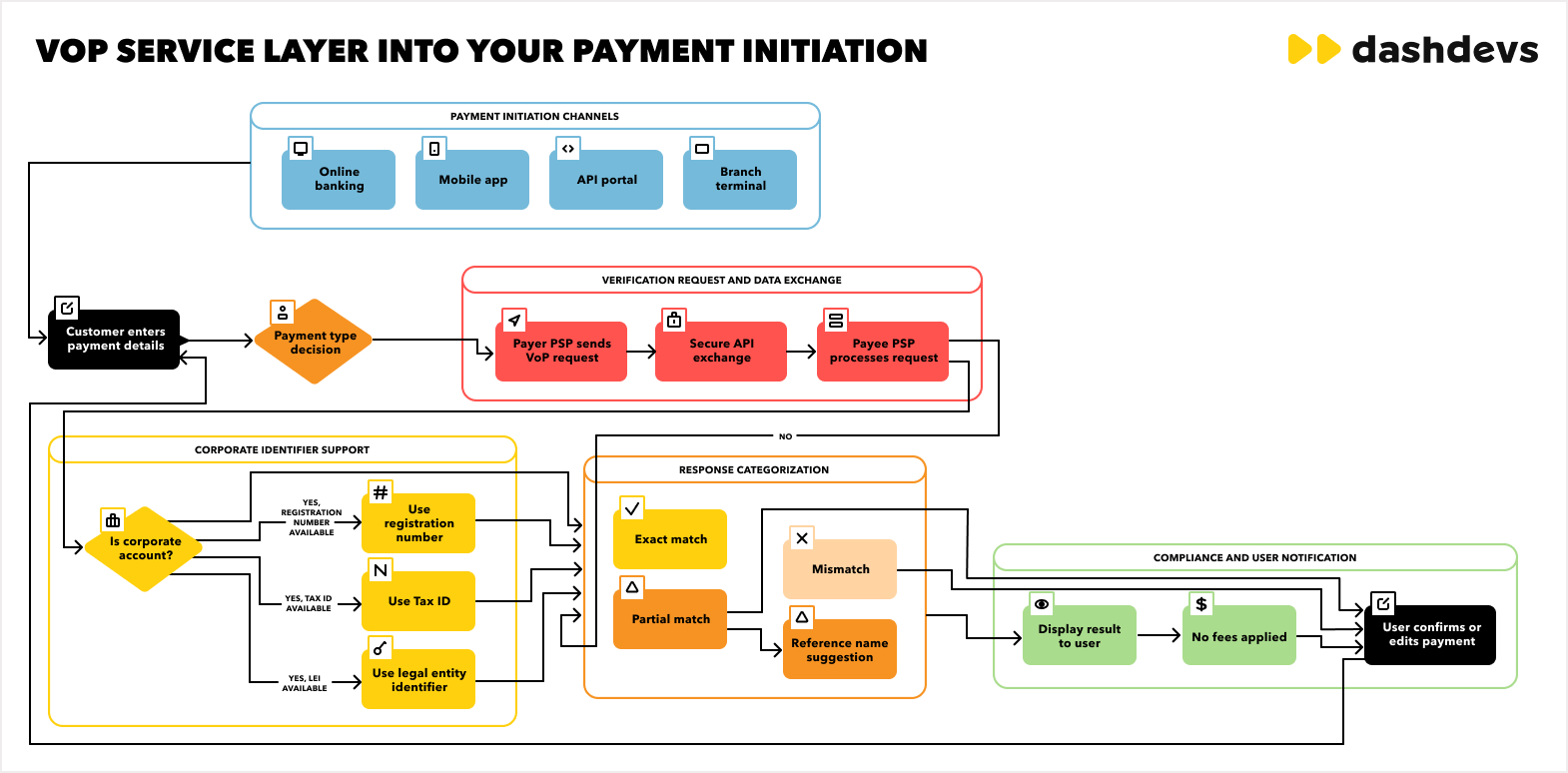
Verification of Payee in SEPA transfers became mandatory for all eurozone PSPs on 9 October 2025. Checks must execute as soon as the payer enters recipient details, displaying results instantly to prevent authorized push payment (APP) fraud.
Cross-border execution requires connecting your VoP engine to a recognized routing hub (such as EBA Clearing’s VoP routing service) adhering to the EPC VoP Scheme Rulebook to ensure seamless name-checking across foreign IBANs.
There is one operational question your VoP architecture must answer before go-live: what happens when the VoP API goes down mid-session? Under the IPR, PSPs cannot initiate a new instant payment without a completed VoP check. Your system needs a circuit breaker that queues initiations, surfaces a degraded-mode message to the user, and resumes processing when the service recovers without timing out the underlying payment session. VoP availability must match your payment processing uptime, which means your VoP integration sits behind the same active-active redundancy model as your core payment engine.
3. AML/CFT Screening
The 10-second window removes the temporal buffer compliance teams historically relied on. The IPR requires daily sanctions screening across the entire customer base rather than per-transaction checks at execution. Verified accounts are placed into a pre-cleared directory against which execution engines check.
Crucially, the 10-second execution window makes inline, transaction-level sanctions screening operationally unviable. The IPR does not remove the obligation to screen. It removes the time to do it per transaction. Daily pre-screening of the full customer database is the required architectural solution, supplemented by intraday updates when the EU consolidated list or OFAC designations are revised between cycles.
Our practical framework on the trade-off between compliance and speed in cross-border payments covers the architectural decisions in detail. That is the right starting point for teams building these pipelines.
4. Real-Time Fraud Monitoring
Once funds leave an account, recovery is difficult. Deploy fraud analytics as dedicated microservices running parallel to payment execution. Stream live transaction data into a low-latency decisioning layer using Redis or Kafka, continuously updating ML models on confirmed fraud cases.
5. Real-Time Liquidity Forecasting
Static end-of-day positions are incompatible with 24/7/365 settlement. Under the IPR, euro liquidity must be available constantly. Non-euro PSPs must manage cross-currency pools and enforce off-hours transaction caps dynamically. Build continuous cash flow visibility using an engine tailored for real-time payment reconciliation.
SCT Inst Implementation Readiness Checklist
Before going live, confirm that your system satisfies these key technical and operational benchmarks:
- Verification of Payee (VoP): API integrated into payment initiation flows; match, no-match, and close-match conditions handled cleanly.
- ISO 20022 Messaging: pacs.008 schema updated with structured address fields (original scheme target 15 November 2026; EPC delayed the unstructured-address end date, so keep shipping structured format now).
- SLA & Performance: 24/7 SLA tracking active per transaction; p99 latency dashboards monitored in real time.
- Idempotency & Deduplication: Idempotency keys present on all payment initiation calls; duplicate pacs.008 detection enabled.
- Timeout Handling: Auto-reverse logic active for transactions exceeding the 10-second threshold.
- Sanctions Screening: Daily automated sanctions screening implemented across the full customer database.
- Fraud Monitoring: Real-time fraud scoring running in parallel outside the critical path.
- Liquidity Controls: Liquidity prefunding and credit lines operational; non-euro PSP off-hours caps enforced dynamically.
- Observability: Unified correlation IDs linked across pacs.008, pacs.002, and camt.056 messages.
- Operational Continuity: DORA-aligned IT continuity and disaster recovery testing completed.
- Ledger Reconciliation: R-transaction flows (camt.056, pacs.004, camt.029) fully integrated into the ledger engine.
Production Edge Cases & Failure Modes
Most SCT Inst failures aren’t architectural. They’re edge cases that weren’t treated as first-class states during build, proving that SEPA Instant readiness is now about trust in your system’s state management.
These four show up most often.
Idempotency violations on timeout. A pacs.008 re-sent after a network timeout without a matched deduplication key is processed by the clearing layer as a new payment. It results in a double debit that can only be resolved via a formal camt.056 recall. Idempotency keys must be generated at initiation, persisted before dispatch, and checked on every retry path without exception.
VoP close-match suppression. Silently passing on a close-match VoP result to reduce checkout friction is a compliance violation under the IPR, not a UX trade-off. The regulation requires the registered account name to be displayed to the payer before confirmation. Teams that suppress it to improve conversion expose themselves to APP fraud liability.
Sanctions list lag. Daily screening works until a designation lands between cycles. Your compliance engine needs an intraday update path triggered by the EU consolidated list or OFAC revisions, with logic to block or queue in-flight payments for affected accounts without halting the full execution pipeline.
Timeout race conditions. Triggering auto-reversal solely on local network timeouts creates double-credit risk if the payment settled in clearing while the acknowledgment was delayed. Always confirm the final state via pacs.028 prior to executing auto-reversal logic.
Pro tip: After 17+ years integrating payment rails, I treat unknown state as the default on instant. Persist the idempotency key before you send pacs.008. Ask clearing with pacs.028 before you reverse. Never guess.
Building on Instant Rails
The Instant Payments Regulation is fundamentally reshaping European money movement. Treating SCT Inst solely as a compliance mandate misses the broader picture: real-time settlement, 24/7/365 availability, and pre-execution checks are now table stakes for modern financial products.
Unlocking this value requires rigorous engineering, building event-driven architectures designed for zero-downtime deployments, low-latency screening, and real-time liquidity forecasting. Teams that master these technical foundations turn regulatory compliance into a long-term competitive moat.
Our engineering scope covers ISO 20022 migration, direct technical access to the Single Euro Payments Area via CENTROlink, and modular core banking components for regulated institutions.
Need expert guidance on migrating to ISO 20022 or architecting your SEPA Instant integration? Get in touch with our engineering team to discuss your project requirements.
Share article
