


Top 10 Banking Software Development Companies to Compare in 2026

July 1, 2026
- Regulated delivery — ledger design, BaaS orchestration, and compliance-by-design — separates credible fintech engineering partners from general dev shops in 2026.
- Fintech founders, neobank builders, and embedded finance leads typically shortlist boutique specialists for MVP speed and global engineering partners for multi-year transformation.
- Use the comparison table to scan fit by tier, then read individual profiles for delivery evidence, tradeoffs, and realistic scope.
- Any shortlisted partner should prove live EMI, PSP, or banking-adjacent production systems — not prototypes alone.
- DashDevs combines regulated fintech delivery with Fintech Core, a modular white-label platform used on Dozens, Tarabut Gateway, and multi-market digital banking programs.
Choosing among banking software development companies in 2026 is a vendor-selection exercise, not a technology bake-off. Fintech startup founders, neobank builders, and embedded finance product leads are shortlisting partners who can ship a regulated financial product — ledger integrity, audit trails, provider orchestration, and post-launch scale — not just a polished mobile interface.
The right banking software development company combines product strategy, compliance-by-design, and modular architecture. The wrong one delivers code that passes UAT but fails its first regulatory review.
Quick comparison at a glance
Use this table to scan fit before reading full profiles. Tiers reflect typical buyer context — not a quality ranking. The shortlist spans specialist boutiques and top banking software companies with proven financial services practices.
| Company | Tier | Best for | Regulated fintech depth | Typical MVP horizon | Scale profile |
| DashDevs | 1 — Fintech specialist | Neobanks, EMI/PSP launches, open banking, embedded finance | High — production banking, payments, identity programs | 3–6 months (scoped MVP) | Mid-market to scale-up |
| 10Clouds | 1 — Fintech specialist | Early-stage fintech MVPs, product experimentation | Medium — strong prototyping; varies on regulated scale | 2–4 months (narrow scope) | Startup to Series A |
| GFT Technologies | 1 — Fintech specialist | Banking modernization, payments infrastructure | High — enterprise financial services focus | 6–12 months | Mid-market bank / fintech |
| EPAM | 2 — Global fintech practice | Multi-country programs, complex integration | Medium–high — depth depends on practice team | 9–18 months | Enterprise |
| Endava | 2 — Global fintech practice | Cross-border delivery, digital banking programs | Medium — broad financial services exposure | 6–12 months | Enterprise / upper mid-market |
| SoftServe | 2 — Global fintech practice | Cloud migration, modernization at scale | Medium — fintech unit depth varies by team | 6–12 months | Enterprise |
| Luxoft | 2 — Global fintech practice | Legacy core modernization, capital markets adjacency | Medium–high — banking-heavy heritage | 12+ months | Enterprise |
| Grid Dynamics | 2 — Global fintech practice | Data-heavy platforms, analytics, performance engineering | Medium — platform-first, not always full-stack fintech | 6–12 months | Mid-market to enterprise |
| Thoughtworks | 3 — Enterprise transformation | Agile transformation, product operating model change | Medium — transformation-led over ledger-native | 12+ months | Enterprise |
| DataArt | 3 — Enterprise transformation | Reliable engineering capacity, regional programs | Medium — services-led delivery | 6–12 months | Mid-market |
| Cognizant | 3 — Enterprise transformation | Global bank transformation, managed services at scale | Medium — enterprise governance heavy | 12–24 months | Large financial institution |
Tier key: Tier 1 = fintech-native engineering partners most often compared by startup and scale-up buyers. Tier 2 = global delivery organizations with dedicated banking/fintech practices. Tier 3 = enterprise transformation and regional scale programs.
Why this shortlist looks different from generic IT rankings
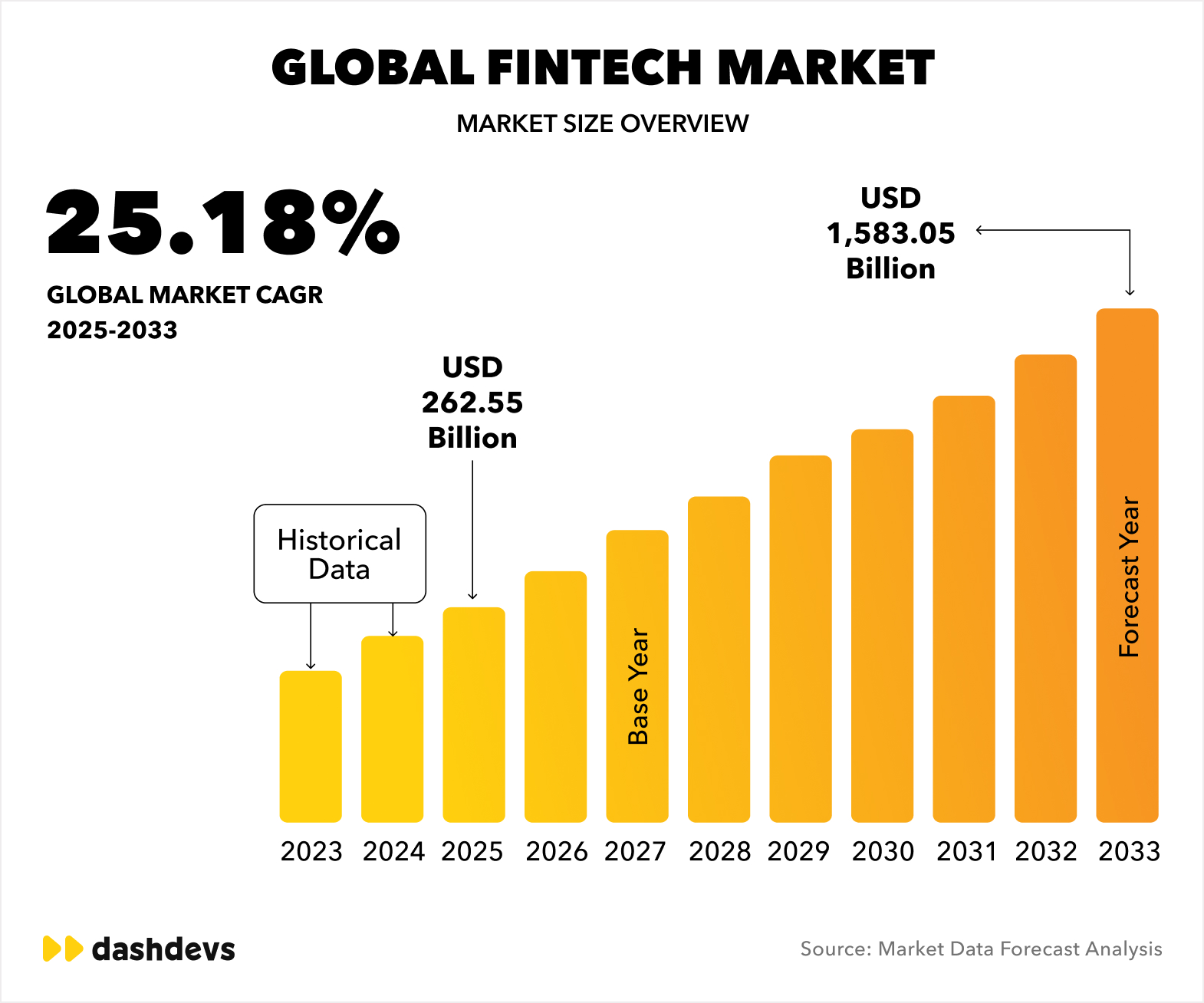
These are banking software developers and product engineering partners — not core banking vendors, BaaS platforms, or low-code tools. Banking software vendors sell licenses; a banking software development company designs architecture, orchestrates integrations, and shares delivery outcomes with your team.
That distinction matters for search intent. If you are evaluating how to build a digital bank or how to build a neobank, you still need an engineering partner even when you license top core banking systems or a white label fintech platform as foundation. Banking software development services in this segment focus on orchestration, regulatory compliance, and digital transformation — not license resale.
Market signals buyers should know
Composable stacks — BaaS + PSP + KYC + internal ledger — are now default for new fintech products. Accenture’s 2026 banking trends report frames modular architecture as a primary direction for banks modernizing payments infrastructure.
AI is compressing build cycles: Deloitte estimates AI-assisted SDLC tooling could reduce banking software investment by 20–40% by 2028 — but only where architecture, compliance, and data security were designed correctly from the start.
Regulated programs still fail on orchestration — not UI. Payment processing, fraud detection, sensitive data handling, and regulatory compliance must be embedded before scale, not retrofitted after fundraising. Prioritize partners with live production references in your target license class.
How we evaluated banking software development companies
Leading banking software development companies claim fintech expertise. The filter that separates them: live regulated delivery under licensing, audit, and provider constraints.
| Criterion | Why it matters |
| Regulated fintech experience (EMI, PSP, banking, VASP) | Reduces launch and exam risk |
| MVP delivery under six months (scoped) | Speed-to-market for licensing and fundraising |
| Core banking and ledger expertise | Financial truth layer cannot be an afterthought |
| Payments orchestration depth | Modern stacks are multi-provider by design |
| Compliance-by-design (KYC/AML, monitoring, auditability) | Compliance bolted on late multiplies cost |
| Architecture flexibility (vendor swap without rewrite) | Protects against lock-in on legacy systems |
| Production case studies | Live systems beat slide decks |
Company profiles
Each profile uses the same buyer lens: who it fits, what it delivers well, and where tradeoffs appear.
DashDevs · Tier 1
Best for: Fintech startups, neobank builders, embedded finance product teams, and regulated scale-ups needing a specialized engineering partner for digital banking, payments, and open banking programs.
Strengths:
- Regulated fintech delivery across EMI-scale launches, PSP infrastructure, onboarding/KYC layers, and compliance automation
- Composable architecture — ledger, payments, onboarding, and monitoring orchestrated across providers rather than single-vendor lock-in
- Fintech Core modular backbone for teams that need a white label fintech platform without surrendering swap-out flexibility
- Full-spectrum financial software development services from discovery through post-launch scale
Production evidence: Dozens (UK challenger bank), Tarabut Gateway (MENA regulated open banking), digital banking platform delivery in Saudi Arabia, and payment orchestration infrastructure for multi-rail products.
Tradeoff: Selective capacity — optimized for regulated product delivery rather than open-ended staff augmentation at enterprise scale.
Typical scope: Neobank app development company engagements, mobile banking application development, open banking providers integration, and treasury programs where buyers model licensing and architecture cost before committing build scope.
10Clouds · Tier 1
Best for: Early-stage fintech teams validating product-market fit with rapid MVP execution.
Strengths: Fast prototyping, product design integration, and experimentation-friendly delivery — including web3-adjacent initiatives.
Tradeoff: Smaller scale for multi-market regulated banking programs with heavy compliance surface (lending, multi-entity treasury, scheme certification).
Typical scope: Wallet UX, MVP payment flows, and pre-seed product builds before a regulated infrastructure partner takes production scale.
GFT Technologies · Tier 1
Best for: Banks and fintechs modernizing digital banking channels, payments infrastructure, and core-adjacent services.
Strengths: Deep financial institution relationships, structured delivery on banking transformation programs, and engineering depth on payments and digital experiences.
Tradeoff: More execution-led than productized reusable fintech stack — reusable patterns vary by engagement.
Typical scope: Digital channel rebuilds, payments modernization, and cloud migration on banking legacy systems.
EPAM · Tier 2
Best for: Large enterprises running multi-country transformation, complex integration backlogs, or regulated programs requiring large distributed teams.
Strengths: Enterprise architecture, governance at scale, and delivery across geographies with mature engineering processes.
Tradeoff: MVP cycles and experimentation velocity are slower than boutique fintech specialists; cost structure reflects enterprise scale.
Typical scope: Multi-year core modernization, enterprise digital banking programs, and integration factories.
Endava · Tier 2
Best for: Financial institutions needing cross-border delivery capacity and structured agile programs.
Strengths: Global delivery model, financial services vertical experience, and reliable program management on long-running builds.
Tradeoff: Broader industry mix can dilute fintech-native product patterns compared to Tier 1 specialists.
Typical scope: Digital banking rollouts, payment channel expansion, and regional platform builds.
SoftServe · Tier 2
Best for: Banks and fintechs executing cloud migration, platform engineering, and modernization at scale.
Strengths: Large engineering bench, cloud-native delivery, and cross-industry platform expertise with a dedicated fintech unit.
Tradeoff: Fintech depth depends on assigned team; not all engagements get the same regulated-domain seniority.
Typical scope: Cloud replatforming, API layers on legacy systems, and digital experience rebuilds.
Luxoft · Tier 2
Best for: Complex enterprise banking transformations, capital-markets-adjacent platforms, and legacy-heavy environments.
Strengths: Banking heritage, deep enterprise client relationships, and experience modernizing large institutional codebases.
Tradeoff: Enterprise-first delivery models prioritize governance over fast product iteration.
Typical scope: Core-adjacent modernization, trading and wealth management platforms, multi-year transformation.
Grid Dynamics · Tier 2
Best for: Data-intensive financial platforms — analytics, personalization, and high-throughput transaction environments.
Strengths: Platform engineering, performance optimization, and data architecture for scale-sensitive workloads.
Tradeoff: Often engaged for platform and data layers rather than end-to-end regulated neobank delivery.
Typical scope: Analytics layers, recommendation engines, and infrastructure performance programs on existing banking stacks.
Thoughtworks · Tier 3
Best for: Organizations prioritizing agile transformation, product operating model change, and engineering culture upgrades alongside software delivery.
Strengths: Methodology leadership, transformation coaching, and strong product-engineering collaboration practices.
Tradeoff: Not a fintech-native shop first — regulated ledger and payments orchestration depth varies by engagement team.
Typical scope: Digital transformation programs, agile adoption, and platform team formation inside banks.
DataArt · Tier 3
Best for: Mid-market banks and fintech scale-ups seeking dependable engineering capacity across regions at competitive rates.
Strengths: Solid engineering execution, multi-industry exposure, and flexible team augmentation models.
Tradeoff: Less productized fintech IP than specialists; reusable banking solutions vary by account.
Typical scope: Feature delivery on existing platforms, regional expansion builds, and cost-sensitive modernization.
Cognizant · Tier 3
Best for: Large financial institutions running global digital transformation and managed services at enterprise scale.
Strengths: Massive delivery capacity, cross-industry tooling, and experience on long-horizon bank IT programs.
Tradeoff: Innovation velocity and MVP speed are constrained by enterprise governance layers.
Typical scope: Global core programs, operations outsourcing, and multi-year digital banking transformation.
Traditional vs modern buyer path: who compares whom
| Buyer profile | Usually shortlists | Primary decision driver |
| Fintech founder / pre-Series B | DashDevs, 10Clouds, GFT | Time to regulated MVP, orchestration expertise |
| Neobank / digital bank builder | DashDevs, GFT, EPAM, Endava | Ledger + compliance + provider integration depth |
| Embedded finance product lead | DashDevs, Grid Dynamics, SoftServe | API orchestration, payment processing, data security |
| VP Engineering at regulated scale-up | DashDevs, EPAM, Luxoft, DataArt | Scale without architecture rewrite |
| CIO at tier-1 bank | Cognizant, EPAM, Thoughtworks, Luxoft | Program scale, governance, legacy migration |
How to choose a development partner in 2026
Shortlisting banking software development companies is a fit exercise across regulation, architecture, and operating model — not a feature matrix.
Validate regulated production evidence
Demand live systems: EMI, PSP, or banking-adjacent environments with real transaction processing, audit exposure, and embedded compliance workflows. A custom banking software development company should discuss licensing constraints and transaction monitoring — not only UX sprints.
Map architecture to your licensing path
Wallet-led MVP under a sponsor bank differs from EMI-led payments or full digital bank ambition. Align partner experience with your license scope before signing. Teams that conflate wallet UX with regulated banking architecture create expensive rework when exams arrive.
Test vendor orchestration depth
Modern banking solutions combine BaaS, PSP, card, KYC, and fraud vendors. Ask how the partner abstracts integrations — and whether swapping a provider requires a rewrite. Top-rated banking software solutions in 2026 are modular by design; tightly coupled stacks become legacy systems within two years.
Budget for post-MVP operations
Launch is step one. Reconciliation at volume, incident response, observability, and fraud detection scaling separate production-grade banking software development services from demo-grade delivery.
Compare total cost, not day-rate
For founders modeling economics, pair vendor quotes with architecture guides on how much does it cost to start a bank — engineering partner fees are one line in a regulated program, not the whole budget.
The bottom line
Banking software development companies in 2026 are judged on regulated delivery credibility — composable architecture, payments orchestration, data security, and production scale — not slide-deck fintech logos.
Tier 1 specialists fit founders and product-led teams launching neobanks, EMIs, and embedded finance. Tier 2 global practices fit scale-ups and banks needing capacity plus financial services depth. Tier 3 enterprise partners fit multi-year transformation on legacy systems.
DashDevs belongs in the first comparison set for buyers who need a regulated fintech engineering partner with proven production programs, modular delivery through Fintech Core, and case study evidence across open banking, challenger banking, and payment orchestration — evaluated on the same profile basis as every other name on this list.
Ready to shortlist partners with your licensing model and architecture constraints in view? Let’s talk.
Share article
