


Best White-Label Payment Gateway Providers: Compare Solutions 2026

August 18, 2026
- Choosing a white-label payment gateway is a partner decision about brand control, merchant ownership, licensing perimeters, and ops tooling.
- Shortlist vendors by model first: ISO/reseller gateway, orchestration layer, acquiring-led PSP, or modular platform you assemble.
- Score vendors on PCI DSS scope, payment method coverage, settlement and reconciliation, white-label UX depth, and exit terms before you compare logos.
- Ideal use cases differ for SaaS platforms, PSPs, marketplaces, and cross-border programs — one stack rarely fits all.
- Treat integration, ledger honesty, and support ownership as first-class selection criteria alongside rate cards.
Choosing a white-label payment gateway provider is an infrastructure and commercial decision, not a theme-color exercise. Fintechs, PSPs, financial institutions, and payment businesses shortlist partners when they need branded checkout experiences, merchant relationships under their name, and payments infrastructure that can grow across methods and markets—without rebuilding scheme connectivity from zero.
This guide compares how leading white-label payment gateway providers are packaged, which licensing models you are actually buying, and the selection criteria that separate a workable platform from a demo that fails in production. User experience at checkout and in the merchant portal is part of that scorecard. For how white-label infrastructure, partners, and costs work before you shortlist logos, see the companion infrastructure guide.
What “white label” changes in a payment gateway decision
A white-label payment gateway lets you offer payment services — and often merchant back-office tools — under your brand while a specialist runs processing technology, certifications, or both. The customer experience stays yours; the PCI DSS control surface and scheme relationships are usually shared or rented.
That is different from a generic hosted checkout, which you cannot reskin, and different from building every connector yourself. Teams evaluating the best white-label payment gateway for businesses should start by naming what they must own: merchant of record, pricing, dispute UX, settlement narrative, and data residency. Everything else is negotiable packaging.
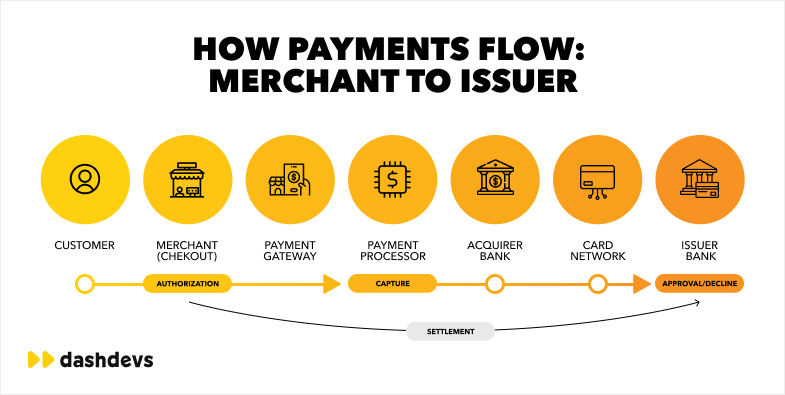
Clarify the payment gateway vs payment processor split early. Many vendors sell a bundled stack; your RFP still needs separate answers for acceptance UI, authorization routing, acquiring, and funding.
Provider models you will see in 2026
Most top white-label payment gateway providers fall into a few commercial patterns. Name the pattern before you compare feature grids.
| Model | What you usually get | Trade-off |
|---|---|---|
| ISO/reseller gateway | Brandable payment pages, onboarding tools, your sales motion on someone else’s rails | Faster launch, less control of acquiring and reserves |
| Acquiring-led PSP white label | Processing + often KYC/KYB workflows under your brand | Stronger compliance wrap; heavier partner dependency |
| Orchestration white label | Multi-acquirer routing, method aggregation, failover under your UX | You still need acquiring partners and a clear ledger |
| Modular platform | APIs and modules you assemble with your product and license perimeter | More engineering; highest long-term flexibility |
White-label payment solutions in the orchestration bucket optimize approval rates and cost across providers. Classic gateway resellers optimize speed-to-market for a single commercial path. Neither is universally “best.” They solve different constraints.
Comparison snapshot: capabilities that matter
Use this table to score any white-label payment gateway provider on the same axes—whether you call the vendor a gateway reseller or an orchestration partner.
| Capability | Why it matters | Questions for vendors |
|---|---|---|
| Brandable checkout & portals | Customer experience and merchant trust sit on your brand | How deep is CSS/SDK control vs. iframe only? |
| Payment method coverage | Local methods move conversion as much as credit cards | Which methods are native vs. partner-passthrough? |
| PCI DSS scope | Scope drives cost and go-live timeline | What remains in your PCI responsibility after integration? |
| Settlement & disputes | Ops load and reserve risk live here | Who owns chargebacks, representment tooling, and funding reports? |
| APIs & webhooks | Product velocity depends on sandbox parity | Idempotency, retries, and event catalog quality? |
| Multi-entity / multi-currency | Platforms and PSPs rarely stay single-MID | Can you isolate merchants, brands, and wallets cleanly? |
| Exit & data portability | Lock-in shows up at year two | Token migration, report exports, notice periods? |
Top white-label payment gateway providers: detailed comparison
The profiles below compare representative white-label payment gateway software products teams evaluate in 2026 RFPs. This is a decision frame. Always re-validate regions, licenses, and current packaging in diligence.
DashDevs (Fintech Core)
DashDevs delivers modular payment infrastructure through Fintech Core—a white-label fintech platform built for teams that need more than a branded checkout layer. It combines transaction processing, payment routing, merchant onboarding, ledger logic, reconciliation workflows, compliance integrations, and provider abstraction in one adaptable stack.
Unlike rigid SaaS gateways, Fintech Core is designed for PSP founders, EMIs, and fintech platforms that need custom orchestration rules, settlement visibility, and architecture they can evolve as providers, regions, and product scope change. DashDevs acts as the engineering and delivery partner, helping teams design, build, and scale payment operations infrastructure rather than locking them into a fixed vendor workflow.
- Model: Modular platform
- Best fit: PSPs, EMIs, wallets, and payment-led platforms needing operational control
- Routing: High — custom multi-acquirer logic
- Acquiring: Partner-dependent; provider-agnostic by design
- Ledger: Internal ledger and reconciliation built in
- White-label depth: Full brand control over merchant portal and ops workflows
IXOPAY
IXOPAY is an orchestration-focused infrastructure platform used by businesses operating across multiple payment providers and markets. Its value is provider abstraction, multi-acquirer routing, payment optimization, and operational flexibility when no single processor covers every corridor well.
- Model: Orchestration-focused
- Best fit: Multi-provider payment operations across regions
- Routing: High — core product strength
- Acquiring: Separate contracts required
- Ledger: May require separate accounting layer
- White-label depth: Strong API/UX layer; depth varies by deployment
Spreedly
Spreedly is a payment orchestration and tokenization-focused infrastructure layer. It emphasizes tokenization, vaulting, payment method abstraction, and multi-provider connectivity rather than owning the full PSP operating stack.
- Model: Orchestration/tokenization layer
- Best fit: Teams needing flexible connectivity without tying logic to one processor
- Routing: High for provider switching and vaulting
- Acquiring: Not included — bring your own processors
- Ledger: Not a full PSP ledger; integration required
- White-label depth: Payment experience layer; back-office varies
DECTA
DECTA is an acquiring-centric payment infrastructure provider with a stronger card-processing and European payments focus. It combines gateway infrastructure with acquiring services inside one ecosystem.
- Model: Acquiring-centric
- Best fit: EU-focused card payment businesses wanting gateway + acquiring together
- Routing: Moderate — stronger within own ecosystem
- Acquiring: Included in core offering
- Ledger: Settlement tooling tied to acquiring relationship
- White-label depth: Brandable checkout; confirm portal depth in diligence
ACI Worldwide
ACI Worldwide provides enterprise-grade payments software for large financial institutions and high-volume payment operations. Its strength is transaction processing, enterprise payment infrastructure, banking integrations, and large-scale operational stability.
- Model: Enterprise transaction processing
- Best fit: Banks, large processors, enterprise payment environments
- Routing: High at enterprise scale; implementation-heavy
- Acquiring: Partner/institution-dependent
- Ledger: Enterprise-grade; complex to implement
- White-label depth: Customizable; long implementation cycles
BR-DGE
BR-DGE is a payment orchestration platform focused on connecting merchants and payment providers through flexible routing and payment method access.
- Model: Orchestration
- Best fit: Merchants and platforms needing provider relationship control without building orchestration from scratch
- Routing: High — core value proposition
- Acquiring: Bring your own
- Ledger: Confirm reconciliation depth in RFP
- White-label depth: Strong routing UX; verify merchant portal scope
CellPoint Digital
CellPoint Digital is a payment orchestration and optimization platform often used by travel, airline, and global commerce businesses. It supports orchestration, alternative payment methods, cross-border commerce, and payment optimization across regions.
- Model: Orchestration/optimization
- Best fit: International payment flows with complex regional method requirements
- Routing: High — cross-border and APM focus
- Acquiring: Partner-dependent
- Ledger: Confirm settlement reporting for your model
- White-label depth: Strong checkout optimization; verify back-office fit
Finastra
Finastra is a broader financial software provider with payment and banking infrastructure capabilities. It is relevant where payment modernization sits inside wider banking technology programs.
- Model: Enterprise banking + payments
- Best fit: Financial institutions modernizing broader banking stacks
- Routing: Enterprise-grade; not a fast PSP launch path
- Acquiring: Institution-dependent
- Ledger: Banking-grade; complex scope
- White-label depth: Customizable within enterprise programs
Comparison table: infrastructure models at a glance
| Infrastructure model | Example providers | Strongest fit | Main advantage | Main limitation | Best for |
|---|---|---|---|---|---|
| Orchestration-focused | IXOPAY, Spreedly, BR-DGE, CellPoint Digital | Multi-provider payment operations | Routing flexibility and provider abstraction | May require separate ledger/accounting layer | PSPs and platforms working with multiple processors |
| Acquiring-centric | DECTA, Solidgate-class peers | Card-focused payment operations | Simplified acquiring relationship | Less flexibility outside provider ecosystem | EU-focused card payment businesses |
| Enterprise processing | ACI Worldwide, Finastra | Large-scale financial institutions | Enterprise-grade stability and scale | Complexity and implementation effort | Banks, processors, large enterprises |
| Modular fintech infrastructure | DashDevs Fintech Core | Payment, wallet, ledger, compliance, orchestration | Flexible architecture and custom workflows | Requires strong implementation strategy | PSPs, EMIs, wallets, differentiated fintech platforms |
| ISO/reseller gateway | NMI-class platforms | Branded merchant acceptance at speed | Fastest path to branded checkout | Limited routing and acquiring control | ISOs and payment facilitators with sales-led models |
These examples show that white-label payment gateway software is not one category with one perfect answer. Match the infrastructure model behind each solution to your operating model — not only the feature list or demo UI.
Leading white label payment gateways by use case
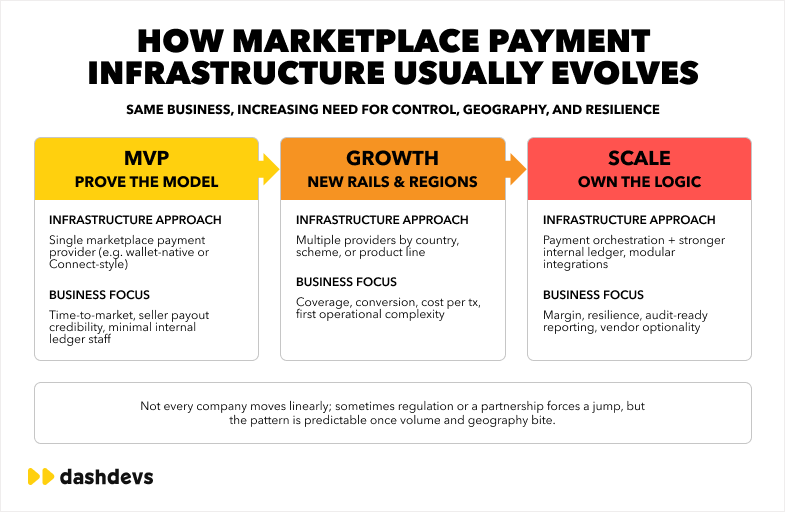
Rather than ranking logos for SEO theater, match vendor types to jobs. The names below are representative of models teams evaluate in 2026 RFPs.
For ISOs and payment facilitators building a branded offer
Reseller-style gateways (NMI-class platforms and similar ISO toolkits) remain common when sales teams need a white-label online payment gateway quickly: branded payment pages, boarding, and recurring tools without setting up full acquiring. Best for teams that monetize merchant relationships more than proprietary routing IP.
Watch-outs: Reserve policies, boardability by MCC, and how much of the back office is truly white-label versus co-branded.
For digital PSPs that need depth beyond checkout
Acquiring-led or PSP-shaped white-label stacks (Solidgate, Unlimint, and Ecommpay-class providers and peers in your corridor) package processing, fraud tooling, and often merchant lifecycle under your brand. Best when you sell payment services as a product line and need operational breadth.
Watch-outs: Who is the merchant of record, how pricing tiers work at your volume, and whether you can add a second acquirer later without a rewrite.
For platforms that must route across multiple acquirers
Orchestration-first vendors (Corefy, BridgerPay-class, IXOPAY, Spreedly, and similar) position themselves as white-label payment platforms: rules, cascading, analytics, and method aggregation with your UX on top. Best when approval rate and cost optimization are the product edge—and you already understand payment orchestration as a control layer.
Watch-outs: You still need acquiring contracts, reconciliation ownership, and clarity on which payment methods are first-class versus bolted on.
For teams assembling a modular stack
Some programs combine licensed partners with modular banking and payments building blocks—closer to assembling a white-label payment service provider motion than buying a single box. DashDevs’ Fintech Core sits in this category when accounts, ledgers, and payment modules must stay under your product roadmap while processors remain swappable.
Watch-outs: Integration effort is real; the upside is avoiding a single-vendor ceiling when you expand into new rails or entities.
When your roadmap includes lending-adjacent checkout or installment products, confirm the gateway can support the flows a BNPL development partner would expect (tokens, webhooks, and clear capture/void semantics), not only card sales.
Licensing models and regulatory perimeter
White-label payment gateway solutions inherit someone else’s license or sit on yours. That distinction decides what you can promise merchants.
- Software on your license — You hold the PI/EMI (or equivalent) and rent technology. Highest brand and pricing control; heaviest compliance load.
- Program on their license — The partner is the regulated entity; you distribute under brand rules. Faster corridors and less freedom on underwriting and reserves.
- Hybrid — Technology white-label plus sponsored acquiring in some markets. Common for expansion, easy to misdocument in sales decks.
Cross-border roadmaps add sponsor banks, FX, and local method partners. Treat cross-border payment integration as a separate workstream from “skin the checkout,” or your launch date will slip at the first corridor.
If accounts and banking modules sit beside acceptance, a white-label banking platform path may matter as much as the gateway choice.
If you are still choosing the regulatory wrapper, read DashDevs’ guide to the electronic money institution versus payment institution path before you sign a white-label term sheet that assumes the wrong perimeter.
Integration options that change time-to-revenue
Integration is where white-label payment gateways succeed or stall.
- Hosted / iframe payment pages — Lowest PCI burden, thinner UX control. Fine for MVP merchant acceptance.
- JS / mobile SDKs — Better payment experience and conversion tuning; more engineering ownership.
- Server-to-server APIs — Maximum control for platforms and PSPs; highest design discipline for tokens, 3-D Secure, and retries.
- Plugins and marketplaces — Speed for SMB channels; verify versioning and refund edge cases.
Teams that treat payment gateway integration services as a product workstream (sandbox parity, webhook contracts, and idempotency) outperform teams that just “add a script tag.”
For platforms embedding payments into software products, review ISV payments model requirements before selecting a vendor that only supports simple e-commerce checkout.
Selection criteria: a practical scorecard
Use this checklist when you compare white-label payment gateway providers on your shortlist.
- Brand depth — Customizable checkout, receipts, and merchant portals — or only a logo swap?
- Method and corridor fit — Cards, APMs, payouts, and refunds for the markets you sell this year, not a global brochure.
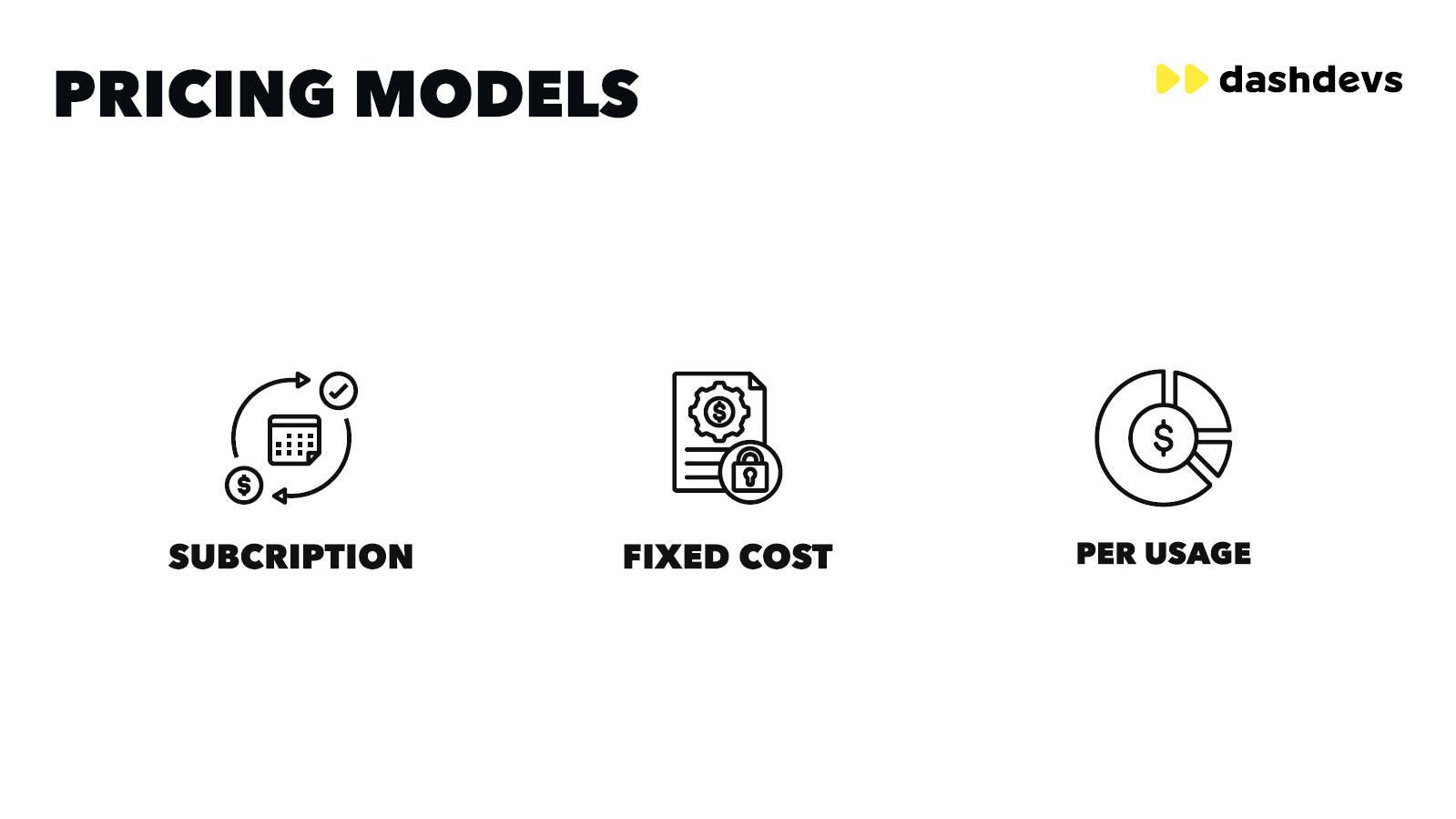
- Economics — Blended rates, scheme fees, gateway fees, chargeback fees, and minimums. Model unit economics at your forecast volume.
- Risk and compliance — PCI DSS evidence, fraud tooling, KYC/KYB hooks, and audit artifacts your bank will accept.
- Ops tooling — Settlement files, dispute workflows, and support SLAs. Pretty dashboards do not replace funding truth.
- Reliability — Auth latency, failover story, and status communication during incidents.
- Commercial terms — Exclusivity, volume commitments, token portability, and what happens if you add a second provider.
Ideal use cases (and mismatches)
| Use case | Usually fits | Often a mismatch |
|---|---|---|
| SaaS embedding payments | Orchestration or modular WL with strong APIs | Rigid ISO kits with weak multi-tenant isolation |
| Regional PSP launch | Acquiring-led white-label payment gateway stack | Pure orchestration with no acquiring path |
| Marketplace/platform | Split payouts, KYB depth, clear ledger events | Single-MID reseller tools |
| High-growth e-commerce brand | Conversion-focused SDKs + fraud depth | Heavy PSP back-office you will never use |
| Banking-adjacent product | Modular stack + clear license story | “White label” that forbids your banking UX |
Operations: reconciliation, revenue, and merchant trust
A white-label payment gateway solution that converts well still fails if finance cannot explain fees and funding. Build real-time payment reconciliation into the selection criteria: event quality, report latency, and how chargebacks post back into your ledger.
Your revenue stream may be gateway markup, SaaS fees, interchange share, or FX spread. Whatever the model, merchant relationships depend on payout predictability and dispute clarity more than on marketing screenshots of the checkout.
Payment facilitators and PSPs should also pressure-test support ownership: when a merchant’s customer fails 3-D Secure at peak hour, who answers — and in whose brand voice?
Teams combining card rails with account-to-account flows should confirm how each vendor handles open banking integrations alongside traditional card acceptance.
How to shortlist without drowning in demos
- Write the program one-pager: brand owner, merchant of record, corridors, methods, target go-live.
- Pick the model (reseller, acquiring-led, orchestration, or modular)—eliminate vendors that do not fit.
- Run the same scorecard on three vendors maximum.
- Prove sandbox → production parity on auth, capture, refund, and dispute webhooks.
- Negotiate exit and token portability before volume commitments.
“Buy the operating model you can staff — white-label UX without settlement ownership is just a themed iframe.”
The best white-label payment gateway providers for your roadmap are the ones that match that operating model, not the loudest conference booth. Prefer partners who show production references in your use case and who treat payment infrastructure as a system.
Final take
Choices of white-label gateways reshape your brand promise, compliance perimeter, and engineering backlog for years. Start with model fit and selection criteria; use vendor logos only after the scorecard is honest.
Whether you need a white-label payment gateway solution for a fast PSP launch or a multi-acquirer platform, insist on PCI clarity, method coverage, and ledger-grade events.
DashDevs helps payment product teams evaluate stacks, integrate gateways, and keep orchestration and reconciliation coherent as volume grows. If you are comparing white-label payment solutions now, bring your corridor list and merchant-of-record assumptions to the first conversation. Those two facts eliminate half the market before the first demo.
Share article
