


White-Label Payment Gateway Solutions in 2026: Infrastructure Guide for PSP Founders
How PSP founders should evaluate white-label payment gateway software, infrastructure models, and operational requirements before choosing a payment stack in 2026

August 18, 2026
- Choosing a white-label payment gateway is an infrastructure strategy decision, not just a vendor selection exercise.
- Modern PSPs need merchant onboarding, payment routing, settlement visibility, reconciliation, and compliance workflows—not only checkout APIs.
- White-label payment solutions on the market follow different infrastructure models: orchestration, acquiring-centric, enterprise processing, and modular fintech platforms.
- Most PSP failures appear after launch through routing rigidity, ledger gaps, settlement mismatches, and weak operational visibility.
- DashDevs helps teams design payment infrastructure that stays flexible across providers, regions, and product expansion.
Launching a PSP in 2026 is no longer just about connecting card payments or adding a checkout page. Founders who treat payments as a thin integration usually discover the gap later—when finance asks why settlement reports do not match merchant balances, when operations cannot trace a failed transaction across provider logs, or when product teams need a new payment method in a new market and routing logic has to be rewritten from scratch.
Modern PSPs need merchant onboarding, transaction processing, payment routing, multi-acquirer logic, settlement visibility, reconciliation, compliance integrations, auditability, fraud controls, and scalable back-office operations. A white-label payment gateway is operational fintech infrastructure, not payment acceptance software with a logo swap.
This guide explains what payment gateway infrastructure actually includes, which infrastructure models matter in 2026, how solution categories differ on the market, and how PSP founders should evaluate providers without confusing feature demos with production readiness. It also covers where DashDevs’ infrastructure perspective fits when teams need flexible architecture rather than a rigid vendor stack.
Summary
Before the deep dive, here are the practical takeaways:
- Choosing a white-label payment gateway is an infrastructure strategy decision.
- White-label payment architectures differ by model: orchestration, acquiring-centric, enterprise processing, and modular fintech.
- PSP founders should evaluate ledger design, routing flexibility, and settlement visibility.
- White-label payment gateway cost is operational, not just software licensing.
- The strongest stacks separate transaction logic, routing, compliance, provider integrations, and financial accounting.
Why white-label payment gateway infrastructure matters in 2026
Payment volume keeps growing, but payment complexity is growing faster. Embedded finance is pushing acceptance into SaaS products, marketplaces, and vertical platforms. Cross-border commerce forces teams to support regional payment methods, local compliance workflows, and multi-currency settlement. Real-time and account-to-account payments add rails that do not behave like card authorization.
Compliance pressure is also rising. Merchant onboarding, screening, transaction monitoring, and audit evidence are no longer back-office afterthoughts—they are part of the product operating model. Merchants expect clearer reporting, faster settlement visibility, and fewer unexplained payment failures.
That is why PSPs increasingly need flexible payment gateway infrastructure rather than a single hardcoded gateway integration. A branded payment gateway becomes valuable when it lets a company operate under its own brand while keeping control over payment logic, merchant relationships, and growth strategy.
Multi-provider payment strategies are now normal. Approval rates vary by region, card type, and merchant category. Settlement timing differs by acquirer. Local methods require separate integration and routing logic. Teams that cannot orchestrate across providers end up with fragile products and expensive manual operations—which is why many scaling PSPs invest in a dedicated payment orchestration platform rather than hardcoding routing into checkout services.
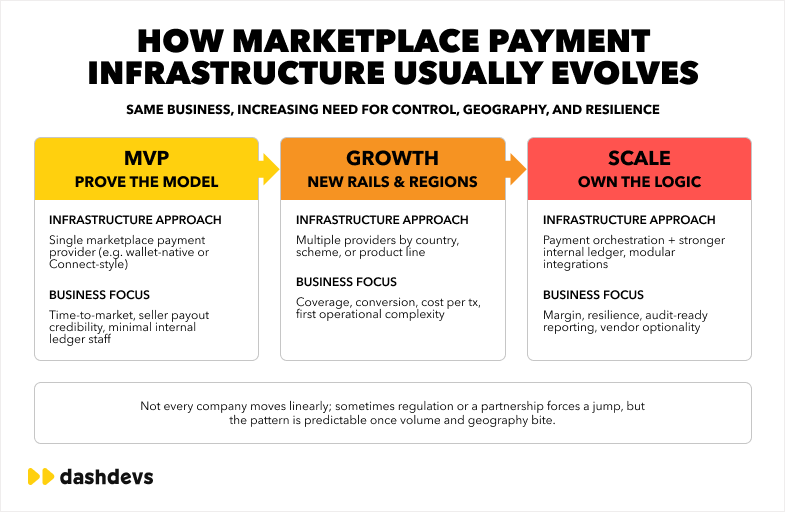
“Global fintech investment rebounded in 2025, rising to $116 billion across 4,719 deals.” — KPMG, February 2026
Stripe reported that businesses on its platform processed $1.9 trillion in 2025. Those numbers reflect demand, but they also reflect how many companies are competing on operational quality, not just payment availability.
“Vendor relationships can make or break a product’s success.” — Fintech Garden episode 110
Pro tip: Before comparing vendors, write down your 24-month operating model: regions, payment methods, licensing structure, merchant types, and settlement model. A white-label payment gateway that fits a demo use case often fails once those constraints become real.
What is a white-label payment gateway?
A white-label payment gateway is payment infrastructure that lets a company offer payment services under its own brand while using ready-made or modular gateway technology. It is not a white-labeled checkout widget sitting on top of someone else’s processor with no operational control.
Understanding the difference between components matters before you evaluate any solution. Many founders conflate the gateway layer with the full white-label payment processing stack and end up buying the wrong thing. Our guide on payment gateway vs payment processor breaks down where each layer ends and the next begins.
| Role | What it does |
|---|---|
| Payment gateway | Checkout, tokenization, routing into processors |
| Payment processor | Authorization lifecycle, clearing, settlement mechanics |
| PSP | Merchant relationship, compliance scope, settlement model |
| Payment facilitator | Sponsored merchant model under an acquirer umbrella |
| Payment orchestration layer | Multi-provider routing, failover, method expansion |
A modern white-label payment gateway solution typically includes these modules:
| Module | What it covers |
|---|---|
| Transaction processing | Authorization, capture, refunds, reversals, voids |
| Payment routing | Multi-acquirer logic, failover, cost optimization |
| Merchant onboarding | KYB, risk review, fee and contract setup |
| Settlement and reconciliation | Batch matching, holds, payout visibility, exceptions |
| Risk and compliance | Fraud tools, AML, sanctions, audit logs |
| Reporting and APIs | Merchant reporting, webhooks, SDKs, back-office access |
Modern white-label payment solutions are not just checkout products. They are operating systems for payment businesses. If finance, compliance, and support teams cannot work from the same transaction truth merchants see, the platform will accumulate operational debt quickly.
What PSP founders actually need from gateway infrastructure
From a founder’s perspective, gateway infrastructure must support the business model—not only the first integration demo.
| Requirement area | What founders should verify |
|---|---|
| Merchant operations | Onboarding, KYB, fee setup, portal, support workflows |
| Routing and methods | Multi-acquirer payments, failover, local method expansion |
| Financial operations | Settlement visibility, reconciliation, fee logic, reporting |
| Compliance | Screening, monitoring, evidence trails, role-based access |
| Product integration | API-first design, webhooks, platform and marketplace support |
| Scalability | Regional expansion without rewriting core routing logic |
Founders often compare payment gateway total cost of ownership only at the software level. The real cost appears in operations: manual reconciliation, failed payments, provider lock-in, support escalations, and inability to scale into new regions or methods. That is especially true when the stack lacks a proper multi-account ledger system, and finance teams rebuild balances outside the platform.
A white-label payment gateway that looks affordable at launch can become expensive when every routing change requires vendor professional services, every settlement exception needs a spreadsheet, and every new market restarts the integration cycle.
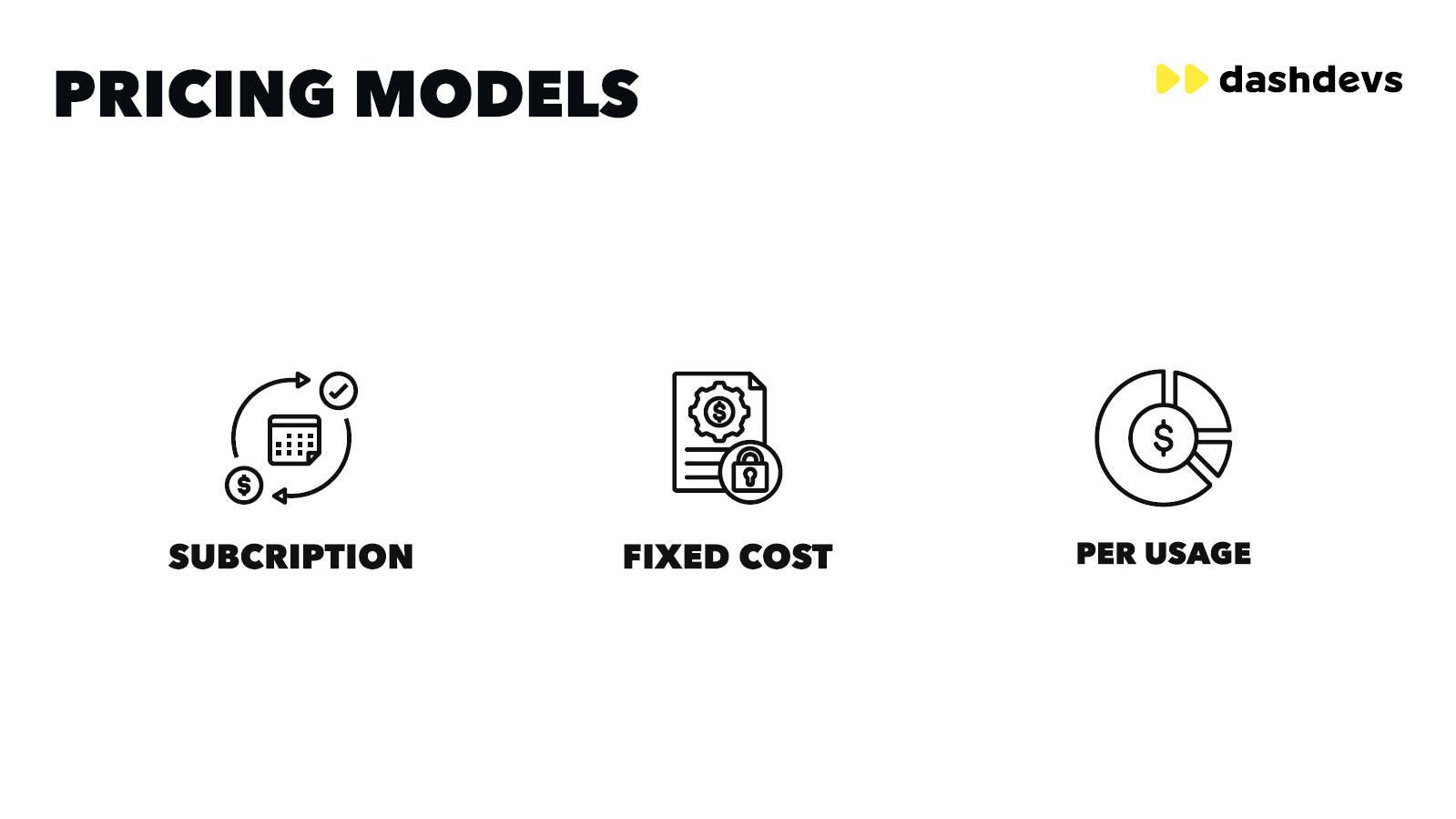
White-label payment gateway cost: what actually drives the bill
| Cost driver | Why it matters |
|---|---|
| Software licensing | Base platform or SaaS fees |
| Integration effort | Acquirers, methods, fraud, KYC, reporting |
| Compliance scope | PCI, AML, licensing, audit evidence |
| Operations headcount | Reconciliation, support, merchant ops |
| Provider economics | Interchange, acquiring fees, revenue share |
| Scaling rework | Routing, ledger, and reporting changes at growth |
Pro tip: Ask vendors for a reconciliation walkthrough, not just an authorization demo. If they cannot show how auth events, settlement files, and merchant balances connect, assume your finance team will rebuild that logic manually.
Core architecture of a modern white-label payment gateway
The strongest payment gateway infrastructure separates transaction logic, routing logic, compliance logic, provider integrations, and financial accounting. That separation is what keeps a PSP adaptable as volume, regions, and providers change.
| Architecture layer | Primary responsibility | Failure signal at scale |
|---|---|---|
| Transaction processing | Auth, capture, refunds, status normalization | Inconsistent payment states across channels |
| Routing and orchestration | Multi-acquirer logic, failover, retry safety | Hardcoded provider logic blocks expansion |
| Ledger and reconciliation | Financial truth, settlement matching | Finance rebuilds balances in spreadsheets |
| Compliance and risk | KYC/KYB, AML, fraud, audit evidence | Compliance gaps discovered during audits |
| Merchant operations | Onboarding, fees, reporting, support | Ops becomes the bottleneck after sales growth |
| Integration layer | APIs, webhooks, provider adapters | Every new provider requires product rewrites |
Transaction processing layer
This layer handles authorization, capture, refunds, reversals, chargebacks, and payment status tracking. It must normalize provider responses into internal states that product, finance, and support teams can rely on. Without consistent status semantics, every new integration leaks complexity into customer-facing flows.
Routing and orchestration layer
This is where provider routing, failover, multi-acquirer logic, payment method selection, retry logic, and approval optimization live. Routing is a business capability. Approval targets, cost thresholds, regional rules, and failover behavior should be observable.
Ledger and reconciliation layer
Transaction records, balances, settlements, fees, and financial events must stay consistent. A production-grade stack needs an internal ledger that records what the business must treat as financially true, not what one provider dashboard shows at a moment in time.
Reconciliation connects authorization events, settlement files, fee deductions, and merchant balances. When this layer is weak, finance teams rebuild truth manually every month.
“As fintechs evolved, their once-simple models became multi-layered ecosystems.” — Fintech Garden episode 122
Compliance and risk layer
KYC, KYB, AML monitoring, fraud tools, sanctions screening, audit logs, and role-based access belong here. Compliance cannot sit in a separate toolchain that operations reconciles after the fact.
Merchant operations layer
Merchant onboarding, merchant portal, reporting, settlement visibility, fee configuration, and support workflows define whether PSP software can scale commercially. Many technically capable gateways fail because merchant operations remain immature.
Integration layer
APIs, webhooks, acquirers, banks, card schemes, wallets, local payment methods, fraud providers, and KYC vendors connect through this layer. Integration breadth matters, but adapter design matters more—providers change, and your architecture should absorb that change.
White-label payment gateway models: what the market actually offers
Different white-label payment gateway platforms are built around different infrastructure models. The right choice depends on your business model, licensing structure, markets, transaction volume, compliance needs, and long-term operational strategy—not on a generic feature checklist.
If you have already shortlisted specific vendors and want a side-by-side comparison, see our top white-label payment gateway providers breakdown. This section focuses on the model behind the vendor—which determines how much control, flexibility, and ownership you actually get.
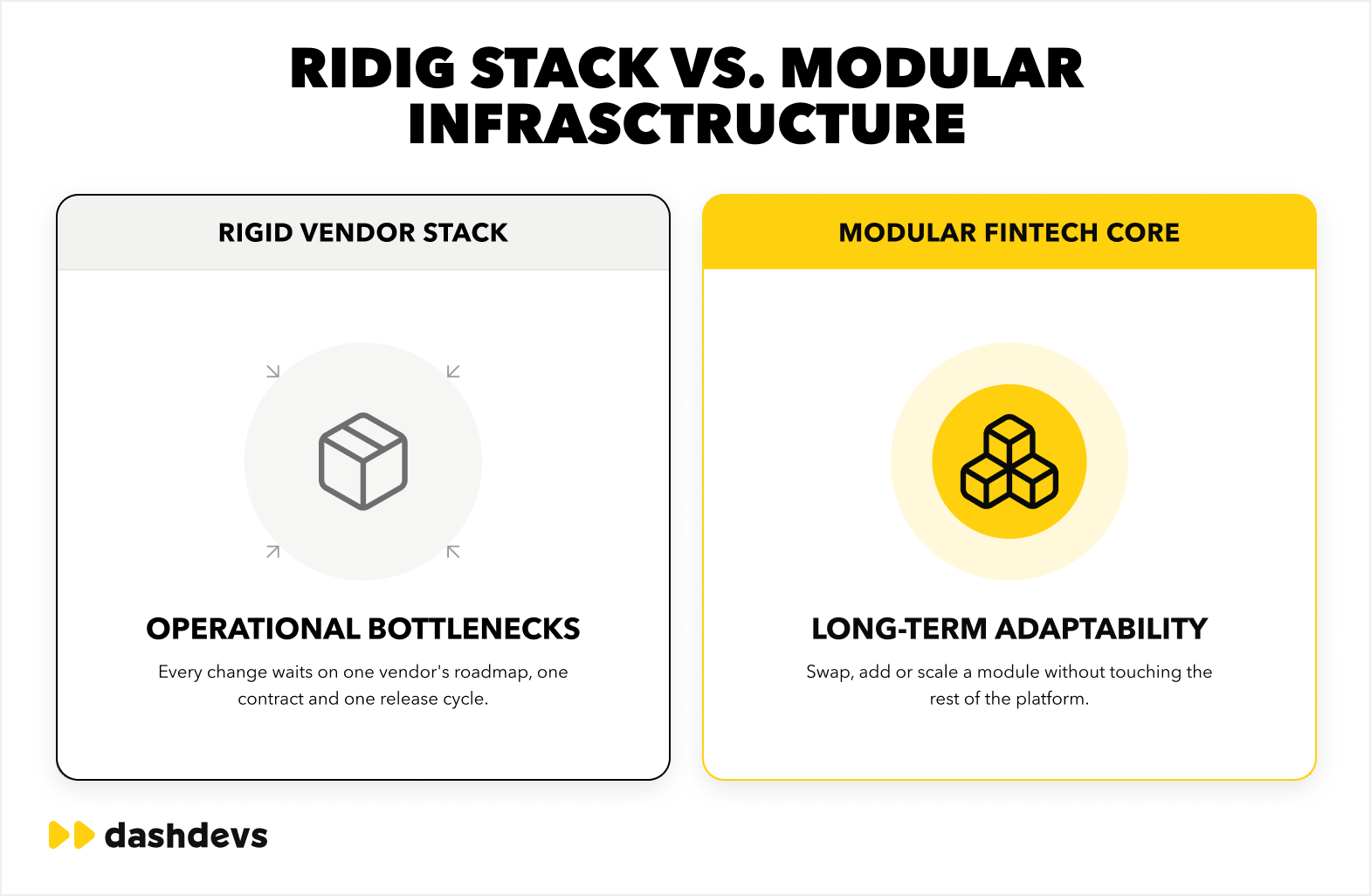
The four infrastructure models
Orchestration-focused platforms connect to multiple acquirers and payment methods through routing logic you control. Their strength is provider abstraction and failover flexibility. Their gap is that they rarely own the full PSP operating stack—ledger, onboarding, and compliance workflows often live outside the platform and need separate implementation.
Acquiring-centric platforms bundle gateway functionality with an acquirer relationship. This simplifies provider setup, especially for card-heavy, EU-focused operations. The trade-off: routing flexibility is constrained to that provider’s ecosystem, which limits your options as you expand regions or payment methods.
Enterprise transaction processing platforms target large financial institutions and high-volume operations. They offer proven scale and stability, but implementation complexity and commercial structures are calibrated for banks and large processors—not for PSP startups or mid-market fintechs moving quickly.
Modular fintech infrastructure separates payment processing, routing, ledger, compliance, and merchant operations into adaptable layers rather than a single vendor stack. This model offers the most architectural control—and requires the most deliberate implementation strategy. It is the right model when your business cannot afford vendor lock-in as licensing, provider relationships, or product scope evolve.
Infrastructure model comparison
| Infrastructure model | Strongest fit | Main advantage | Main limitation |
|---|---|---|---|
| Orchestration-focused | Multi-provider payment operations | Routing flexibility and provider abstraction | May need separate ledger/accounting layer |
| Acquiring-centric | Card-focused, EU payment businesses | Simplified acquiring relationship | Less flexibility outside provider ecosystem |
| Enterprise processing | Large financial institutions | Enterprise-grade stability and scale | High complexity, not calibrated for fast-moving PSPs |
| Modular fintech infrastructure | PSPs, EMIs, wallets, fintech platforms | Flexible architecture and custom workflows | Requires strong implementation strategy |
“The infrastructure model determines your ceiling. Choose the wrong model for your growth stage, and you will rebuild core components within 18 months.”
How to evaluate white-label payment gateway partners
Choosing a white-label payment platform is an architectural commitment that affects how your PSP onboards merchants, settles funds, manages compliance, and expands into new regions.
These are the evaluation criteria that matter in production:
Routing architecture ownership
The question is not whether a platform supports multi-acquirer routing. Most claim to. The question is who controls it in production. If adjusting a routing rule requires a vendor ticket, a professional services engagement, or a release cycle, your approval optimization strategy depends on their calendar. Routing flexibility has to be observable, testable, and in your hands.
Settlement and ledger design
Ask vendors to show you reconciliation—not authorization. If financial truth lives in a provider dashboard rather than an internal ledger, your finance team will rebuild it in spreadsheets every month. The ledger layer determines whether settlement timing differences, fee deductions, and holds across multiple acquirers are visible inside the platform or become manual exceptions. This is where most platforms reveal their limits.
Compliance and merchant operations depth
KYB, AML monitoring, sanctions screening, and audit evidence can’t be a parallel tool chain that operations patches together after the fact. For white-label credit card processing and alternative payment methods, regional compliance requirements compound quickly—ask specifically how onboarding workflows and transaction monitoring connect in your target markets, not in a generic demo environment.
Integration surface and provider flexibility
Pre-integration breadth matters less than the cost of adding or replacing a provider. Acquirers change, settlement terms shift, and local rails evolve. If every provider change requires a product rewrite, your stack is already fragile. Platforms with open banking integrations and API banking connections built in reduce the effort of adding alternative rails — but always verify what “integrated” means in practice versus what is available on a roadmap.
Scalability and model flexibility
The hardest scenario to evaluate is the one you have not hit yet. Ask what happens to your routing logic, ledger structure, and merchant operations tooling if you switch acquirers, enter a new region, or change your licensing model. If ISV payments or marketplace distribution is on your roadmap, verify that the platform supports those models before you are mid-launch and discovering it does not.
Crypto and emerging rails
If your product roadmap includes digital assets, white-label crypto payment gateway development capability needs to be evaluated separately—not assumed from the platform’s fiat infrastructure. Authorization flow, settlement timing, and reconciliation logic behave differently on crypto rails. Platforms that claim coverage without architectural separation between fiat and crypto processing usually mean a thin integration on top of a fiat stack.
“Treat partner evaluation as a technical audit, not a commercial negotiation. The gaps that matter are never visible in a demo. They surface six months after go-live.”
Common mistakes PSP founders make when choosing payment gateway software
Most selection mistakes are architectural, not commercial.
- Choosing based on demo UI instead of operational architecture
- Underestimating reconciliation complexity between auth logs, settlement files, and merchant balances
- Ignoring ledger structure and treating provider dashboards as financial truth
- Relying on one acquirer or processor without failover planning
- Not planning for local payment methods and regional routing rules
- Missing compliance workflow requirements beyond PCI scope
- Assuming PCI compliance solves all operational risk
- Ignoring observability, reporting, and support traceability
- Focusing only on launch speed instead of settlement visibility
- Underestimating hidden operational overhead beyond base software licensing
Realistic production examples:
- Payment retry logic creates duplicate transaction records because idempotency was provider-specific, not platform-wide
- Settlement report totals do not match merchant balances because fee deductions and holds live in separate systems
- A failed transaction cannot be traced because webhook logs, provider IDs, and internal states were never normalized
- A new market launch requires rewriting routing logic because orchestration was hardcoded into checkout services
“The hardest part of payments is not authorization. It is making every downstream team believe the same transaction story.”
Pro tip: Run a pre-mortem before vendor selection. Ask what breaks at 10x volume, in a second region, or after your primary acquirer changes settlement file formats. The gaps you find there matter more than checkout conversion on day one.
Build vs buy vs hybrid: how PSPs should approach gateway infrastructure
There is no universal answer. The decision depends on how much operational ownership you need and how much architectural debt you can carry. If you are still defining the business model, start with our guide on how to start a payment processing company before locking in a gateway vendor.
| Approach | Time to launch | Ownership | Best when |
|---|---|---|---|
| Build from scratch | 18–24+ months | Full | You need deep custom logic and have compliance capacity |
| Buy white-label software | 4–8 months | Limited | You need speed and can accept vendor boundaries |
| Hybrid infrastructure | 6–12 months | Selective | You need speed plus control over routing, ledger, and ops |
Building from scratch
Pros: full ownership, deep customization, no vendor constraints on core logic.
Cons: long development timeline, PCI and security burden, high maintenance, and operational complexity across reconciliation, routing, and merchant tooling. For a deeper build path, see how to build a payment gateway.
Buying white-label software
Pros: faster launch, proven components, lower initial development effort.
Cons: customization limits, possible provider lock-in, and dependency on vendor roadmap and professional services.
White-label merchant services models add another layer to evaluate here. If you are reselling payment services under your brand without owning the underlying processing infrastructure, your commercial ceiling—and your compliance exposure—depends entirely on the terms and architecture of the underlying provider. Many white-label payment processors offer reseller programs that look attractive at low volume and become restrictive as merchant count grows.
Hybrid infrastructure model
Pros: reusable infrastructure, custom orchestration, provider flexibility, faster launch with ownership over core logic.
Cons: requires an experienced architecture and engineering partner to avoid rebuilding the same modules poorly.
Many PSPs need a hybrid approach: not everything should be built from scratch, but not everything should be locked inside a rigid vendor platform either. Teams often start with modular infrastructure for ledger, onboarding, and orchestration, then customize merchant experience and vertical workflows on top.
For teams evaluating a broader financial product alongside payment gateway infrastructure, launching a white-label banking platform with Fintech Core covers the expanded infrastructure model (cards, ledger, open banking, and payment gateway) within one operating stack.
DashDevs perspective: what real PSP infrastructure requires
DashDevs approaches PSP infrastructure as a combination of transaction processing, payment routing, merchant operations, ledger logic, compliance integrations, back-office tooling, reconciliation workflows, scalable APIs, and infrastructure ownership.
In delivery programs across Europe, the UK, and MENA, the same operational patterns repeat:
- Routing variance breaks products when orchestration is treated as an integration detail
- Settlement timing creates finance escalations when ledger design is weak
- Compliance evidence gaps appear when onboarding and transaction monitoring are disconnected
- Merchant operations become the bottleneck when back-office tooling is underbuilt
DashDevs works on fintech product development, payment systems, digital wallets, transaction processing systems, payment orchestration, and compliance-ready infrastructure. Teams that need hands-on delivery support across acquirer integrations, routing logic, and merchant portal development can engage DashDevs directly through payment gateway integration services.
For teams expanding beyond acceptance, card issuing often sits next to gateway infrastructure when merchants expect unified balances, payouts, and card products under one operating model.
Fintech Core is modular fintech infrastructure, not a rigid white-label payment gateway software label. It supports teams that need custom workflows, provider abstraction, ledger-centric financial truth, and room to evolve without replacing the entire stack every time the business model shifts. The same applies to white-label payment gateways as a broader category: the underlying architecture matters more than the brand or the feature list on a vendor’s pricing page.
Pro tip: Treat Fintech Core and similar modular stacks as architecture building blocks, not a substitute for operating model design. The value appears when routing, ledger, onboarding, and reporting are mapped to how your PSP actually runs day-to-day.
DashDevs helps fintech companies build payment infrastructure that can adapt to providers, regions, compliance requirements, and product expansion instead of becoming trapped in one rigid stack.
Final thoughts: choose infrastructure, not just a gateway
The hardest payment infrastructure problems usually appear after launch: routing under performance pressure, reconciliation across providers, settlement visibility for finance, compliance evidence for audits, provider management during commercial renegotiation, regional expansion into new methods, and merchant operations at scale.
A white-label payment gateway solution should be evaluated as long-term payment infrastructure, not only as software for faster market entry. Authorization is the visible layer. Settlement visibility, reconciliation, orchestration, and merchant operations determine whether the business can grow without constant firefighting.
If your team is evaluating payment gateway infrastructure or planning to build PSP software, DashDevs can help assess the architecture, integration strategy, and operational model before development begins.
Share article
