

Core customer experiences and financial operations depended on infrastructure decisions made earlier in the product lifecycle.


From a Provider-Dependent Stack to a Scalable Financial Platform
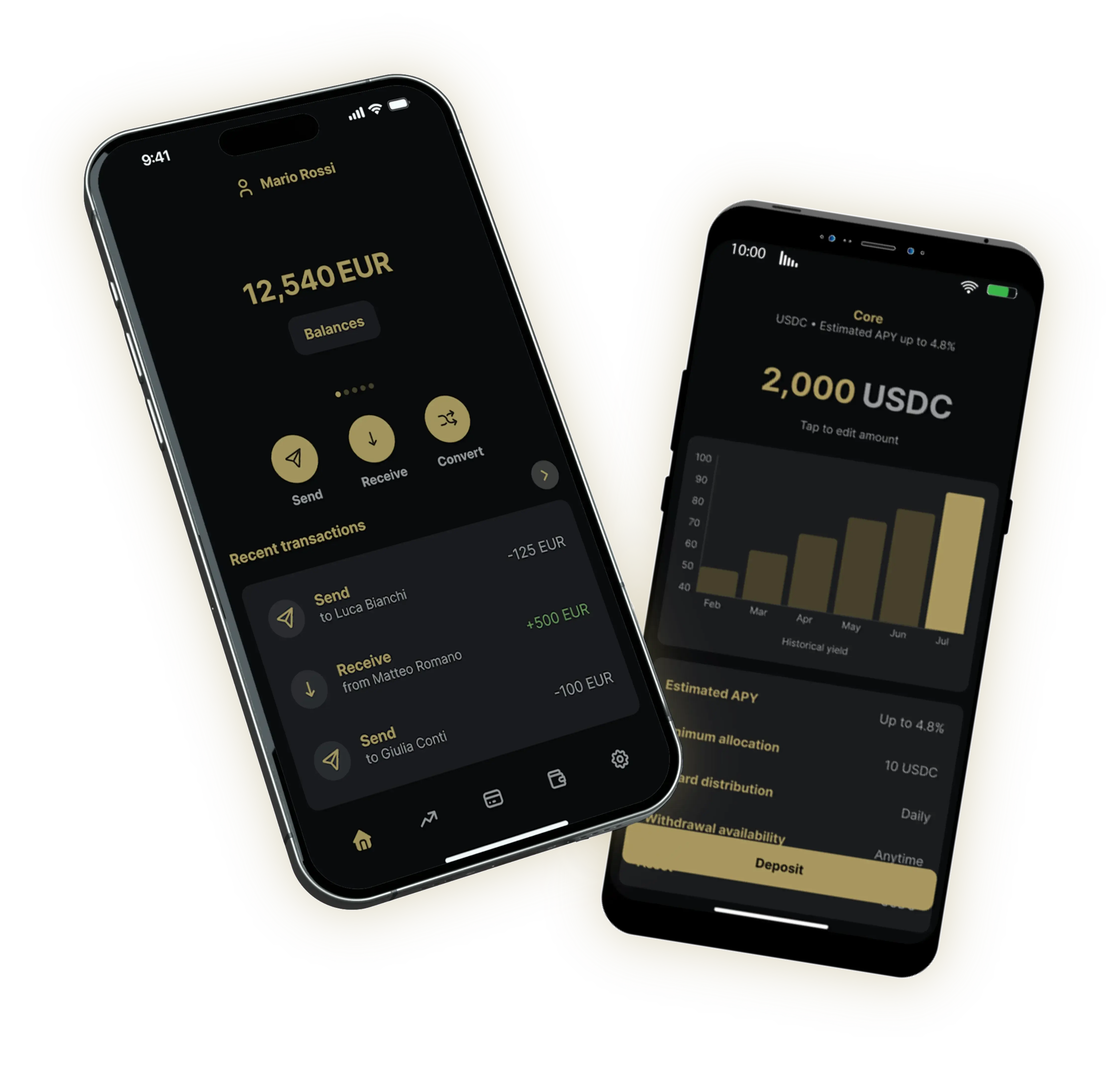
Kleos reached a point where extending the existing platform created more constraints than opportunities. The next stage of growth required a fundamentally different operating model — not a technology refresh, but a business transformation. Fintech Core involvement: specific modules used — Customer and onboarding, Ledger, Payments (Stanhope IBAN, SEPA/SWIFT), Auth (Web3Auth wallets), Cards (Visa in later release), Backoffice, and compliance hooks. Built by DashDevs on Fintech Core.
01
Business problem
Kleos wanted to evolve from a provider-dependent fintech application into a platform capable of supporting long-term product expansion.
Target operating model

What made this difficult
Wallet custody, banking operations, payment services, and investment products operated across separate environments and provider models.
Introducing new services required disproportionate implementation effort because changes had to be coordinated across disconnected systems.
Scaling the current architecture increased integration costs and created long-term migration risk.
The challenge was not delivering new functionality. The challenge was building an operating model capable of supporting future functionality.
02
The cost of scaling the existing model
If Kleos continued to scale the existing setup, the likely outcomes included:
- Slower product releases
- Increasing provider dependency
- Duplicated operational processes
- Growing infrastructure costs
- Reduced speed of introducing new financial products
- Expensive future migrations
- Limited ownership over customer experience
- Higher compliance and operational overhead
Over time, the business risk would shift from technical debt to strategic debt.
04
What the solution provides
The resulting platform foundation enables a unified operating layer supporting traditional and digital financial services.
Unified financial infrastructure
One operational layer supporting traditional and digital financial services.
Banking and payment operations
Infrastructure supporting Euro IBAN accounts and SEPA/SWIFT flows.
Global payment experiences
Visa card capabilities integrated into the product ecosystem.
Digital asset ownership
Migration toward non-custodial wallets using Web3Auth with MPC and Account Abstraction capabilities.
Stablecoin infrastructure
Support for USDC on Ethereum.
Investment and yield capabilities
Tokenized yield vaults and portfolio execution through on-chain operations.
Smart-contract orchestration
A programmable layer connecting investment, wallet, and payment experiences.
Operational management
Administrative and back-office capabilities supporting control and visibility.
05
Business outcomes
With this approach, Kleos can compound product development over time — not only lower operational friction, but a stronger ability to scale.
Launch and expand faster
New financial capabilities can be introduced without rebuilding infrastructure layers.
Reduce infrastructure dependency
Product evolution becomes less constrained by individual vendors.
Improve unit economics
Reusable infrastructure lowers marginal delivery effort for future services.
Support additional product lines
The platform becomes capable of supporting future banking, payment, wallet, and investment scenarios.
Increase strategic flexibility
Business decisions are no longer blocked by architectural limitations.
Prepare for future regulatory evolution
Infrastructure decisions support a more scalable compliance model.
06
Testimonials
07
RELEASES
01
MVPLaunched Kleos on its new Fintech Core platform, migrating customers off the legacy ABC-powered app. Individual customers onboard with phone and email verification and complete KYC through Sumsub. Delivered the core banking integration with Stanhope - personal IBAN issuance, real-time balance sync, SEPA/SWIFT transfers, AML hooks and reconciliation.
10 weeks
02
v1.1Shipped the platform's first investment product: non-custodial deposits and withdrawals into yield-generating vaults, with a dedicated investment UI and full transaction history. Added Web3Auth-based wallet login and free internal transfers between Kleos customers. Fiat and crypto balances were unified on one home screen, with investing and referrals positioned as the two flagship features of a fee-free plan.
6 weeks
03
v1.1.1Introduced fees on outgoing SEPA and SWIFT transfers, configurable by currency and transfer type, with an upfront estimate before sending and a full breakdown afterward. Existing customers were shielded from retroactive charges.
2 weeks
04
v1.2.0Brings Visa card issuance to Kleos - both virtual and physical cards, tiered into Base and Gold products. Customers can freeze and unfreeze a card, set and view their PIN, check live card balances, and top up directly from their account balance. Rounds out with card limits, secure on-demand card-detail viewing, and the ability to block or terminate a card right from settings.
8 weeks
Map the infrastructure decisions first.
15+ years building regulated fintech products. 100+ financial products delivered. We know what breaks at launch and what holds up at scale.