

The client needed one platform capable of supporting multiple financial products and asset classes instead of operating separate infrastructures for banking, payments, wallets, and trading.

From Fragmented Trading Infrastructure to a Unified Platform for Compliant Digital Asset Markets
The client wanted to build a regulated digital asset platform capable of supporting institutional-grade trading while operating across fiat, stablecoins, and cryptocurrencies under a single operating model. This Liquidity business case is a DashDevs implementation on Fintech Core for an unnamed licensed client. It is not presented as a DOPAY product page. Fintech Core involvement: specific modules used — Customer and onboarding, Ledger, Payments, Auth, Backoffice, plus custom DashDevs work on matching, custody/KMS, and liquidity. Load-tested matching capacity is stated separately from production outcomes such as 60% faster onboarding.
01
Business Problem
The client wanted to build a regulated digital asset platform capable of supporting institutional-grade trading while operating across fiat, stablecoins, and cryptocurrencies under a single operating model.
The target platform included:
However, several business challenges made this difficult
Liquidity management, wallet operations, payment processing, compliance controls, and trading workflows operated across disconnected systems, making operations difficult to scale efficiently.
Launching new products, supporting additional digital assets, or entering new markets required significant engineering effort because core platform capabilities were tightly coupled and difficult to extend.
Every transaction had to comply with EMI and VASP requirements, including KYC, KYB, KYT, AML monitoring, Travel Rule compliance, audit trails, and risk controls, without reducing platform performance.
The challenge was building a compliant financial platform capable of supporting future products, new jurisdictions, and institutional-scale trading.
02
Cost of Inaction
If the client continued operating fragmented infrastructure, the likely outcomes included:
- Slower product expansion
- Increasing operational complexity
- Duplicated compliance processes
- Higher infrastructure and maintenance costs
- Limited visibility across liquidity and customer operations
- Slower onboarding of new customers and partners
- Difficulty introducing new digital assets and payment capabilities
- Growing regulatory and operational risk
Over time, infrastructure fragmentation would become a barrier to business growth rather than a technical inconvenience.
04
What the Solution Provides
The resulting platform foundation enables:
Unified financial infrastructure
A single operational layer supporting fiat, stablecoins, cryptocurrencies, trading, and payment operations.
Institutional-grade trading
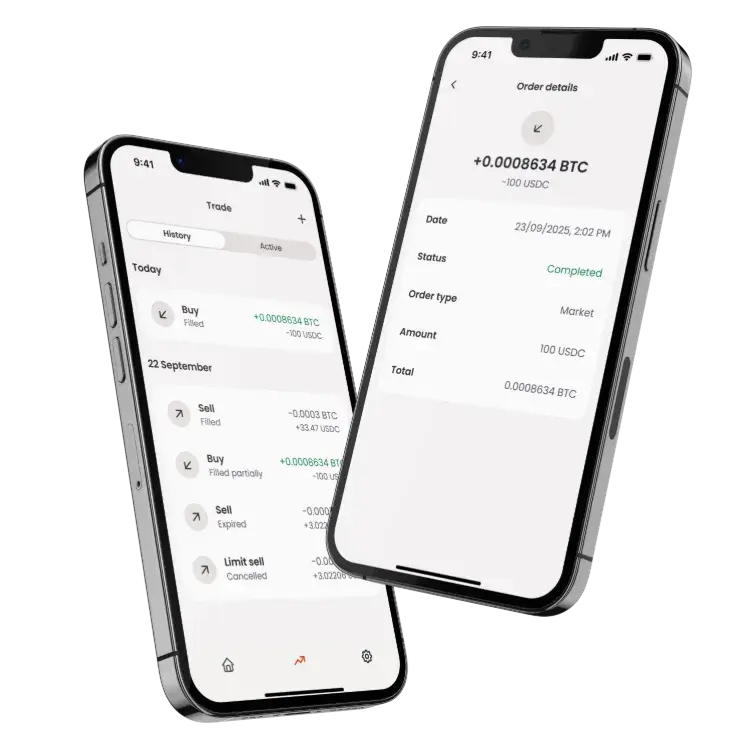
A high-performance matching engine load-tested above 30,000 transactions per second with sub-40 ms execution latency. These figures are load-test results, not a published production daily average.
Banking, wallets, and payments
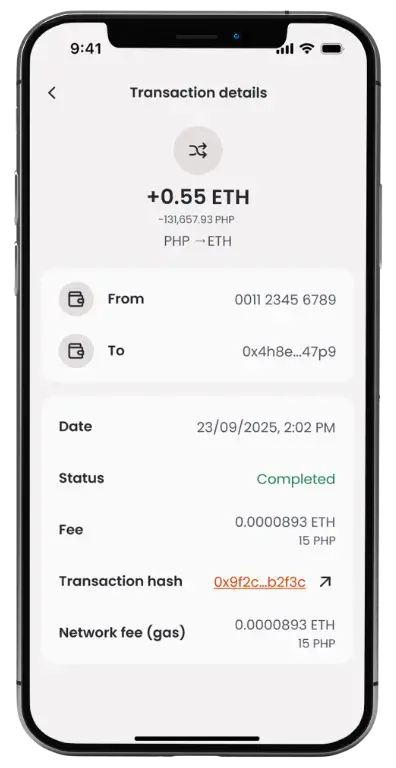
Multi-currency bank accounts, crypto wallets, fiat transfers, local payment processing, and digital asset storage within one platform.
Liquidity management
Automated liquidity balancing supported by internal reserves, market makers, threshold monitoring, and scheduled asset rebalancing.
Compliance by design
Integrated KYC, KYB, KYT, AML monitoring, Travel Rule workflows, audit trails, and policy enforcement aligned with EMI and VASP operating requirements.
Risk management
Automated fraud detection, configurable business rules, transaction monitoring, and tiered customer limits based on verification levels.
In-house custody and key management
Internal key management and transaction signing architecture that reduces reliance on external custody providers while maintaining security and operational control.
Modular architecture
Independent services for trading, wallets, compliance, liquidity, and payments enable continuous product expansion without redesigning the platform.
05
Business Outcomes
With this approach, the client can:
Operate one platform instead of multiple disconnected systems
Fiat, crypto, payments, wallets, and trading work together on a shared infrastructure.
Scale institutional trading
Load-tested above 30,000 transactions per second while maintaining sub-40 ms execution latency. High availability is a production operating target.
Accelerate customer acquisition
Production outcome: optimized compliance workflows reduced onboarding time by 60%, allowing faster customer activation without compromising regulatory requirements.
Strengthen regulatory readiness
Compliance capabilities are embedded into operational workflows, making it easier to expand into regulated markets and satisfy audit requirements.
Improve liquidity efficiency
Automated liquidity balancing maintains a 95:5 liquidity ratio while reducing operational intervention.
Reduce operational complexity
One platform replaces multiple disconnected systems, reducing integration effort and improving operational visibility.
Expand products faster
New digital assets, payment methods, liquidity providers, and financial services can be introduced without rebuilding the core platform.
06
RELEASES
01
MVP
Platform foundationLaunched the foundation of the platform: users can sign up and log in with just a phone number, review Terms & Conditions, and complete full identity and business verification through integrated KYC/AML and KYB checks. Backoffice staff also gained secure administrator access to manage the platform.
6 weeks
02
v1.1
Onboarding and fiat fundingIntroduced separate onboarding journeys for personal and business users, added safeguards against duplicate accounts, and enabled fiat balance top-ups via bank transfer. Backoffice teams gained tools to search and manage customer accounts, plus a ledger for transparent transaction tracking.
3 weeks
03
v1.2
Security and crypto walletsStrengthened account security with SMS-based two-factor authentication and automatic session timeouts. Rolled out crypto wallets with deposits and withdrawals, tiered transaction limits based on verification level, and built-in monitoring for suspicious crypto activity. Backoffice admins gained dashboards for onboarding, limits, transactions, and staff access, while users got a simple way to reach customer support.
6 weeks
04
v1.3
Liquidity and contactsDelivered smart liquidity management that automatically balances funds between hot and cold wallets, plus the ability to send crypto directly to saved contacts. Backoffice admins can now track liquidity, review a full audit trail of platform activity, and log in with an authenticator app for extra security. Also laid the groundwork for signing up via email.
4 weeks
05
v1.4
Trading experienceRolled out the core trading experience - an order book and matching engine letting users buy and sell crypto and fiat, complemented by live market charts. Users can now review their full transaction history in-app and get help through an FAQ and support ticketing system, while backoffice teams gained fine-grained staff permission controls.
7 weeks
06
v1.5
Payments and ops controlsExpanded ways to move money: users can send payments by QR code, user ID, or straight from their contact list, including crypto transfers, and sign in with email as an alternative to phone number. Backoffice teams can now export user and transaction data, configure transaction-monitoring rules, manage fees and markups, and help users recover access if they lose their two-factor device. Also extended crypto support to 20 additional tokens.
6 weeks
Design the platform architecture before fragmentation becomes a barrier.
15+ years building regulated fintech products. 100+ financial products delivered. We know what breaks at launch and what holds up at scale.