

Fintech
Integration Services
Book a consultation





Fewer Vendors to Manage. Faster Time to Market.
Every fintech product depends on providers it doesn’t control — KYC vendors, processors, banking partners, FX rails. The work isn’t just connecting to them; it’s choosing the right ones, sequencing the integration so nothing blocks launch, and keeping the architecture flexible enough to swap a provider without rebuilding your product.
Our fintech integration services are built on real delivery experience, including infrastructure work on Fintech Core, our own modular banking platform, so the architecture decisions we make are informed by what actually holds up in production.












Fintech Service Providers
Every fintech product relies on third-party providers. Whether you need to verify customers, move money, issue cards, or access banking infrastructure, choosing the right integration partner affects your speed to market, scalability, and long-term flexibility. We work across the leading providers in every category, so you’re never limited to a single vendor.
KYC & AML
Open Banking
KYC and AML integrations let you onboard customers and screen for fraud without building identity verification and compliance monitoring from scratch — reducing both regulatory exposure and time to launch.
















Open banking integrations give your product real-time access to customer account data and payment initiation, enabling account aggregation and richer financial insight without requiring direct bank relationships for every market you enter.







Banking as a Service
Payment Processing
BaaS integrations let you offer banking features — accounts, transfers, card programs — without holding a banking license yourself, so you can launch regulated financial products on a realistic timeline.












Payment processing integrations connect you to acquirers and card networks so you can accept payments reliably across online, in-app, and in-store channels, with the resilience to keep transactions flowing if one provider has an outage.














Card Issuing
FX and Cross-Border Payments
Card issuing integrations let you launch branded debit or credit cards with full control over limits, activation, and card lifecycle — a common requirement for neobanks, BNPL platforms, and embedded finance products.







FX and cross-border integrations handle currency conversion and international transfers, which matters as soon as your product serves customers or merchants outside a single currency zone.










Lending as a Service
Online Brokerage
LaaS integrations connect you to credit bureaus, alternative data providers, and BNPL infrastructure, so you can assess creditworthiness and extend credit products without building underwriting infrastructure internally.







Online brokerage integrations let you embed investment and trading functionality alongside banking features, useful for fintechs building toward a single financial “super app” experience.






Integration of Service Providers by DashDevs

KYC & AML
We’ve implemented KYC and AML integrations including Veriff, Jumio, Onfido, and SumSub across dozens of fintech projects, handling identity verification, sanctions screening, and ongoing transaction monitoring. Our role covers provider selection, API integration, and tuning verification flows to balance compliance coverage against onboarding friction — a recurring trade-off we’ve worked through across different regulatory environments.
KYC & AML



Card Issuing
We’ve integrated card issuing platforms including Marqeta, SynapseFI, Galileo, and Thredd, building the full card lifecycle — issuance, activation, spend controls, and management — into client products. This work has included both digital-first card programs and combined physical/virtual card rollouts for neobanks and embedded finance platforms.
Card Issuing
Open Banking
We’ve built open banking integrations with Plaid, TrueLayer, and SaltEdge, enabling account aggregation, transaction data access, and payment initiation. Our Tarabut project — MENA’s first regulated Open Banking platform — involved integrating multiple banking partners under active regulatory oversight, which shaped how we approach open banking architecture for clients operating in less mature regulatory markets.
Open Banking
Banking as a Service
We’ve implemented BaaS integrations covering account management, IBAN issuance, internal transfers, SEPA, Faster Payments, and ACH, working with providers across the BaaS landscape. This typically forms the core infrastructure layer for neobank and embedded finance clients who need banking functionality without becoming a licensed bank themselves.

Payment Processing
We’ve integrated payment processing with Stripe, Adyen, Worldpay, PayPal, and Amazon Pay, connecting client products to major acquirers for online, in-app, and in-store transactions. On projects like iOL Pay, this has included supporting 250+ payment methods across global card networks and regional payment schemes for a single hospitality platform.

Cross-Border Payments
We’ve implemented cross-border payment integrations with CurrencyCloud, Banking Circle, and Wise, handling multi-currency transfers and settlement across international payment networks. This work typically involves reconciling currency conversion timing and FX risk with the client’s existing transaction and ledger architecture.
Cross-Border Payments
Lending as a Service
We’ve connected lending products to credit bureaus and data providers for creditworthiness assessment, and integrated BNPL and alternative lending providers including Affirm and Klarna. This includes structuring the data flows that feed lending decisions, which matters as much as the integration itself for risk-sensitive products.

Online Brokerage & Foreign Exchange
We’ve integrated online brokerage and FX data providers to support investment functionality and currency conversion within client platforms — from real-time market data feeds to executing trades and exchanging currencies as part of a broader financial product, drawing on the same infrastructure experience we’ve applied across Fintech Core.
Achieve More with the Right Experts by Your Side

Why Choose DashDevs for Fintech Integrations

Deep Fintech Integration Expertise
We’ve spent over a decade exclusively in fintech, integrating 70+ providers across KYC, payments, banking infrastructure, and lending. That focus means we understand the regulatory and operational context behind each integration — not just the API docs.

Provider Ecosystem Knowledge
We’ve worked across the major players in every integration category, from Stripe and Adyen to Plaid and TrueLayer to Marqeta and Galileo. That breadth means we can recommend the provider that fits your specific use case, not just the one we know best.

Reusable Infrastructure via Fintech Core
Fintech Core, our white-label banking platform, comes pre-integrated with multiple providers across categories. Where it fits your roadmap, this means faster time-to-market — you’re building on integration work that’s already been tested in production.

Regulatory & Compliance Awareness
Provider integrations in fintech carry compliance weight — KYC obligations, data protection rules, card network requirements. We factor these into integration design from the start, rather than treating compliance as a separate workstream.

Proven Delivery at Scale
We’ve delivered fintech integrations across 500+ projects, including regulated Open Banking platforms, multi-provider payment processing, and card issuing programs serving real transaction volume — not just sandbox environments.

Flexible, Vendor-Independent Engineering
We architect integrations so you can add, replace, or run providers in parallel without re-platforming. This protects you from single-vendor lock-in and gives you leverage in provider negotiations as your business scales.
Our Fintech Integration Process
Vendor Selection & Architecture
We assess your product requirements, target markets, and compliance obligations to recommend the right providers — and design an integration architecture that avoids locking you into any single vendor.
1Integration & Orchestration Design
We map out how each provider connects to your existing systems, including data flows, fallback logic, and how multiple providers in the same category (e.g. two KYC vendors, two acquirers) work together rather than in isolation.
2Implementation
Our engineers build and configure the integrations — API connections, webhooks, authentication, and error handling — following the architecture design while adapting to real provider documentation gaps and edge cases as they appear.
3Testing & Go-Live
We test integrations against real transaction scenarios, compliance requirements, and failure conditions before launch, so issues surface in staging rather than in production.
4Monitoring & Ongoing Support
After go-live, we monitor integration health, support provider migrations or additions as your product evolves, and help you adapt the integration layer as regulations or business requirements change.
5
Integrations cases
- Over 250 payment methods in innovative iOL pay by DashDevs
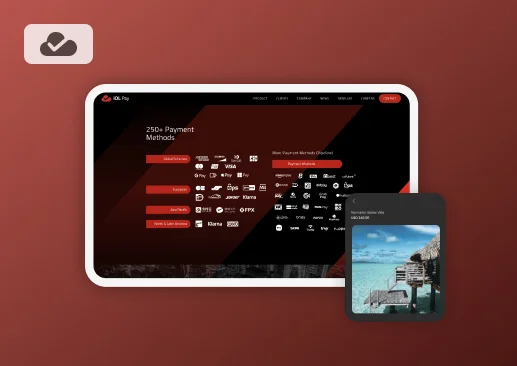
Over 250 payment methods in innovative iOL pay by DashDevs
iOL Pay is a versatile software development kit (SDK) that supports 250 payment methods for B2B2C businesses. For people in the hospitality industry speed is crucial, so iOL Pay seamlessly integrates payment options for your customers. With iOL Pay, customers gain access to global card networks like Apple Pay, American Express, Google Pay, and VISA, as well as local networks such as Alipay, Bancontact, Girropay, Klarna, and more.
- pi1 is a seamless financial solution for users with different needs
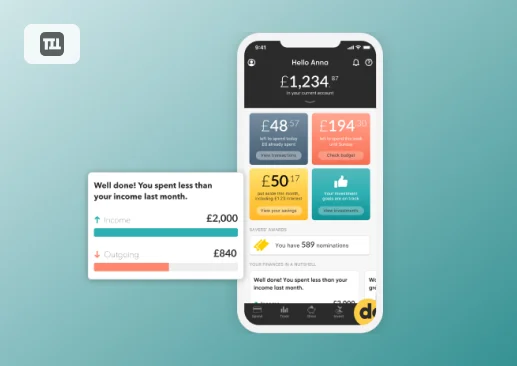
pi1 is a seamless financial solution for users with different needs
Pi1 app revolutionizes the financial industry by offering a complete range of banking products and services. As a branchless financial institution, it empowers individuals to invest, manage, spend, and earn more efficiently and wisely. With its transparent and affordable financial services, the PI1 app is set to transform the global economic landscape. This solution is integrated with over 30 service providers, including KYC, AML, and others.
Look up other cases
Faq
How long does a fintech integration take?
Timelines vary by category and complexity. A single payment processor integration can take a few weeks, while multi-provider setups involving KYC, banking infrastructure, and compliance work typically take longer. We scope timelines during vendor selection and architecture design, based on your specific provider mix and target launch date.How do you help us choose the right provider?
We assess your transaction volume, target markets, regulatory requirements, and existing systems, then compare providers in the relevant category against those criteria — not just feature lists. Having integrated 70+ providers, we can flag the practical implementation trade-offs that aren’t visible in vendor documentation.Can you integrate with our existing systems and the providers we already use?
Yes. Most of our fintech integration work involves connecting new providers to a client’s existing tech stack, rather than building from a blank slate. We assess your current architecture first and design the integration to fit around it, minimizing disruption to systems already in production.How do you make sure we’re not locked into a single provider?
We design integration architecture with provider independence in mind — abstracting provider-specific logic so a vendor can be replaced or run alongside an alternative without rebuilding your core product. This matters most in categories like payment processing and KYC, where provider performance and pricing can shift over time.Do you work with services such as Stripe, ClearBank, Marqeta?
Yes — we’ve integrated all three, along with 70+ other fintech providers across payment processing, banking infrastructure, and card issuing. You can review specific implementation examples in our case studies or blog.How do you handle compliance and data security?
Compliance requirements — KYC obligations, data protection rules, PCI DSS, card network standards — are factored into integration design from the start rather than added afterward. This includes how customer data flows between your systems and third-party providers, and ensuring monitoring is in place for ongoing regulatory obligations, not just at launch.