


FEBRUARY 12, 2026
%22%3E%3Cpath%20d=%22M12%206.18945C12%205.99054%2011.921%205.79978%2011.7803%205.65912%2011.6397%205.51847%2011.4489%205.43945%2011.25%205.43945S10.8603%205.51847%2010.7197%205.65912C10.579%205.79978%2010.5%205.99054%2010.5%206.18945V14.4395C10.5%2014.5717%2010.535%2014.7015%2010.6014%2014.8158S10.7632%2015.0249%2010.878%2015.0905l5.25%203C16.3003%2018.1836%2016.5022%2018.2056%2016.6905%2018.1518%2016.8788%2018.0981%2017.0386%2017.9728%2017.1358%2017.8028%2017.2329%2017.6327%2017.2597%2017.4314%2017.2104%2017.2419%2017.1612%2017.0523%2017.0397%2016.8896%2016.872%2016.7885L12%2014.0045V6.18945z%22%20fill=%22%23111%22/%3E%3Cpath%20d=%22M12%2024.9395c3.1826.0%206.2348-1.2643%208.4853-3.5148C22.7357%2019.1743%2024%2016.1221%2024%2012.9395c0-3.18264-1.2643-6.23489-3.5147-8.48533C18.2348%202.20374%2015.1826.939453%2012%20.939453S5.76516%202.20374%203.51472%204.45417C1.26428%206.70461.0%209.75686.0%2012.9395c0%203.1826%201.26428%206.2348%203.51472%208.4852C5.76516%2023.6752%208.8174%2024.9395%2012%2024.9395zm10.5-12c0%202.7847-1.1062%205.4554-3.0754%207.4246-1.9691%201.9691-4.6398%203.0754-7.4246%203.0754-2.78477.0-5.45549-1.1063-7.42462-3.0754C2.60625%2018.3949%201.5%2015.7242%201.5%2012.9395c0-2.7848%201.10625-5.45554%203.07538-7.42467S9.21523%202.43945%2012%202.43945c2.7848.0%205.4555%201.10625%207.4246%203.07538C21.3938%207.48396%2022.5%2010.1547%2022.5%2012.9395z%22%20fill=%22%23111%22/%3E%3C/g%3E%3Cdefs%3E%3CclipPath%20id=%22clip0_1107_2521%22%3E%3Crect%20width=%2224%22%20height=%2224%22%20fill=%22%23fff%22%20transform=%22translate(0%200.939453)%22/%3E%3C/clipPath%3E%3C/defs%3E%3C/svg%3E)
35 min listen

Host


Tune in to the Full Podcast Episode Below
Listen now on


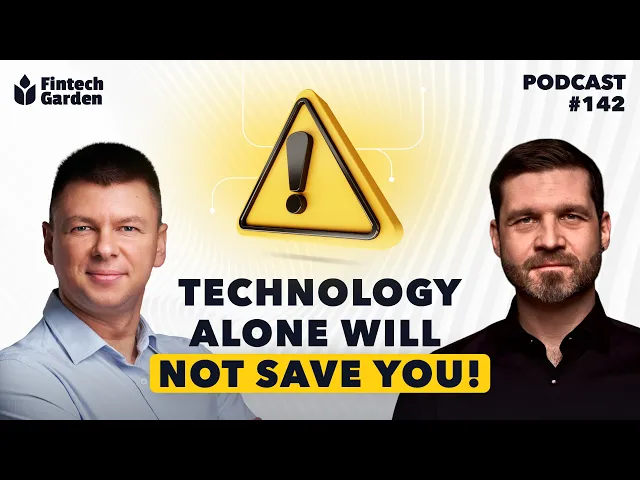
Cybersecurity rarely makes headlines when it works, but when it fails, the consequences are immediate and expensive. In this episode of the Fintech Garden podcast, hosts Igor Tomych and Dmytro Kondratenko speak with Dennis Vinta, Chief Security Officer at Börse Stuttgart Group and CTO of Börse Stuttgart Digital, about how security has evolved from an IT safeguard into foundational infrastructure for digital finance.
Why cybersecurity is now a board-level priority
Igor, Dumitru, and Dennis explore how the threat landscape has evolved over the past decade. As financial systems moved to cloud environments, SaaS platforms, and digital assets, complexity increased significantly. Identity access management, third-party tooling, and distributed teams introduced new risks that cannot be addressed with perimeter defenses alone.
The discussion highlights a structural shift: cybersecurity is no longer about isolated technical controls. It is about aligning security strategy with business growth, product roadmaps, and regulatory expectations. Threat modeling becomes a continuous discipline rather than a one-time workshop.
The human factor in modern security
A central theme of the episode is the dual role of people in cybersecurity. Customers and employees can strengthen security posture through awareness and responsible behavior, yet they remain primary targets for social engineering and fraud.
Dennis explains why most attacks exploit attention and behavior rather than technical vulnerabilities. Fraud campaigns targeting crypto platforms, fake advertising, and phishing illustrate how security today must combine education, monitoring, and rapid response. Automation helps, but human oversight remains essential.
Automation, AI, and code integrity
The conversation also addresses the growing use of automation and AI in software development. As AI-generated code becomes more common, verification and quality assurance processes must evolve. Security is framed as a balance between automation for consistency and human review for judgment.
Rather than positioning automation as a replacement for people, the episode presents it as a force multiplier that requires stronger governance, clearer processes, and enhanced verification mechanisms.
Post-quantum cryptography and future resilience
Looking ahead, the discussion turns to quantum computing and the long-term resilience of cryptographic systems. Dennis outlines practical first steps companies can take today, including building an inventory of cryptographic assets and preparing for algorithm transitions.
The future of cybersecurity is described not as a sudden technological leap, but as a gradual tightening of controls, improved visibility across systems, stronger identity management, and AI-enhanced monitoring.
Why listen
This episode offers a practical, infrastructure-level view of cybersecurity in fintech. It explains how security leaders balance business objectives with risk mitigation, how organizations manage increasing technical complexity, and why cybersecurity is ultimately about protecting operational continuity and customer trust.
For fintech operators, product leaders, and technology executives, this conversation provides a grounded perspective on what modern security truly requires.
Share article
Host


