AUGUST 4, 2026
%22%3E%3Cpath%20d=%22M12%206.18945C12%205.99054%2011.921%205.79978%2011.7803%205.65912%2011.6397%205.51847%2011.4489%205.43945%2011.25%205.43945S10.8603%205.51847%2010.7197%205.65912C10.579%205.79978%2010.5%205.99054%2010.5%206.18945V14.4395C10.5%2014.5717%2010.535%2014.7015%2010.6014%2014.8158S10.7632%2015.0249%2010.878%2015.0905l5.25%203C16.3003%2018.1836%2016.5022%2018.2056%2016.6905%2018.1518%2016.8788%2018.0981%2017.0386%2017.9728%2017.1358%2017.8028%2017.2329%2017.6327%2017.2597%2017.4314%2017.2104%2017.2419%2017.1612%2017.0523%2017.0397%2016.8896%2016.872%2016.7885L12%2014.0045V6.18945z%22%20fill=%22%23111%22/%3E%3Cpath%20d=%22M12%2024.9395c3.1826.0%206.2348-1.2643%208.4853-3.5148C22.7357%2019.1743%2024%2016.1221%2024%2012.9395c0-3.18264-1.2643-6.23489-3.5147-8.48533C18.2348%202.20374%2015.1826.939453%2012%20.939453S5.76516%202.20374%203.51472%204.45417C1.26428%206.70461.0%209.75686.0%2012.9395c0%203.1826%201.26428%206.2348%203.51472%208.4852C5.76516%2023.6752%208.8174%2024.9395%2012%2024.9395zm10.5-12c0%202.7847-1.1062%205.4554-3.0754%207.4246-1.9691%201.9691-4.6398%203.0754-7.4246%203.0754-2.78477.0-5.45549-1.1063-7.42462-3.0754C2.60625%2018.3949%201.5%2015.7242%201.5%2012.9395c0-2.7848%201.10625-5.45554%203.07538-7.42467S9.21523%202.43945%2012%202.43945c2.7848.0%205.4555%201.10625%207.4246%203.07538C21.3938%207.48396%2022.5%2010.1547%2022.5%2012.9395z%22%20fill=%22%23111%22/%3E%3C/g%3E%3Cdefs%3E%3CclipPath%20id=%22clip0_1107_2521%22%3E%3Crect%20width=%2224%22%20height=%2224%22%20fill=%22%23fff%22%20transform=%22translate(0%200.939453)%22/%3E%3C/clipPath%3E%3C/defs%3E%3C/svg%3E)
26 min listen

Host

Tune in to the Full Podcast Episode Below
Listen now on


Everyone in fintech is chasing the same headline: instant settlement, cross-border payments in seconds, stablecoins moving money in real time.
Marwan Forzley, CEO and co-founder of Veem, has spent over a decade building the infrastructure behind exactly that. His take on the industry’s obsession with speed runs against the grain.
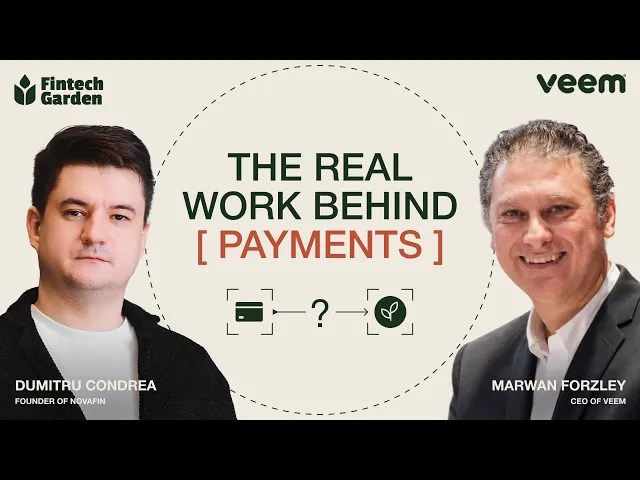
In this episode of the Fintech Garden Podcast, he joins Dumitru Condrea to explain why the rail is the easy part — and why compliance, risk, and user experience decide whether a transaction actually clears.
The rail is the easy part
Once a payment rail is built, moving money is mechanically simple. What most of the industry underinvests in is everything layered on top: compliance, risk management, and the experience that determines whether a payment completes or dies in exception queues — the cross-border payments compliance vs. speed tradeoff in practice.
Marwan’s point is operational, not philosophical. Speed without clearing quality is a demo. Production is the stack that keeps money moving when data is messy and jurisdictions disagree.
KYC and KYB that look different in every country
Veem operates in more than 100 countries, collecting and reconciling KYC and KYB data that looks completely different from one jurisdiction to the next.
Some registries hand over a clean beneficial ownership record. Others leave the field blank. Marwan walks through how Veem turns that inconsistency into an automated process — and where human review still has to step in.
The hard engineering problem is not “move the funds faster.” It is “prove who the parties are, consistently, when the source data never looks the same twice” — exactly what KYC providers are built to solve across jurisdictions.
Where stablecoins actually compete
Marwan is direct about stablecoins. The technology works, but it does not automatically win.
In corridors like US to euro, foreign exchange is already cheap and liquid, so a stablecoin has little to compete on. Its advantage shows up in messier corridors, where traditional rails are slow or expensive.
That framing cuts through a lot of treasury-slide hype: pick corridors where the status quo fails on cost or speed, not where the incumbent rails already work.
The next unlock is shared compliance, not another fast rail
Marwan’s argument is that the next wave of useful fintech infrastructure will not be another fast rail. It will be shared compliance frameworks that work across borders the way SEPA works across the EU — cutting the cost of doing KYC right instead of looking for ways around it.
That is the through-line of the episode: build the boring layers that make global payments bankable, and the speed conversation finally starts to matter.
Share article
Host