


SEPTEMBER 16, 2026
%22%3E%3Cpath%20d=%22M12%206.18945C12%205.99054%2011.921%205.79978%2011.7803%205.65912%2011.6397%205.51847%2011.4489%205.43945%2011.25%205.43945S10.8603%205.51847%2010.7197%205.65912C10.579%205.79978%2010.5%205.99054%2010.5%206.18945V14.4395C10.5%2014.5717%2010.535%2014.7015%2010.6014%2014.8158S10.7632%2015.0249%2010.878%2015.0905l5.25%203C16.3003%2018.1836%2016.5022%2018.2056%2016.6905%2018.1518%2016.8788%2018.0981%2017.0386%2017.9728%2017.1358%2017.8028%2017.2329%2017.6327%2017.2597%2017.4314%2017.2104%2017.2419%2017.1612%2017.0523%2017.0397%2016.8896%2016.872%2016.7885L12%2014.0045V6.18945z%22%20fill=%22%23111%22/%3E%3Cpath%20d=%22M12%2024.9395c3.1826.0%206.2348-1.2643%208.4853-3.5148C22.7357%2019.1743%2024%2016.1221%2024%2012.9395c0-3.18264-1.2643-6.23489-3.5147-8.48533C18.2348%202.20374%2015.1826.939453%2012%20.939453S5.76516%202.20374%203.51472%204.45417C1.26428%206.70461.0%209.75686.0%2012.9395c0%203.1826%201.26428%206.2348%203.51472%208.4852C5.76516%2023.6752%208.8174%2024.9395%2012%2024.9395zm10.5-12c0%202.7847-1.1062%205.4554-3.0754%207.4246-1.9691%201.9691-4.6398%203.0754-7.4246%203.0754-2.78477.0-5.45549-1.1063-7.42462-3.0754C2.60625%2018.3949%201.5%2015.7242%201.5%2012.9395c0-2.7848%201.10625-5.45554%203.07538-7.42467S9.21523%202.43945%2012%202.43945c2.7848.0%205.4555%201.10625%207.4246%203.07538C21.3938%207.48396%2022.5%2010.1547%2022.5%2012.9395z%22%20fill=%22%23111%22/%3E%3C/g%3E%3Cdefs%3E%3CclipPath%20id=%22clip0_1107_2521%22%3E%3Crect%20width=%2224%22%20height=%2224%22%20fill=%22%23fff%22%20transform=%22translate(0%200.939453)%22/%3E%3C/clipPath%3E%3C/defs%3E%3C/svg%3E)
33 min listen



Tune in to the Full Podcast Episode Below
Listen now on


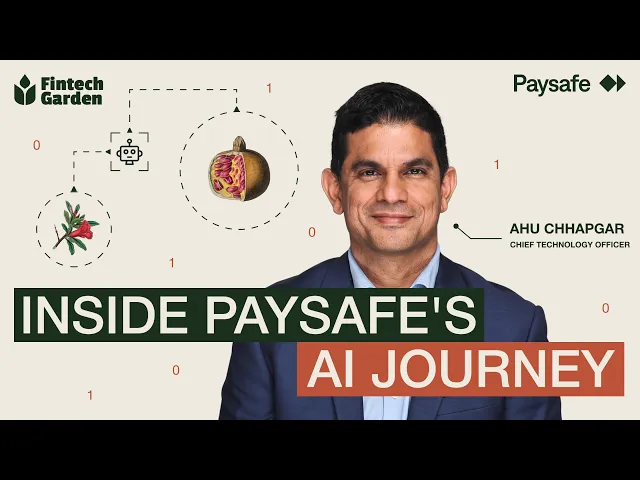
At Paysafe, integrating artificial intelligence into core engineering requires far more than adopting new tooling. It demands a structural overhaul of operational workflows and risk management. Ahu Chhapgar, CTO at Paysafe and former executive at PayPal, Mastercard, and Citi, walks through what that actually looks like when the product is payments, not a sandbox.
The reality behind 64% AI-generated code
Chhapgar highlights a pivotal benchmark: in July, 64% of the software his engineering organization shipped was generated by AI. However, he emphasizes a critical caveat often overlooked: accelerating code generation does not eliminate the necessity for functional requirements, regulatory oversight, or security validation. It simply shifts where operational effort is concentrated. Custom fintech software development still has to carry those constraints, whether a human or a model wrote the first draft.
The unforeseen constraint: scaled code review
As automated output surged, Paysafe encountered an unexpected operational choke point: code review capacity. Rather than seeking a single silver bullet, Chhapgar applied an iterative refinement strategy, identifying the newly formed bottleneck, resolving it, and adapting to the next. He draws a direct parallel to the fragmented, unstandardized landscape of API development immediately following the launch of Apple’s App Store.
Human capital, not software, determines success
When evaluating why organizational AI initiatives stall, Chhapgar pinpoints cultural resistance rather than technical limitations. Echoing Jensen Huang’s perspective that AI will not replace workers, but AI-fluent professionals will replace those who lag behind, Paysafe established a top-down directive originating from the CEO to eliminate ambiguity around mandatory adoption. That is a change-management problem as much as an engineering one, which is why fintech consulting often starts with operating model, not a vendor shortlist.
Fintech risk and native architectural explainability
A sharp divide separates internal utilities isolated from PCI or PII data, which can iterate rapidly, from production financial infrastructure. For core monetary systems, auditability and explainability must be natively engineered into the system architecture from day one rather than retrofitted. Every commit, whether human-authored or machine-generated, must navigate the exact same rigorous security pipeline before reaching deployment. That pipeline is why PCI DSS and scanning discipline still sit next to the AI stack rather than behind it.
The maturity curve of agentic commerce
Autonomous agents executing financial transactions on behalf of consumers remain commercially nascent. While long-term potential is vast, widespread adoption relies on establishing unified ecosystem standards across card networks, merchants, and issuing institutions to define clear liability models for agent-initiated disputes and chargebacks.
Share article
Host

